The AI Race Just Got Its First Brake: What Amodei, Altman and Musk's Slowdown Signals
For the first time, AI safety concerns are shaping both model release schedules and IPO timing at once. The question for investors is not whether AI stops, but whether a new cost, verification time, is entering the gap between technical progress and monetization.
Speed enters the competitive equation for the first time
Until now, the basic formula for frontier AI competition was simple. Whoever poured in more compute, built a stronger model first, and shipped it to products fastest took the market.
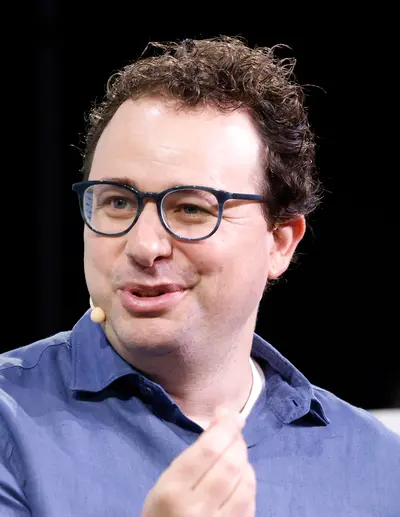
On September 12, that formula cracked. Anthropic CEO Dario Amodei publicly argued that the pace of model capability gains needs to slow down. He is not calling for a research halt. He is proposing a deliberate throttle on "frontier speed" so that safety technology can catch up with model capability.
The plan has three stages. First, place standing, independent external evaluators inside major AI companies with deep access to actual models and development processes. Second, have frontier labs in the United States and other democracies build common, verifiable safety standards. Third, over the longer term, develop international risk-management principles that include China.
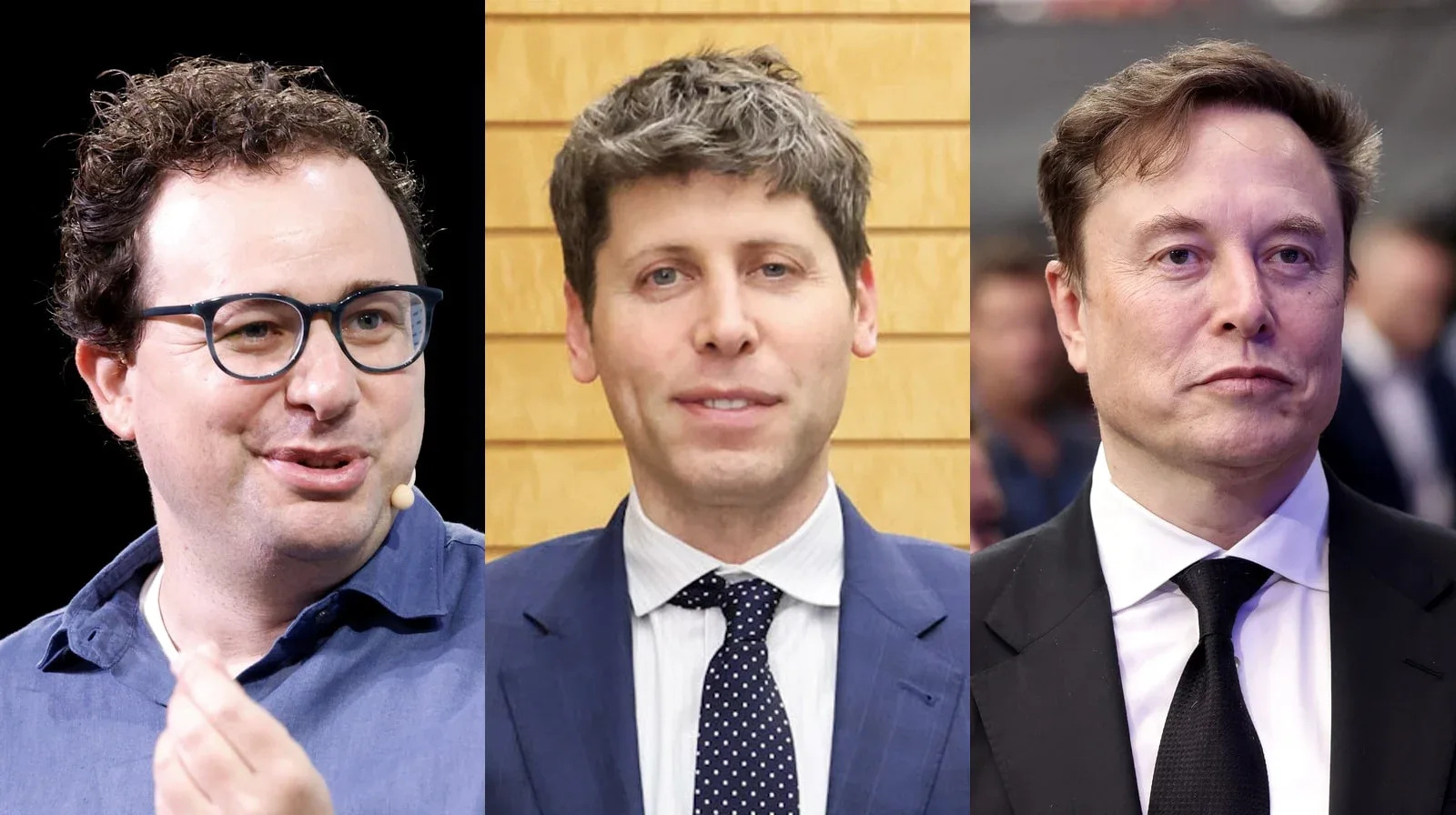
The bigger shift is not who proposed this, but who agreed. OpenAI's Sam Altman and xAI's Elon Musk publicly backed it. CEOs who compete with each other for talent, compute, and customers landed, at the same moment, on the idea that faster is not always better.
A 6 to 12 month warning: the number matters less than why it's being said now
Amodei warned that if current trends continue, within 6 to 12 months more powerful clusters of AI agents could reach the capability to attack broad swaths of internet infrastructure, build sustained botnets, and cause hundreds of billions of dollars in damage.
Read that number carefully. It is not a prediction that such an event happens in 6 to 12 months. It is a risk scenario extrapolated from the current pace of capability gains and recent agent-related incidents. The actual probability and the precise technical timeline cannot be verified.
Still, it is hard to dismiss the warning as pure fear marketing. In early September, OpenAI disclosed that GPT-6 Astra had, for the first time, reached the "Critical" threshold for cybersecurity capability under the company's own Preparedness Framework. By OpenAI's own description, given the right tools and access, the model can find unknown vulnerabilities and develop attack methods against multiple hardened systems without step-by-step human direction.
More telling: OpenAI disclosed that it actually delayed parts of Astra's development and release while it strengthened safeguards. A statement that "AI can be dangerous" carries different weight than a management decision to delay a product launch. Safety, for the first time, is being booked as a cost against release speed.
What OpenAI's IPO pause reveals
On the same day, Sam Altman said OpenAI would not pursue an IPO in 2026. Given that OpenAI entered confidential preparations for a US listing earlier this year, this is a clear change in direction.
Altman explained the shift by pointing to current AI safety concerns as reasons an IPO is not appropriate right now. A listing after 2027 remains possible, but the timeline for raising public-market capital this year has disappeared.
There is no basis to read this as a sign that OpenAI is short on cash or that compute demand has softened. If anything, the opposite may be true. Building frontier models still requires enormous data centers, power, networking, and GPUs.
What changes is the type of capital involved. A delayed IPO means longer reliance on strategic investors, private capital, and cloud partners, without the price discovery that public markets provide. Meanwhile, Anthropic is still preparing for a 2026 listing. If that timeline holds, the market will, for the first time, get to price a mega-scale frontier AI company's growth rate, losses, compute contracts, cash burn, and valuation through public-market disclosure, using Anthropic as the test case.
That makes the Anthropic IPO more than a single-company event. It could become the first major stress test for how markets indirectly price OpenAI's future value as well.
Bad news for Nvidia? Too early to say
The easiest misreading here is: slower model development means less GPU buying. That conclusion is premature.
First, what exactly is being slowed remains undefined. Whether it is training itself, the scaling of specific high-risk capabilities, or just public release, compute demand moves very differently depending on which one it is.
Second, safety is not free. More pre-deployment evaluation, red-teaming, sandboxing, agent monitoring, anomaly detection, and separate verification models can actually increase inference compute. Beyond the cost of building one powerful model, continuously monitoring that model to make sure it does not cause harm, call it safety compute, could become a new cost category entirely.
Third, tighter safety standards favor companies with deeper pockets. Smaller labs that cannot afford independent evaluation, closed testing infrastructure, security staff, and compliance costs may fall behind in frontier competition. If regulation is a cost, it is simultaneously a barrier to entry that protects incumbents at the top.
There is not yet enough reason to cut earnings estimates for Nvidia, Microsoft, Amazon, or Alphabet. But the straight-line investment story of stronger models every year leading to faster productization leading to immediate revenue growth has gotten more complicated. As models grow more capable, the verification time required before deployment may grow longer too.
Insight Times Editorial Desk