Anthropic Eyes a $2 Trillion IPO. Can It Top SpaceX's Record?
Five months after SpaceX set the record for the largest IPO, Anthropic is weighing a valuation of up to $2 trillion and as much as $100 billion in proceeds. Wall Street admires the growth but is split on the price.

The 20-second read
The 20-second brief
1. A record-sized IPO candidate, just five months later
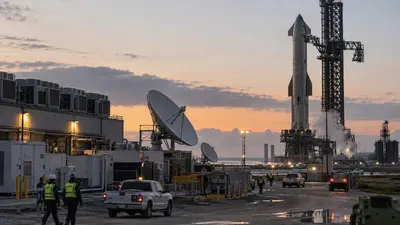
Last June, SpaceX rewrote Wall Street's record book. At the IPO price, it carried a valuation of $1.77 trillion and raised $75 billion, the largest single IPO in history.
Now Anthropic is going after that record.
Largest IPOs compared
| Valuation | Proceeds | |
|---|---|---|
| SpaceX (set June 2026) | $1.77T | $75B |
| Anthropic (upper end under discussion) | $2.0T | $100B (expected) |
If Anthropic lists at the top of that range, its valuation would be about 13% above SpaceX's and its proceeds about 33% higher. Anthropic's size is a market estimate and has not been confirmed.
Proceeds and valuation are different numbers. Raising $100 billion means investors buy that amount of new stock. A $2 trillion valuation is the value placed on all shares outstanding.
Anthropic's S-1 filing still leaves the offer price and share count blank. Even so, the fact that 22 investment banks are taking part, led by Goldman Sachs and Morgan Stanley, shows this is a central event for Wall Street.
2. How does a five-year-old company get to a $2 trillion discussion?
A $2 trillion valuation is territory that only a handful of Big Tech names occupy in the US market.
Anthropic's weapon is speed. Revenue rose from $1.382 billion in the third quarter of 2025 to $16.956 billion a year later. The number of business customers spending more than $100,000 a year grew from more than 950 to more than 11,900.
Net revenue retention (NRR), which measures revenue expansion from existing customers, is about 900%. That means companies already paying are sharply increasing their AI usage.
The figure stands out because of what Anthropic sells.
Traditional SaaS sells software licenses to employees. Anthropic sells AI intelligence that handles work such as coding, analysis and research. As customers use AI more deeply, usage-based revenue can rise without a large increase in subscribers.
The premium Wall Street wants to give Anthropic is hard to explain with current revenue alone. It reflects an expectation that companies may shift part of their labor and outsourcing budgets, not just software budgets, into AI usage fees.
3. Three Wall Street views: excitement, arithmetic, caution
What stands out is that Wall Street is not disputing Anthropic's business. The disagreement is over how much to pay for that growth.
The gap between $2 trillion and $1.5 trillion is a full $500 billion. Investors looking at the same company are making very different assumptions about growth, profitability and risk.
4. The number Wall Street likes least: $895.4 billion
As of the end of September 2026, Anthropic disclosed about $895.4 billion in long-term spending, combining purchase and lease commitments signed and those signed afterward. Most are contracts tied to compute and AI infrastructure.
Of that, $447.5 billion is scheduled through the end of 2030, and most of the rest between 2031 and 2045.
The figure shows how large AI demand is expected to become. It also shows the capital burden of supporting that growth.
The company's third-quarter GAAP operating loss was $567 million. Non-cash valuation losses made the net loss larger, but the real compute costs and investment spending still to come cannot be ignored.
For Wall Street's optimism to hold, rising AI usage has to more than offset falling prices and rising infrastructure costs.
5. Insight Times View: this IPO is a price tag for the whole AI industry
Anthropic's listing means more than the arrival of another large tech stock.
SpaceX was priced by the market on the future value of space infrastructure, satellite communications and its AI business. Anthropic would be priced on the economic value of the intelligence its AI models sell directly.
If the listing goes well and the high valuation holds, funding conditions for frontier AI model companies could improve. That could be a positive signal for Nvidia, Broadcom, memory chips, data centers and the power supply chain.
If instead the offer price is cut sharply or the valuation wobbles after listing, the market is likely to recalculate not AI demand itself but the price it pays for future growth.
The distinction matters for individual investors too. There is no need to rush in because the deal is big, or to dismiss the growth story because the valuation is high.
What to watch
| Indicator | What to check |
|---|---|
| Final IPO valuation | Where it lands within $1.5 trillion to $2 trillion |
| Actual amount raised | Whether it tops SpaceX's $75 billion record |
| Institutional demand | Real interest as reflected in offer price and allocations |
| Post-IPO share price | Return versus the offer price and whether trading volume lasts |
| Earnings and compute costs | Whether profit and cash flow improve as revenue grows |
- If the $100 billion in IPO proceeds is actually raised, it could surpass SpaceX's $75 billion record. The final record can be judged only once both the valuation and the amount raised are set.
- Expectations are high for the growth potential of its AI intelligence services. But institutional investors and valuation experts differ on whether a $2 trillion price is appropriate.
- He factored in not only revenue growth but also long-term operating margin, reinvested capital, regulatory risk, and cost of capital. His $1.475 trillion figure is one valuation scenario.
- Rising AI service revenue can support growing demand for computing. In the long run, though, the expansion of in-house chips and competing semiconductors could affect Nvidia's market share and pricing power.
- Early investor demand and a company's long-term intrinsic value are different things. It is important to look not only at the gain from the offering price but also at the future revenue and profit that the share price requires.
What to watch
Insight Times Editorial Desk