It Wasn't AI That Broke. It Was the Wait for Payback
An election shock lit the fuse, and leveraged unwinding and risk-control selling widened the drop. As the payback period for AI spending stretched, the market began pricing each company differently.
The 20-second read
1. Why did chips fall more than 12% in a single day?
| Index | Move | Level |
|---|---|---|
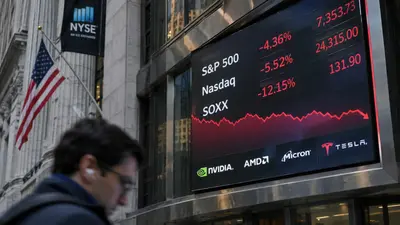
| S&P 500 | -4.36% | 7,353.73 |
| Nasdaq Composite | -5.52% | 24,315.00 |
| SOXX | -12.15% | $131.90 |
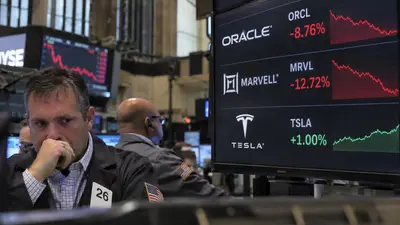
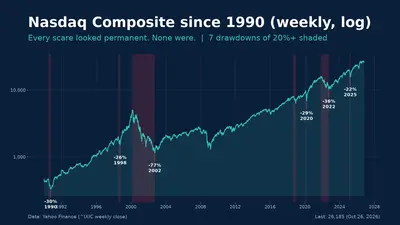
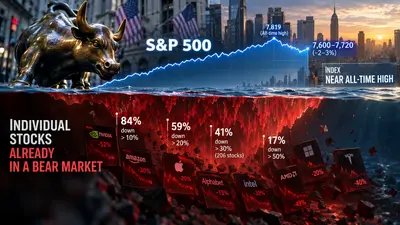
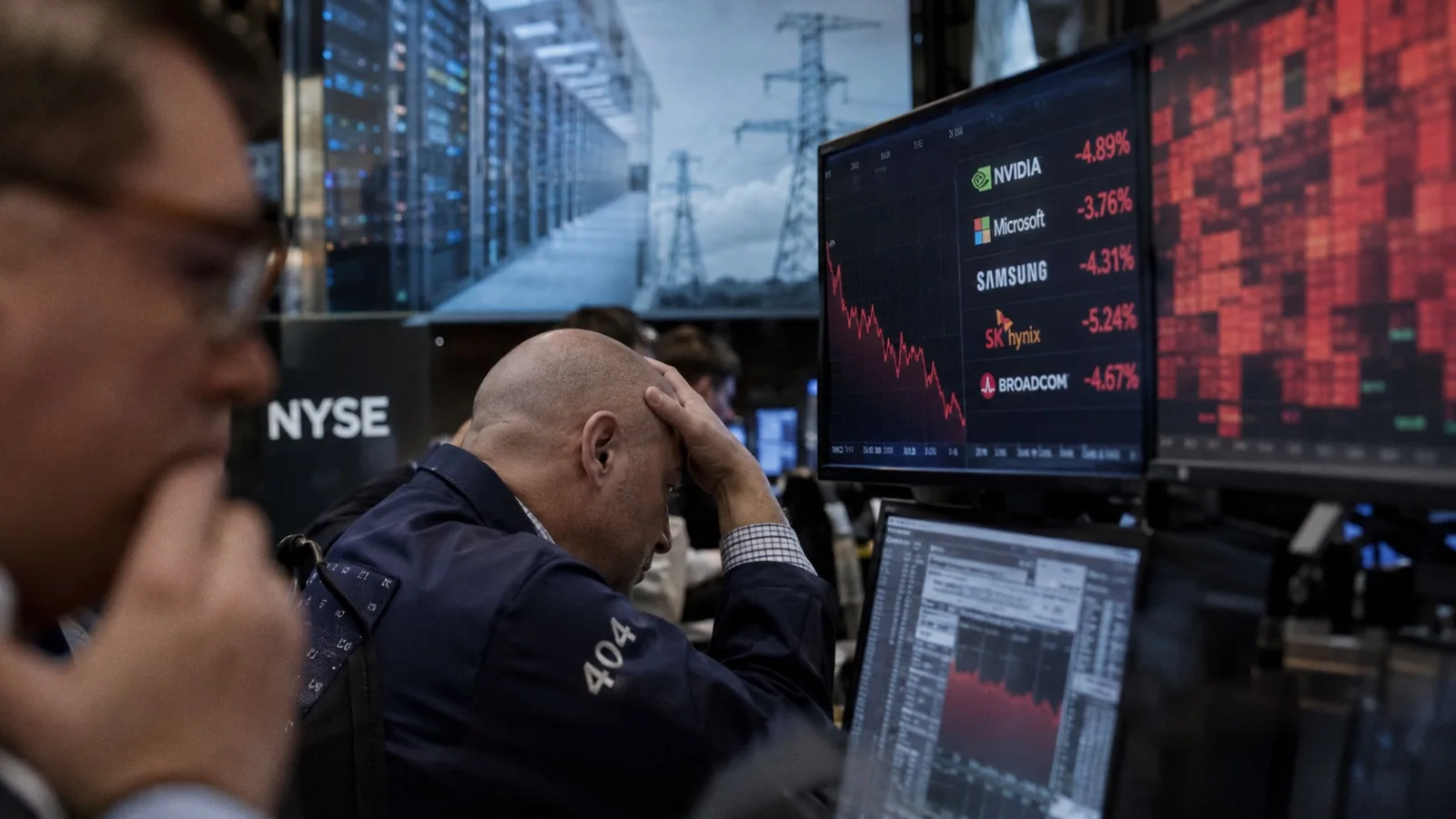
U.S. stocks closed Nov. 5 with the S&P 500 down 4.36% and the Nasdaq Composite down 5.52%. SOXX, which tracks the Philadelphia semiconductor group, fell 12.15%. Nvidia dropped 9.3% and AMD 17.3%, a sign of how concentrated expectations for AI capital spending had become. The Nasdaq is now about 12% below its Oct. 6 high, which puts it in correction territory.
The day before, stocks had risen on relief that midterm election uncertainty was resolved. Chip and AI infrastructure shares were already weak, though. The next day the crack spread across tech. That is why the election result alone does not explain the move.
Treasury yields fell, yet growth stocks fell anyway. Money fleeing to safety can push yields down. But stock prices reflect more than the discount rate applied to future earnings. Earnings expectations, risk premiums and the pressure of sell orders all matter. On this day, those three outweighed the benefit of lower yields.
The drop is easier to read in three layers. First, a trigger: data center regulation. Second, a repricing of how AI investment gets paid back. Third, amplification by leverage and mechanical risk-management selling. Which layer leads changes what a buying strategy should look like.
2. The real election shock is 2028, more than 2027
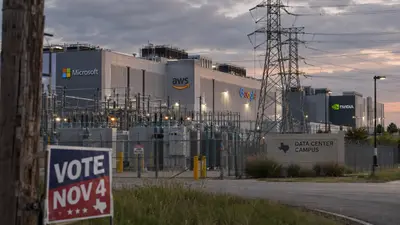
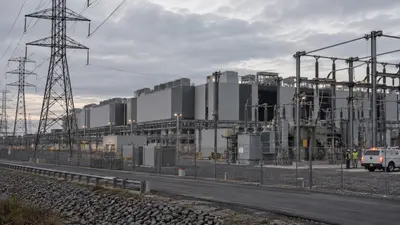
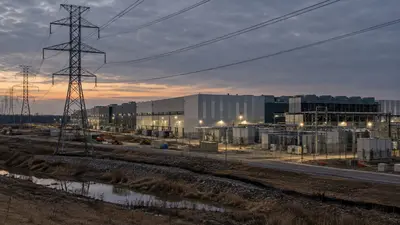
Texas governor-elect Gina Hinojosa said she would pause new data center approvals until laws protecting local residents are in place. The dispute is over who bears the costs data centers impose on power grids, water and communities. There is still no basis for reading this as a halt to every AI construction project across the country.
According to SemiAnalysis, about 75% of the 33.8GW of data center capacity due online in 2027 across the 20 main U.S. states has already broken ground. By contrast, most of the 62.2GW of net new capacity forecast for the whole U.S. in 2028 has not. The first figure covers scheduled capacity in 20 states. The second is a nationwide net-addition forecast. They come from different populations, so they should not be treated as an annual growth rate.
Note: the two figures come from industry forecasts with different scopes. No unstarted share was provided for 2028, so it is not shown as a same-ratio bar.
A facility with a building up and a power connection in preparation is different from one still waiting on permits. Regulation is more likely to change the schedule and cost of the next phase of investment than to destroy the returns on work already under way. But while permits drag on, land costs, financing costs and cash tied up in pre-purchased equipment can keep running.
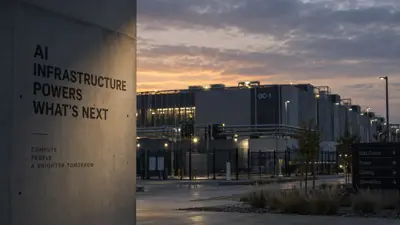
The new bottleneck is not just getting GPUs. It is when power arrives and the site actually switches on. That can affect when equipment suppliers book orders and recognize revenue. It could also strengthen the bargaining power of incumbents that secured power and permits early. Treating AI infrastructure regulation as a single piece of bad news is risky for that reason.
3. A Wall Street rout is never made by one piece of bad news
Consider a hypothetical fund using 2x leverage. It puts 100 of its own capital plus 100 of borrowed money into 200 of stocks.
| Stocks | Equity | Equity change |
|---|---|---|
| 0% | 100 | 0% |
| -10% | 80 | -20% |
| -20% | 60 | -40% |
Interest and fees excluded. This is not a model of whether a margin call occurs.
A 10% drop in stocks cuts equity from 100 to 80, a 20% loss. A 20% drop cuts equity to 60, a 40% loss. Real trading differs by asset in collateral rules and maintenance margin, so these numbers alone cannot show that a margin call happens.
The amplification path runs like this: regulation or payback worries, then lower stock prices and collateral values, then margin calls and tighter risk limits, then rebalancing sales across stocks, futures and ETFs, then further price declines and higher volatility.
As losses grow, prime brokers can demand more collateral or push funds to shrink positions. In retail margin accounts, brokers can also sell securities without advance notice. The purpose of those trades is not to judge fair value. It is to reduce borrowing risk. So whether a price is already cheap or expensive may not matter to the selling decision in that moment.
When market-wide volatility rises, volatility-targeting strategies, some risk-parity strategies and hedge funds' internal risk limits also kick in. If investors rush to buy put options, option market makers' delta hedging can add to selling in the underlying assets. That is a conditional mechanism, stronger when market makers' aggregate gamma is negative. Without checking actual positions, it is wrong to say options trading necessarily caused the plunge.
Leveraged ETFs adjust exposure near the close to hit their daily target multiple. Nomura estimated the selling those ETFs needed to do in this decline at about $47 billion. That is estimated rebalancing demand, not the same as net selling actually executed.
Losses and risk reduction were reported in the hedge fund world on Nov. 5, 2026. According to Reuters, tech-focused long/short funds lost more than 4% in a day, and Wolfeye Capital said it would shrink its equity operation and return some capital. That does not mean roughly $17 billion of assets under management was sold into the market. Assets under management, money returned to investors and actual liquidation volume are entirely different things.
So a loop forms: falling prices produce more selling, and more selling pushes prices lower. This loop does not last forever. Once risk positions shrink enough, selling pressure can ease. That does not mean companies' earlier valuations come back.
4. After a crash, recovery comes in three stages
- Liquidity: selling pressure eases. Volatility settles and margin-call and rebalancing sales fade.
- Fundamentals: earnings outlook holds. Orders, shipments, customer capital spending and operating margins.
- Cash: long-term value is confirmed. Free cash flow, return on investment and whether profitability can repeat.
The first recovery comes when forced selling stops. Once funds cover collateral shortfalls, option positions are unwound and end-of-day rebalancing finishes, there is less left to sell. The market can bounce without any good news on earnings. Chips, high-beta growth stocks and leverage-sensitive names, which fell hard and traded heavily, can move sharply at this stage.
The second recovery comes when real business value holds or improves. That means checking whether customers keep their AI spending plans, whether GPU and HBM shipments slip, whether cloud pricing and margins hold, and how far data center start-up schedules are pushed back. A company that jumps in the first bounce can still fail the second stage.
The third is the recovery of long-run compounding. A company gets there when high revenue growth turns into operating cash flow and free cash flow, and when the economic value attributable to shareholders keeps growing after new investment. A few days of rebound cannot prove it. It takes several quarters of results and proof of investment returns.
The speed of a rebound differs from its quality. The stock that fell most can rise most the next day, but it is not necessarily the company that will reward shareholders years from now.
5. Spending on data centers does not earn everyone the same money
Take a hypothetical data center with total investment of $55 billion and annual revenue of $70 billion.
- If 20% of revenue is cash available for payback: $14 billion a year, a simple payback of about 3.9 years.
- If 10% of revenue is cash available for payback: $7 billion a year, about 7.9 years.
A simple arithmetic example, not a forecast for any actual company or facility.
The same revenue stretches payback to twice as long. Cash available for payback is what is left after power, operations, taxes, maintenance and replacement spending. In practice, changes in utilization, taxes, borrowing interest and the time value of money also matter, so simple payback is not the same as company value.
The AI industry links end customers, AI model providers, cloud operators, data center developers, and chip and equipment suppliers. If an end customer pays 100 for an AI service, the service company pays part of it to a cloud provider, and the cloud company buys chips and equipment, each firm books revenue. Adding up all of it can double count the new money end customers actually spent.
It is also wrong to compare total hyperscaler capital spending only with AI model company revenue. Facilities and networks serve many services, and returns can show up in cloud, legacy software and advertising as well as in model usage fees. Nor should all growth in existing services be credited to AI investment.
This is the logic beneath the crash. The market no longer treats the existence of AI demand as enough. It has begun asking how much must be invested first and when, and how much free cash comes back.
6. Nvidia and Broadcom: same AI, different reasons to recover
Nvidia's rebound case is the most direct tie to AI infrastructure spending normalizing. If its GPU supply and software ecosystem stay competitive and major customers keep installing and ordering, the overdone industry fear could ease and the stock could react fast. But if shipment plans slip into real installation delays and customer investment shrinks, a big price drop alone does not restore value.
Broadcom has a different path. If hyperscalers add in-house accelerators to improve cost and power efficiency, suppliers of custom chips and networking semiconductors gain an opening. Supplier diversification does not mean total AI investment is rising, but if the split of spending changes, so can the beneficiaries.
Broadcom's recent figures showed growth in AI chip revenue and also strong cash generation across its business, which includes infrastructure software. Consolidated free cash flow should not be read as the profitability of AI chips alone. Investors need to separate custom chip revenue growth from company-wide cash flow.
Nvidia's core question is whether AI compute demand and GPU ecosystem profitability last. Broadcom's is whether custom chip programs can grow by customer while high margins and cash generation hold.
7. Where memory, cloud and AI software get decided
For SK hynix, the long-term value turns on the shift to next-generation HBM, pricing and production yield. For Samsung Electronics, it is whether wider AI memory supply and a recovery in technical competitiveness show up in actual share and margins. Memory is an industry where expected EPS is high and P/E looks low when conditions are good. Without calculating normalized earnings separately, that can create an illusion of cheapness. TSMC is a good window onto overall demand for advanced chip production and packaging, more than any single GPU maker, but it is not immune to an industry-wide slowdown in investment.
Microsoft spends heavily on AI infrastructure while generating cash from cloud and software. Contract backlog shows the chance of future revenue recognition, but it is not cash available today. Investors should watch Azure growth, monetization of AI services and free cash flow after capital spending together.
Palantir is an important test of whether companies actually use AI in their work and pay for it. Its recently reported fast revenue growth and U.S. commercial expansion show business strength, but at a high valuation multiple even a small disappointment in future growth can bring a large drop. A good business and a good purchase price are separate questions.
For Alphabet and Meta, the question is how well cash from advertising and platforms covers expanding AI investment. Even if each company's AI spending rises at a similar pace, differences in the cash power of the existing business can mean different financing risk and recovery speed.
8. Tesla and SpaceX: payback time is discounted more heavily in future value
Tesla is valued on the cash generation of its auto and energy businesses together with the future value of robotaxis and robots. Even if quarterly free cash flow improved, it is worth checking whether that came from lower capital spending or better operating efficiency. If delayed investment leaves cash on hand now but also pushes back the future business timeline, the reading on value gets more complicated.
Robotaxi fleet size and operating area are early indicators. What shareholders ultimately need to see is revenue per trip, the cost of maintaining safety, remote support and operations staff, and economics after vehicle depreciation. For Optimus, too, production readiness, outside sales, repeat orders and profit are separate stages. Expected future profit should not be counted like confirmed current profit.
For SpaceX, the cash flows of launch services, Starlink communications and AI-related investment need to be kept apart. How much Starlink earnings go to new space development and AI facility investment changes consolidated results and the cash left for shareholders. Reported sizes of large financial deals should not be mistaken for cash already deployed.
The common test for both companies is when the future business generates cash, more than how promising the technology is. Cash far in the future is more sensitive to discount rates and schedule changes. Even for those who believe the long-term growth story, it makes sense to revise valuation as each stage of commercialization is verified.
9. Five steps for investors eyeing a rebound
Three gates to check yourself:
- First gate: has flow calmed? Volatility, concentration of selling, market breadth.
- Second gate: are revenue and margins intact? Shipments, guidance, customer demand.
- Third gate: is cash left over? Capex, free cash flow, financing costs.
First, do not decide to buy on the intraday decline or the one-day bounce alone. Separate the drop in business value that news explains from price distortion caused by leveraged liquidation. A VIX spike, a surge in volume, peers falling together and selling concentrated near the close are supporting signs of a flow shock, but no single one can call a bottom.
Second, build a portfolio that can survive a market rout. Keep living expenses and short-term needs in separate funds, and do not use margin or leveraged ETFs as a stand-in for long-term investing. Leaving cash to meet further declines lowers the chance of being forced to sell at an unwanted time by a margin call.
Third, set the criteria for scaling in on evidence, not just price. For example, start small after checking the long-term value and financial health of the company you want. Make the next purchase conditional on confirmed sales, orders, margins and customer investment plans. Consider the last purchase when the business and cash generation are confirmed by further results. Splitting into three is not a formula that guarantees returns.
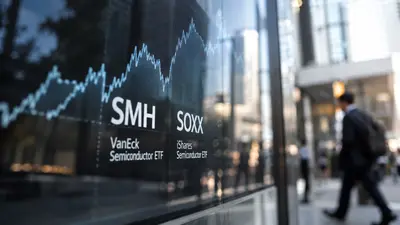
Fourth, do not collect only the biggest decliners. Semiconductor ETFs such as SMH and SOXX are sensitive to a recovery in AI capex expectations, but they differ in sub-industries and concentration. QQQM includes large non-financial companies beyond chips. Check actual holdings and weights, index methodology and expense ratios, not the ETF's name.
Fifth, set sell and review criteria. If customer orders central to the thesis are canceled, data center start-up delays repeat, or financing costs outrun cash generation, reassess the thesis regardless of price. Conversely, if shipments, operating margins and cash flow hold after the plunge, the size of the market's discount can be recalculated calmly.
10. What shows the quality of a rebound
- VIX and market breadth: Check whether the volatility index settles and gains spread to more stocks, not just a few large caps. If volatility falls while earnings expectations worsen at the same time, confidence in the recovery is lower.
- Hedge fund risk reduction and ETF trading: Watch reports and manager materials to see whether risk reduction continues. Do not read all large volume as forced liquidation.
- Hyperscaler capex and actual data center start-ups: What matters is not only announced spending plans but whether permits, power connections, construction starts and start-up dates hold.
- Chip shipments and customer revenue: Check whether orders for Nvidia GPUs, Broadcom custom chips and HBM memory turn into actual revenue and operating profit.
- Free cash flow and borrowing costs: Even if revenue grows, falling cash after investment and interest costs can keep long-term valuation under pressure.
- No. Prices can bounce when selling pressure eases, but if earnings estimates and the appropriate P/E have both come down, stocks may not regain their earlier prices.
- It is too early to say that. Some of the volume planned for 2027 has already broken ground, and the risk is more concentrated in local permits and the schedule for 2028 and beyond. The scope and duration of any regulation need to be watched.
- A calmer VIX can be a clue that forced risk reduction pressure has eased, but it is not a buy signal on its own. Look also at market breadth, earnings outlook and credit risk.
- They carry different risks. SOXX is concentrated in semiconductors and is sensitive to changing expectations for AI capital spending. QQQM has broader sector exposure, but it is not free from valuation pressure on large growth stocks.
- Expected EPS may be close to peak earnings. Check whether normalized EPS, free cash flow after the investment, and valuation all hold up together.
What to watch
Insight Times Editorial Desk