Stocks Plunged Despite Lower Rates as Wall Street's Doubts About AI Spending Grow

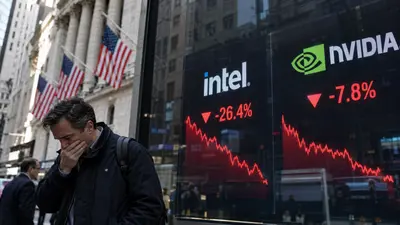
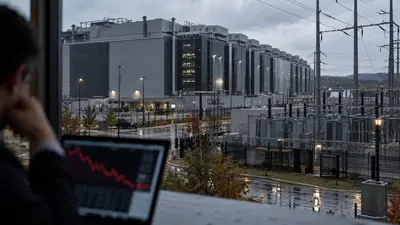
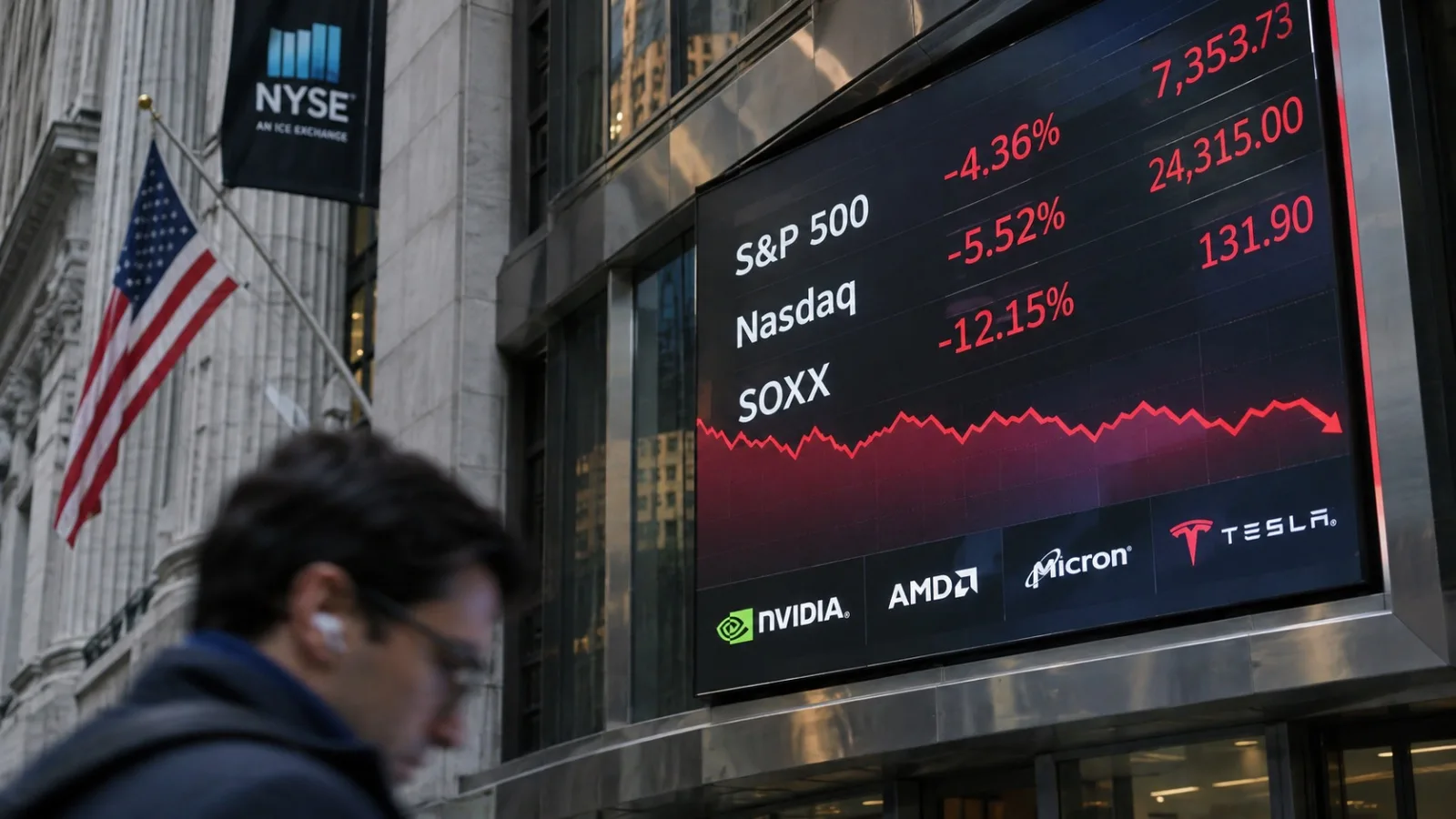
The S&P 500 fell 4.36% and the Nasdaq 5.52% on Nov. 5. The selloff looks more like a repricing of lofty expectations than proof that AI earnings have turned.
The 20-second read

1
The chip-led plunge spread across the whole market. Nvidia fell 9.26%, AMD 17.26% and Micron 17.46%. The Dow and small and mid-cap stocks dropped with them, so this was a risk-off market that went beyond a simple sector rotation.
2
New uncertainty hangs over AI data center investment. Worries about permitting and power regulation have come into focus after the US midterm elections. No actual investment cancellations have been confirmed. The market is instead discounting the timing and profitability of future capital spending ahead of time.
3
Investors need to separate two things. A plunging stock price is a different matter from damage to a company's long-term competitiveness. This is a time to check customers' investment plans and actual changes in orders, not to try to call the bottom.

On Nov. 5, the S&P 500 fell 4.36% and the Nasdaq dropped 5.52%. SOXX, the semiconductor ETF, lost 12.15% in a single day.

The Nov. 5 shock in numbers

IndexChangeClose
S&P 500-4.36%7,353.73
Nasdaq-5.52%24,315.00
SOXX-12.15%$131.90
VIX+69.66%28.18

Closing levels on Nov. 5.

What happened to AI?

The first shock came from data centers.

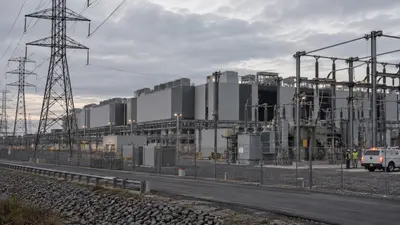
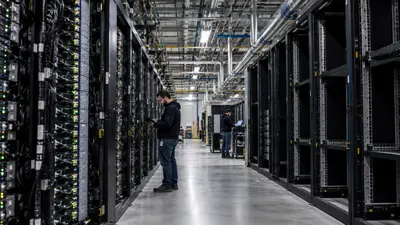
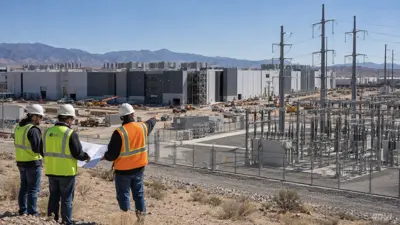
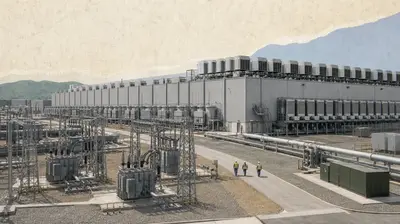
After the midterm elections, regulation of new data center construction and power use could tighten in some parts of the US. If data centers are built later, GPU and server deployments could slip too. That could push back the timing of revenue chipmakers had expected.

There is an important difference, though. A higher chance of regulation is not the same as chip orders actually being canceled. The selloff can be read as stocks carrying the highest growth expectations being sold first, once confidence in future earnings weakened.

The second problem is cost. In its Nov. 4 earnings report, Qualcomm formally acknowledged broad increases in input costs, including chip manufacturing, packaging and memory. It added that price increases need time to flow through fully.

High selling prices can help memory makers. For the smartphone and server makers that buy that memory, they are a cost. The episode showed that the whole AI supply chain cannot expand profits in the same direction at once.

Why did other chip stocks fall more than Nvidia?

StockNov. 5 return
Sandisk-22.26%
Micron-17.46%
AMD-17.26%
Tesla-10.77%
Nvidia-9.26%
Apple-1.53%

Daily returns of major AI-related stocks, based on regular-session closes on Nov. 5, 2026.

Nvidia fell sharply, but memory and chip equipment names saw even more extreme selling.

That is hard to read as direct evidence of worse earnings. It does show the market's concern that even a slight slowdown in AI capital spending could change company earnings expectations and valuations a great deal.

Large platform companies such as Apple and Alphabet fell less. Companies that generate cash flow from many businesses were sold less than those concentrated in AI capex. Still, it is hard to say that money actively flowed into platform stocks.

Tesla's 10.77% drop: what does it mean?

Tesla closed at $343.69, a far bigger fall than the Nasdaq's.

Tesla's valuation is hard to explain by auto sales alone. It also reflects the potential of autonomous driving, robotaxis and robots.

When risk aversion rises, expectations for businesses that have not yet materialized can be discounted more heavily. But a one-day decline alone does not show that Tesla's self-driving technology or commercialization prospects have actually worsened.

Long-term investors should watch less the size of the drop than the expansion of real autonomous service, the ability to generate profit, and cash flow from the auto business.

Bottom line

What matters now is less how cheap stocks have become than how much companies can earn ahead, and how much that expectation has changed. The market's fear should not be ignored. There is also little reason to mistake the fear itself for a company's future.

Why did growth stocks plunge even though rates fell?
  • The effects of uncertainty over future earnings and a higher risk premium may have outweighed the positive effect of lower rates.
  • Lower rates are not always a good signal for risk assets in themselves.
If chip stocks fell 10% to 20% in a day, is it a chance to buy the dip?
  • The size of the drop alone makes it hard to judge whether a stock is undervalued.
  • You need to check the earnings outlook, customer orders and current valuation together.
Is the AI investment cycle coming to an end?
  • One day of stock prices cannot tell you that the cycle is over.
  • The test is whether actual capex cuts and order declines show up.
How should long-term investors respond?
  • First check whether you are using leverage or are overly concentrated in a particular industry.
  • For companies whose investment thesis still holds, build positions in stages to fit your cash. Be wary of forcing purchases in an attempt to time the short-term bottom.

What to watch

VIX and the indexes stabilizing togetherA signal of easing risk aversion is only convincing if the indexes rebound and the VIX falls at the same time.
Breadth of the chip reboundCheck whether memory, equipment and server makers join the recovery, not just Nvidia.
Hyperscaler capexCheck whether Microsoft, Amazon, Alphabet and Meta are sticking to their capital spending plans.
Chip orders and marginsWatch for delayed customer orders, lowered shipment guidance and margin pressure from rising costs.
Retest of the low after the reboundMore important than one big rebound day is whether the previous low holds in the pullback that follows.
The Nov. 5 plunge can be read as high expectations being sold first, not as proof that AI earnings have weakened.

Insight Times Editorial Desk

More by topic

Starting with this story's topics, then what readers are following now

Investor psychology, decision-making and books on investing

Nasdaq

This story's topic12 storiesSee all →

S&P 500 Slips 0.22%, but 73% of the Market Fell

Long-term yields above 5% weighed on small caps and semiconductors on Oct. 7. A strong 10-year Treasury auction and a few large tech names limited the index's losses.

Tech

HBM

75 storiesSee all →

Memory stacked next to the GPU.

AI Chip Peak Check: Demand Still Rising, Risk Building in 2027-2029 Supply and Funding

DRAM and NAND contract prices are still climbing and HBM suppliers hold the edge. Power shortages, AI financing costs and simultaneous memory expansion are the risks for later years.

Investing

Has Memory Peaked? Prices Are Cooling, but the Shortage Looks Set to Run to 2028

Price growth has slowed and consumer demand is already breaking. Server and HBM supply remains short, and Micron says more than 75% of its 2027 volume is already committed to customers.

Tech

The Real ASML Number Isn't the 3% Pop, It's the 30% Capacity Hike

ASML's rally isn't just an AI trade. Customers are already locking in 2027 tool slots, and ASML is raising Low-NA EUV capacity by roughly 30% to keep up.

Investing

2027 Isn't the End: Citi's Case for a Memory Supercycle Running to 2031

Citi says the memory shortage timeline is stretching again. If AI shifts from "train once" models to continual learning, HBM, server DRAM and enterprise SSDs could all fall short at the same time.

Tech

AI Chips Haven't Peaked. The Real Risk Sits in 2028 Supply

HBM and server DRAM shortages are now spreading into enterprise SSDs. The question isn't today's strength, it's how much new capacity these prices are pulling in and when it lands.

Investing

US AI Data Centers Are Headed for 90GW. Gigawatts Now Matter More Than Dollars

Goldman Sachs expects US data center capacity to grow from 64GW at the end of 2026 to 90GW at the end of 2027. The AI race is moving from buying GPUs to building power plants and transmission lines alongside them.

Tech

The Next AI Chip Race Is About How Chips Connect

Applied Materials will lift its stake in Dutch equipment maker BESI from about 9% to 20%. The bet is less about control than about a new way to link chips.

Tech

A building that houses servers and networking gear and supplies them with powe…

Why the White House Swapped "AI" for "Super Intelligence"

Executive Order 14434 renames AI across the federal government without defining a new technology. The real story is about roughly $700 billion in capex, free cash flow and electricity.

Tech

2027 Investing Needs Alignment, Not Prediction

A new investing book argues the hard part was never picking the next winner. It's staying aligned with where value and bottlenecks are moving while keeping old human weaknesses in check.

Investor Mind

AMD Crossed $1 Trillion, and the Market Started Looking at CPUs Again

AMD's stock topped a $1 trillion market cap for the first time. The rally isn't just about being an Nvidia alternative. It reflects a reassessment of AMD as a full-stack AI infrastructure vendor, one that bundles CPUs, GPUs and networking, as AI shifts from chatbots to agents and reignites data center demand for CPUs.</deck> <parameter name="oneline">As AI moves from chatbots to agents, the market has started counting the CPU sitting next to the GPU again.

Tech

Why Nebius Is Keeping Some 2027 AI Capacity Off the Shelf

Nebius mixes long-term contracts, short-term premiums and auctions. Holding back capacity pays only if the servers stay busy, and it is not yet clear the pricing will last.

Tech

DeepSeek's $15 Billion Raise: Model Makers May Feel It Before Nvidia Does

China's DeepSeek is closing a round about twice its original target. For US investors, the question is less the size of the check than where the money goes and whose profits it could erode.

Tech

AI Data Centers Are Rewriting Contracts While They Wait for Power

Oracle's Project Jupiter shows that the AI power shortage is no longer a "2030 forecast." The mere possibility of a delayed power hookup has already triggered a force majeure clause, and it is starting to shake billions in loans and lease-income timelines.

Tech

AI's next bottleneck is not silicon. It is electricity

GPUs were scarce, then HBM and advanced packaging. Now the constraint is power delivered to the right place at the right time, and the ability to pull heat out of racks drawing more than 100kW.

Investing

NVDA

89 storiesSee all →

Amazon Goes After Nvidia's Strongest Moat, and It Is Software, Not GPUs

Amazon's open-source TorchNeuron aims to let existing AI code run on its Trainium chips. The contest comes down to the total cost of AI compute and the return on Amazon's $220 billion in annual capital spending.

Tech

AI's Next Bottleneck Is Money, Not Chips

Broadcom is lending Anthropic up to $42 billion, and Nvidia wants to build a $500 billion market for loans backed by GPUs. The AI race may turn on what rate buyers pay to borrow.

Tech

China's AI Labs Went Open Source Because They Had to, Not Because They Wanted To

A GPU shortfall pushed Chinese AI labs toward efficiency and open weights, and that constraint is now reshaping the global competition over who controls AI's basic infrastructure.

Tech

Nvidia's Next Target After GPUs: Controlling What AI Agents Are Allowed to Do

OpenShell and Sentry are not about policing what an AI says. They are about controlling, at the server infrastructure level, which files and APIs an AI can touch, what it can execute, and who can actually pull the plug when something goes wrong.

Tech

The US-China Summit Didn't Erase Taiwan Risk for Chip Stocks

Washington's Taiwan policy held, but roughly $14 billion in arms sales is still on hold. For AI chip investors, the summit reads less like risk removed and more like a fragile balance extended.

Macro

ASML Is Discussing 2030 Orders. How Long Can the AI Chip Supercycle Last?

Despite bubble worries, ASML sees equipment shortages through 2028. Investors should watch future production capacity, not just today's orders.

Tech

Tesla Energy's 13.7GWh Paradox: Expectations Ran Faster Than Deployments

Q2 deployments recovered but margins collapsed. Q3 set a record for deployments and still missed estimates. The issue is not the size of AI power demand but how fast it converts into Tesla revenue and profit.

Tech