This, Too, Shall Pass. But Investors Should Come Out Tougher
Selloffs will keep coming. Lower debt, less concentration and steady buying can make them easier to live with.

Anyone who has invested for long enough knows the days when opening the brokerage account feels like a chore.
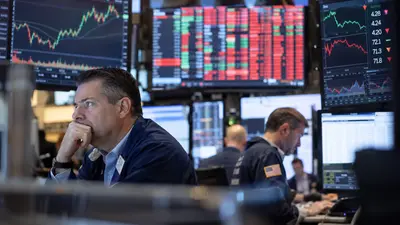
Yesterday was a big drop. How far has it fallen today? Gains that took years to build can vanish in a few days. Even people committed to long-term investing feel it in the gut.
Normally, the plan is not to fixate on daily prices. Own good companies for a long time. But once the market starts to shake, conviction shakes with it.
A small bounce makes it seem the worst is over. Another drop brings regret for having hoped. The more news you read, the more worrying stories you find. Some say sell now. Others call it a once-in-a-lifetime buying chance.
Neither camp is comforting.
On days like this, no amount of market analysis makes the anxiety go away. Nobody can say for sure whether the decline is a passing correction or the start of something bigger.
Nor does the answer have to arrive today. The time we invest over does not end with one session.
We spent similar days only a few years ago
There is no need to go back to the financial crisis. In just the past few years, the US stock market has tested investors several times.
Take 2022. Inflation surged and the Federal Reserve raised rates quickly. Tech stocks that had been prized for growth fell hard. The S&P 500 dropped about 25% from its January high to its October low, and the Nasdaq went through a far deeper correction.
Pessimism was everywhere. No one knew when the hikes would end, and fears of recession ran high.
Then time passed. The S&P 500 regained its previous record close in January 2024. The path was not smooth. Rallies faded into new declines, and the wait for recovery was longer than many expected.
April 2025 brought something similar. US tariff policy rattled financial markets. Major indexes fell sharply within days, and worries grew that the global economy could be thrown into turmoil again. As tariff policy shifted and negotiations advanced, the market found its way back.
Looking back, the fear of that moment feels a little distant. But for people holding stocks then, it was not a light time. It may not have been so different from what investors feel now.
A past recovery does not guarantee a quick one this time. Even if the overall market climbs again, not every individual stock regains its old price.
Still, looking back has value. Hard stretches that seemed endless did pass. And once time has gone by, most of us no longer remember the daily moves we took so seriously.
The market will test us many more times
This correction is probably not the last. Recession worries will return, and rates could rise again. An industry everyone now expects to grow may develop more slowly than hoped. Technologies and companies nobody saw coming may lead the market instead.
That is how markets work. Good companies do not rise in a straight line. Firms with strong earnings fall along with the market when sentiment sours. Even when the long-term growth case holds, prices can adjust in the short run because expectations ran too high.
Being optimistic about the future of AI and semiconductors does not mean every company in those industries must rise every day.
Anyone investing for the next 10 or 20 years will likely face many more days like this one. If each of them shakes you this much, investing becomes exhausting.
So some getting used to it is needed. At first, even a 3% drop is uncomfortable. After several corrections, it becomes easier to separate the stock's price from the company's value.
Calm does not come automatically with time, though. It is possible only when you invest within the amount of assets and risk you can bear.
Volatility cannot be removed. But it is possible to learn how to invest so that it does not upend daily life. That is likely one of the key skills a long-term investor has to build.
Doing nothing can be the harder move
When prices fall sharply, it is easy to feel something must be done. Sell now to cut losses. Or buy more because prices have dropped.
Either way, a quick decision seems likely to bring relief. But a decision made to quiet anxiety is not necessarily a good investment decision.
If you held a company yesterday with a five-year horizon, a lower price today does not erase its next five years.
If something real has changed in its sales, profits, competitiveness or industry outlook, it deserves a fresh look. If no such change has been confirmed, there is no need to rush to a conclusion based on one day's price.
Sometimes doing nothing is the hardest investing action. Do not sell. Do not stretch to buy more. Live as usual and check in only when something important changes at the company.
There is no need to watch prices every hour, read every piece of market news, or answer every pessimistic forecast.
Read a favorite book, take a walk, have dinner with family. The market will keep moving. It may fall further. On some day it may jump for no clear reason.
You do not have to react to every move, and your time as an investor does not stop. Investing for the long run is less about watching prices for a long time and more about finding a way to stay in the market for a long time.
Keep the lessons from this one
This decline will be forgotten in time. But not every uncomfortable memory should go. A market under stress is a good moment to review how you invest.
First, debt. Anyone who was force-liquidated, or came close, while investing with margin or a loan against their stocks should remember this experience for a long time.
Even a good company's stock can fall further than expected. If shares are sold by force over a collateral shortfall before the recovery, the chance to wait is gone.
One of the most painful outcomes in investing is being right about a company and still not benefiting because of cash needs. It may be worth setting a rule never again to depend on margin loans or stretched borrowing.
Second, excessive concentration. It is reasonable to believe AI will be an important industry. Many investors are positive on the long-term growth of AI and semiconductors.
But liking an industry's future is different from putting most of your assets in it. Buy Nvidia because it is good, collect chip stocks because semiconductors look promising, add AI ETFs because AI is growing, and a long list of holdings can amount to a bet on one outlook.
Even if that outlook proves right, the ride can include losses that are hard to bear. When many tech stocks wobble together, as now, some investors find their portfolio leans further to one side than they thought. If so, the fix is to rebalance a bit.
Finally, impatience. The thought that you must earn a set amount this week, a set percentage this month, or hit a target before the year ends.
At first such goals can sharpen motivation. Over time they can keep an investor rushing. The market does not pay out on the dates we choose.
Even good companies can take years to rise, and can trade sideways far longer than expected. Rather than put a deadline on returns, it may be better to build habits you can keep up.
A more comfortable way to invest from here
The method is less complicated than it sounds. Start by dividing your assets into a few roles.
Keep industries with long-term growth potential, such as AI and semiconductors, as the portfolio's growth engine. Hold index ETFs that track growth across the US economy and companies as a core asset. Mix in dividend ETFs and cash equivalents.
One example: 25% in AI and semiconductors, 35% in index ETFs such as SPY and QQQ, 20% in dividend ETFs, 5% in high-risk individual growth stocks and ETFs, and 15% in cash equivalents.
That is not the right answer. The point is to keep the whole portfolio from swinging too far if any one industry or company moves against expectations. SPY and QQQ also hold large tech stocks, so the real overlap with AI-related assets should be checked. Dividend ETFs are stocks too, and can lose money.
Once the basic structure is set, the next ingredient is consistency. Dollar-cost averaging (DCA) helps here.
It means investing a fixed amount on a set date every month. If you invest a set sum each month, you buy fewer shares when prices are high and more when they are low.
DCA does not prevent losses. If the market keeps rising, investing a lump sum early could earn more.
Still, for people who invest savings regularly, DCA can be a useful habit. There is no need to worry whether today is the bottom or to guess next week's price.
Invest steadily to fit your means, in good markets and bad. Review the portfolio once or twice a year and trim whatever has drifted far from the original weights. Even that much can make investing far simpler.
Investing is a long game
We often treat investing like a short match. A good month feels like success. A few weeks of losses feel like all the effort was wasted.
But investing is probably not something to judge over such short stretches. It continues for 10 years, 20 years, perhaps a lifetime.
How many bull and bear markets will come in that time? How many new companies will emerge, and how many of today's promising ones will lose out to competition?
Many of today's worries will look quite different in a few years. The rate-hike fear of 2022 did, and so did the tariff shock of 2025, as each moved into a new phase.
This correction will also become the past. When and how, no one knows. That is why not overreaching matters all the more.
Invest money you can leave alone even if the market does not recover on your schedule. Diversify enough that trouble at one company does not upset your life. Build a structure that lets you go about your day as usual even when prices are falling.
Invest that way and your attitude toward declines may change. Losses will not be welcome, but they may be less frightening than before.
You may even reach a point where today's price carries no special meaning, and the day passes like any other.