Is Space Cooler for AI? Why Musk Wants Data Centers in Orbit

The next limit on AI may be power and cooling, not GPUs. Elon Musk is looking to Earth orbit for an answer, but the test is cost per hour of compute.
Is Space Cooler for AI? Why Musk Wants Data Centers in Orbit

The 20-second read

1
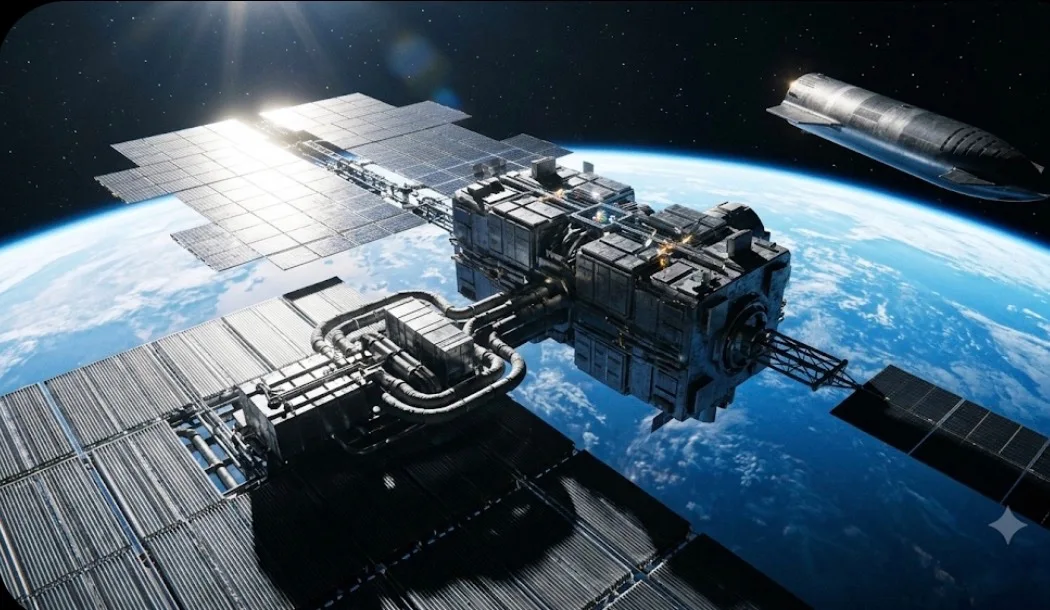
Musk said each square meter of solar panel produces about 250W, and each square meter of radiator facing away from the sun can shed about 1,300W. The core idea is to solve both power generation and heat rejection in space.
2
SpaceX's published AI1 expansion design lists average compute power of 175kW and a peak of 250kW. But these are published design specs, not commercial operating results.
3
The deciding variables for investors are not the temperature of space but Starship's actual per-unit shipping cost, satellite lifespan, compute revenue and maintenance costs.

How do you cool an AI chip in a vacuum?

In a vacuum, no air carries heat away by convection. That is why space is often described as hard to cool, and the description is correct. But convection is not the only way to shed heat. Hot objects also emit energy as infrared light, a process called thermal radiation.

Data centers on Earth move heat with coolant, fans and cooling towers. In space, the design would carry heat from the chips through a liquid loop to a large radiator panel. The panel's surface then radiates infrared into the dark. Real spacecraft already use this principle.

The cooling chain

  1. AI chip: computing generates heat.
  2. Cooling loop: moves the heat to the radiator.
  3. Space radiator: releases the heat outward as infrared radiation.

Note: the vacuum itself does not absorb heat. Radiator performance depends on surface temperature, emissivity, panel orientation, and radiation arriving from the sun and Earth.

So space is not a free refrigerator. It is a place where a different cooling system can work, provided heat can be gathered and released from a large surface.

Making 250W, shedding 1,300W

On Nov. 3, Musk posted figures on X: about 250W of power per square meter of solar panel and about 1,300W of heat rejection per square meter of radiator. The ratio is roughly 5.2 to 1. For the same power level, that suggests the solar array could be much larger than the radiator.

  • Solar panel power density: 250W/m² (Musk's design assumption)
  • Radiator heat rejection: 1,300W/m² (an assumption that depends on orientation and temperature)

The ratio does not translate directly into the finished satellite's area ratio. Power used by things other than AI chips, generation efficiency, whether both sides of the radiator are used, incoming heat and operating margins all have to be counted. An earlier description of the initial AI1 design assumed about 1,400W/m² of heat rejection.

The numbers matter for another reason. They suggest the largest structures on an orbital AI data center may not be the chip servers. They may be the solar panels that make power and the radiators that dump heat.

AI1 is a specific design, not science fiction

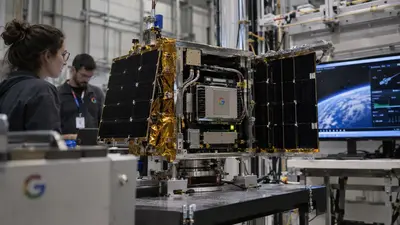
SpaceX presents its AI computing satellite project as Starmind. The initial design showed average compute power of 120kW and a peak of 150kW. A later expanded design on the company website lists an average of 175kW and a peak of 250kW. Width grew from about 70m to about 75m.

  • AI1 expanded design, average compute power: 175kW (company design)
  • AI1 expanded design, peak compute power: 250kW (company design)
  • Deployed wingspan: 75m (expanded design)
  • Mass deployment plan: from late 2027 (company target)

SpaceX plans to use solar array, satellite manufacturing and laser communications technology built up through Starlink. It also says it will build an AI satellite factory in Bastrop, Texas, and pursue mass production and deployment from late 2027. A published design is one thing. Launching and operating at the planned scale is another.

The test is Starship's shipping economics, not cooling

On Earth, building a data center means solving grid connection, land, water and permits. Space avoids some of those limits but adds new costs. Solar panels, radiators, AI chips and radiation shielding all have to be lifted into orbit.

  • Ground data center: the core constraints are grid connection, cooling equipment, permits and water use.
  • Orbital data center: the core constraints are launch cost, mass, radiation, communications and maintenance.

This is where Starship matters. If payload per launch rises and the cost of repeat launches falls far enough, the economics of large space infrastructure could change. But on top of the cost of building a satellite, launch, insurance, replacement, communications and orbital operations all count. The real cost per unit of compute has to be competitive with the ground.

The question, in the end, is not whether space is colder than Earth. It is whether the total cost of delivering one hour of AI compute in space can fall below the ground price.

What it means for Tesla investors

SpaceX's AI satellite plan also mentions a joint project with Tesla on an AI chip production facility. That points to possible cooperation on manufacturing, semiconductors and power technology.

It would be a stretch, though, to say orbital data centers translate into Tesla revenue or cash flow. What matters to Tesla shareholders is the actual contract structure of any joint project, the investment burden, the supply relationship and how profits are split. It also has to be confirmed what economic rights, if any, SpaceX's success gives Tesla shareholders.

Four numbers to watch

  1. Starship's actual cost per launch and payload mass. The starting point for the initial installation cost of an orbital data center.
  2. AI1's sustained compute output and utilization. Whether the published average output holds in actual orbit.
  3. Satellite lifespan and replacement cycle. How GPU aging, radiation and debris collisions affect long-run cost.
  4. Compute service revenue and cost per unit. The evidence for whether this has moved from a technology demonstration to a profitable commercial service.
If space is minus 270 degrees, does cooling happen on its own?
  • No. There is no air convection in a vacuum. Heat from the chips has to be carried to a radiator and emitted as infrared, and sunlight and heat radiated from Earth must also be taken into account.
Is it enough for the radiator to be 5 times smaller than the solar panel?
  • A simple comparison of Musk's two per-area output assumptions gives a difference of about 5.2 times. In an actual design, temperature, emissivity, use of both sides of the radiator and system losses all have an effect.
Is AI1 already operating commercially?
  • SpaceX has published AI1's design specs and its plan for mass deployment. The output figures cited in this article are based on the published design and should not be read as commercial operating results.
If SpaceX's space AI business grows, do Tesla shareholders benefit directly?
  • The partnership alone does not tell us. You would need to check the actual contracts, Tesla's supply or ownership ties, capital investment and profit sharing.

What to watch

Starship launch cost and payload massHow far the cost per launch falls will determine the initial installation cost of an orbital data center.
AI1 sustained power and uptimeThis is the metric for checking whether the published average power holds up in actual orbit.
Satellite lifespan and replacement cycleThis shows how GPU aging, radiation and debris collisions affect long-term costs.
Compute revenue and unit costThis is the basis for judging whether the business has moved from a technology demonstration to a profitable commercial service.
The decisive question for space data centers is not how cold space is, but whether the total cost of one hour of compute can fall below the ground-based price.

Insight Times Editorial Desk
More by topic

Starting with this story's topics, then what readers are following now

Investor psychology, decision-making and books on investing

Data Centers

This story's topic93 storiesSee all →

A building that houses servers and networking gear and supplies them with powe…

US AI Data Centers Are Headed for 90GW. Gigawatts Now Matter More Than Dollars

Goldman Sachs expects US data center capacity to grow from 64GW at the end of 2026 to 90GW at the end of 2027. The AI race is moving from buying GPUs to building power plants and transmission lines alongside them.

Tech

Why the White House Swapped "AI" for "Super Intelligence"

Executive Order 14434 renames AI across the federal government without defining a new technology. The real story is about roughly $700 billion in capex, free cash flow and electricity.

Tech

Nvidia's Next Target After GPUs: Controlling What AI Agents Are Allowed to Do

OpenShell and Sentry are not about policing what an AI says. They are about controlling, at the server infrastructure level, which files and APIs an AI can touch, what it can execute, and who can actually pull the plug when something goes wrong.

Tech

2027 Investing Needs Alignment, Not Prediction

A new investing book argues the hard part was never picking the next winner. It's staying aligned with where value and bottlenecks are moving while keeping old human weaknesses in check.

Investor Mind

AMD Crossed $1 Trillion, and the Market Started Looking at CPUs Again

AMD's stock topped a $1 trillion market cap for the first time. The rally isn't just about being an Nvidia alternative. It reflects a reassessment of AMD as a full-stack AI infrastructure vendor, one that bundles CPUs, GPUs and networking, as AI shifts from chatbots to agents and reignites data center demand for CPUs.</deck> <parameter name="oneline">As AI moves from chatbots to agents, the market has started counting the CPU sitting next to the GPU again.

Tech

Why Nebius Is Keeping Some 2027 AI Capacity Off the Shelf

Nebius mixes long-term contracts, short-term premiums and auctions. Holding back capacity pays only if the servers stay busy, and it is not yet clear the pricing will last.

Tech

DeepSeek's $15 Billion Raise: Model Makers May Feel It Before Nvidia Does

China's DeepSeek is closing a round about twice its original target. For US investors, the question is less the size of the check than where the money goes and whose profits it could erode.

Tech

GPU

This story's topic63 storiesSee all →

A chip built to draw graphics, whose ability to run thousands of identical cal…

Amazon Goes After Nvidia's Strongest Moat, and It Is Software, Not GPUs

Amazon's open-source TorchNeuron aims to let existing AI code run on its Trainium chips. The contest comes down to the total cost of AI compute and the return on Amazon's $220 billion in annual capital spending.

Tech

HBM

75 storiesSee all →

Memory stacked next to the GPU.

Has Memory Peaked? Prices Are Cooling, but the Shortage Looks Set to Run to 2028

Price growth has slowed and consumer demand is already breaking. Server and HBM supply remains short, and Micron says more than 75% of its 2027 volume is already committed to customers.

Tech

AI Chip Peak Check: Demand Still Rising, Risk Building in 2027-2029 Supply and Funding
DRAM and NAND contract prices are still climbing and HBM suppliers hold the edge. Power shortages, AI financing costs and simultaneous memory expansion are the risks for later years.

Investing

2027 Isn't the End: Citi's Case for a Memory Supercycle Running to 2031

Citi says the memory shortage timeline is stretching again. If AI shifts from "train once" models to continual learning, HBM, server DRAM and enterprise SSDs could all fall short at the same time.

Tech

AI Chips Haven't Peaked. The Real Risk Sits in 2028 Supply

HBM and server DRAM shortages are now spreading into enterprise SSDs. The question isn't today's strength, it's how much new capacity these prices are pulling in and when it lands.

Investing

Memory Chip Supercycle: Not at Peak Yet, But 5 of 6 Warning Signs Are Flashing

Memory prices are still climbing, but the pace is slowing and PC and smartphone demand is starting to crack under the weight of higher chip costs. This looks less like a price peak and more like a profit plateau building toward the next supply cycle.

Investing

China's DRAM Push Tests the Memory Supercycle for SK hynix, Samsung and Micron

Memory looks tight through 2027, with oversupply a risk from 2028. Investors in AI chips need to keep the two timelines apart.

Tech

The Real ASML Number Isn't the 3% Pop, It's the 30% Capacity Hike

ASML's rally isn't just an AI trade. Customers are already locking in 2027 tool slots, and ASML is raising Low-NA EUV capacity by roughly 30% to keep up.

Investing

NVDA

87 storiesSee all →

ASML Is Discussing 2030 Orders. How Long Can the AI Chip Supercycle Last?

Despite bubble worries, ASML sees equipment shortages through 2028. Investors should watch future production capacity, not just today's orders.

Tech

Tesla Energy's 13.7GWh Paradox: Expectations Ran Faster Than Deployments

Q2 deployments recovered but margins collapsed. Q3 set a record for deployments and still missed estimates. The issue is not the size of AI power demand but how fast it converts into Tesla revenue and profit.

Tech

AI Data Centers' Next Bottleneck: Getting Power From the Grid to the GPU

Securing a gigawatt of power does not mean a gigawatt reaches GPU compute. The next fight in AI infrastructure is happening inside the data center, over how little electricity gets wasted before it reaches the chip.

Tech

The AI Bubble Question Has Changed: By Late 2026, It's ROIC Over GPUs

There is no sign yet that AI investment is slowing. If anything, hyperscaler spending forecasts keep climbing. But as the scale of that capital has grown, the market's question has shifted from "is AI growing" to "when, and how much, does this capital come back as cash."

Tech

The Question Markets Asked This Week: Who Controls the AI Bottleneck, Not Who Owns AI

The Fed hiked again and the 10-year topped 5 percent, but the center of the AI trade held. The market is no longer asking whether AI is growing, it is asking who controls memory, power and capital.

Tech

AI Raises Prices While It Is Being Built, and Lowers Them Only Once It Is Used

The buildout is pulling in chips, power, land and construction labor all at once, and that pushes prices up. The disinflation shows up later, if the tools actually change how work gets done.

Macro

TSMC's August number that matters is not 53%. It is September's threshold

TSMC posted its first month above NT$500 billion. The useful reading is not the growth rate but what September revenue has to be to hit the top of third-quarter guidance, and whether AI demand is still alive on the factory floor.

Tech