Marvell Bought AI's Highway. Wall Street Sold the Stock.

Marvell's roughly $115 billion all-stock deal for Lumentum is a bet on optical networking in AI data centers. Investors started with the price.
The 20-second read

1
Marvell agreed to acquire Lumentum at an enterprise value of about $115 billion. It is a large deal aimed at securing optical networking technology for AI data centers.
2
Lumentum shareholders will receive 4.5 Marvell shares each, and existing Marvell shareholders will own about 67% after the deal closes. Wall Street's main concerns are the purchase price and the dilution of existing shareholders' stakes.
3
What investors should check is earnings per share (EPS), cash flow and integration synergies, more than the combined company's revenue size. Even if the AI connectivity market grows, the returns that reach shareholders are a separate calculation.

1. What Marvell is buying is not AI compute

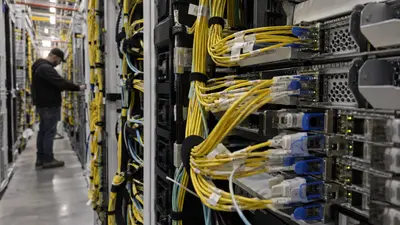
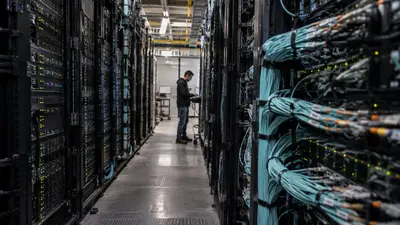
AI data centers need more than GPUs. For thousands of chips to compute at once, a network has to move data between them quickly.

Marvell has custom silicon, network switching and high-speed connectivity technology. Lumentum is strong in lasers, optical transceivers and optical circuit switching.

Put simply, Marvell supplies chip technology that handles the flow of data, while Lumentum supplies the core technology that carries data as light.

The deal rests on a judgment that competition in AI infrastructure is widening from compute performance to connection speed and power efficiency. The two companies put the addressable market of the combined business at $550 billion. That is the companies' own estimate of potential market size, not confirmed revenue.

2. $115 billion, the price Wall Street balked at

The key terms of the deal:

ItemTerms
Lumentum enterprise valueAbout $115 billion
Value per Lumentum shareAbout $1,132
Acquisition premiumAbout 23.9%
Exchange ratio4.5 Marvell shares per Lumentum share
Post-merger ownershipExisting Marvell holders 67%, Lumentum holders 33%
Targeted closingFirst half of 2028

Based on company announcements. The premium is calculated from both companies' closing prices on Oct. 28, 2026, before deal rumors spread.

Marvell is paying in its own stock, not cash. But skipping cash does not make the cost disappear.

Existing shareholders get a bigger company, but they own a smaller slice of it.

The issue is less the dilution itself than whether what they get in return is enough.

Marvell expects more than $1 billion in annual cost synergies after the merger, and growth in non-GAAP earnings per share starting in the first year after closing. Whether those gains materialize will have to be tested during integration.

3. Wall Street priced the deal before the AI future

Shares of both Marvell and Lumentum fell after the deal was announced on Nov. 2.

Reuters reported that investors worried about valuation multiples above those of peers and the burden of a large acquisition. What mattered was not only that the optical networking market is growing, but how much Marvell paid to secure that growth.

Even in a growth industry, an expensive acquisition can lower returns.

A high price can also be justified. That happens when the acquired technology produces a product edge rivals cannot easily match, and that edge turns into real customer orders and high profitability.

Marvell's deal will likely be judged by the same standard.

4. Three things to watch

  • Non-GAAP EPS growth: whether the first-year earnings-per-share growth Marvell has projected after closing actually arrives.
  • More than $1 billion in annual cost synergies: whether cutting duplicate costs and improving production efficiency turns into real profit gains.
  • Closing in the first half of 2028: shareholder approval from both companies, regulatory review, and then the pace of product integration and customer order growth.

The question this deal leaves is plain.

Companies buy future growth. Investors have to work out how much of that growth is left for each share they own.

Does Marvell's stock drop mean demand for AI optical networking has weakened?
  • It is hard to judge an industry demand slowdown from the stock's reaction to the deal announcement alone.
  • In this deal, the purchase price and the payment structure are key factors in how it is judged.
Is it a loss for existing Marvell shareholders if their stake falls to 67%?
  • A lower ownership percentage is a change in existing shareholders' share of the company.
  • If earnings per share and cash flow rise after the merger, shareholder value could increase.
Does acquiring Lumentum put Marvell ahead of Broadcom?
  • Competitiveness could improve, since Marvell would secure a broad range of optical components and chip connectivity technology.
  • Customer adoption, product performance and profit margins will determine the real competitive advantage.
What should long-term investors focus on most?
  • Whether per-share economics improve after the acquisition, more than the stock price right after the announcement.
  • An approach that tracks share count, profit margins and cash flow along with revenue growth.

What to watch

Non-GAAP EPSCheck whether the increase in the first year after closing, as Marvell has stated, shows up in actual results.
$1 billion in annual cost synergiesCheck in quarterly results whether cutting duplicate costs translates into better earnings.
Shareholder approval and regulatory reviewWatch whether the approval process stays on track for the target close in the first half of 2028.
Growing customer ordersWatch whether optical networking orders increase after products are integrated, which would help justify the high price.
Marvell bought the connective tissue of AI data centers, but the market weighed the price paid before the growth outlook.

Insight Times Editorial Desk

More by topic

Starting with this story's topics, then what readers are following now

Investor psychology, decision-making and books on investing

Data Centers

This story's topic90 storiesSee all →

A building that houses servers and networking gear and supplies them with powe…

US AI Data Centers Are Headed for 90GW. Gigawatts Now Matter More Than Dollars

Goldman Sachs expects US data center capacity to grow from 64GW at the end of 2026 to 90GW at the end of 2027. The AI race is moving from buying GPUs to building power plants and transmission lines alongside them.

Tech

Why the White House Swapped "AI" for "Super Intelligence"

Executive Order 14434 renames AI across the federal government without defining a new technology. The real story is about roughly $700 billion in capex, free cash flow and electricity.

Tech

Nvidia's Next Target After GPUs: Controlling What AI Agents Are Allowed to Do

OpenShell and Sentry are not about policing what an AI says. They are about controlling, at the server infrastructure level, which files and APIs an AI can touch, what it can execute, and who can actually pull the plug when something goes wrong.

Tech

2027 Investing Needs Alignment, Not Prediction

A new investing book argues the hard part was never picking the next winner. It's staying aligned with where value and bottlenecks are moving while keeping old human weaknesses in check.

Investor Mind

AMD Crossed $1 Trillion, and the Market Started Looking at CPUs Again

AMD's stock topped a $1 trillion market cap for the first time. The rally isn't just about being an Nvidia alternative. It reflects a reassessment of AMD as a full-stack AI infrastructure vendor, one that bundles CPUs, GPUs and networking, as AI shifts from chatbots to agents and reignites data center demand for CPUs.</deck> <parameter name="oneline">As AI moves from chatbots to agents, the market has started counting the CPU sitting next to the GPU again.

Tech

Why Nebius Is Keeping Some 2027 AI Capacity Off the Shelf

Nebius mixes long-term contracts, short-term premiums and auctions. Holding back capacity pays only if the servers stay busy, and it is not yet clear the pricing will last.

Tech

DeepSeek's $15 Billion Raise: Model Makers May Feel It Before Nvidia Does

China's DeepSeek is closing a round about twice its original target. For US investors, the question is less the size of the check than where the money goes and whose profits it could erode.

Tech

Semiconductors

This story's topic56 storiesSee all →

The whole business of designing, fabricating and testing chips.

Memory Chip Supercycle: Not at Peak Yet, But 5 of 6 Warning Signs Are Flashing

Memory prices are still climbing, but the pace is slowing and PC and smartphone demand is starting to crack under the weight of higher chip costs. This looks less like a price peak and more like a profit plateau building toward the next supply cycle.

Investing

Valuation

This story's topic32 storiesSee all →

Measuring where a share price sits relative to the company’s results.

Anthropic's IPO: The Number That Matters More Than $100 Billion Is $2 Trillion

Claude-maker Anthropic is growing at a stunning pace, but the real question for investors is not how fast, only how long, and how much cash is left after GPUs and data centers.

Tech

Oil at $110, 10-Year Yield at 5%: The Discount Rate on Growth Stocks Is Rising Again

Brent crude spiked to $109.97 intraday and the US 10-year Treasury yield tested the 5% threshold. What matters is not the numbers themselves but that oil-driven inflation fears are pushing bond yields higher across the globe at once.

Macro

ARK Sets Tesla 2031 Target at $4,400, Betting on 8.1 Million Robotaxis and Optimus

ARK Invest's new model implies a $17.5 trillion market cap for Tesla by 2031. It reads less like a forecast than a scenario that assumes robotaxis and robots earn real money.

Tech

AI Needs to Find $1 Trillion a Year From Somewhere to Pay Back Its Capex

Saying AI capex is big is no longer the point. The harder question is what end users have to pay for the buildout to pencil out, and Goldman Sachs puts that number at roughly $1 trillion a year.

Tech

Year Five of the Bull Market: Why U.S. Stocks Aren't Expensive Yet, and What AI Chips and Power Must Deliver

U.S. stocks have gained about 117% since the October 2022 low. What happens next depends less on the bull market's age than on whether expected earnings, which lean heavily on AI semiconductors, turn into reality.

Investing

AI Can Lift More Than Stocks: It May Push Long-Term Yields Higher Too

The AI boom can grow the numerator of corporate earnings while also growing the denominator of the discount rate. Investors watching long-term Treasury yields now need to add "AI capital demand" to the Fed, inflation and the deficit.

Tech

Lam Research Revenue Jumped 54%. The Stock Fell 12%. Here Is Why

Record results and a sharp sell-off at Lam Research show a paradox of growth investing. The key question is not how fast a company grows, but how much investors paid for that growth.

Tech

M&A

This story's topic6 storiesSee all →