Why SpaceX Wants to Move Data Centers Into Orbit

Power is hard to find on Earth, and computers are hard to lift into space. Elon Musk is betting that cheaper Starship launches can flip that equation.
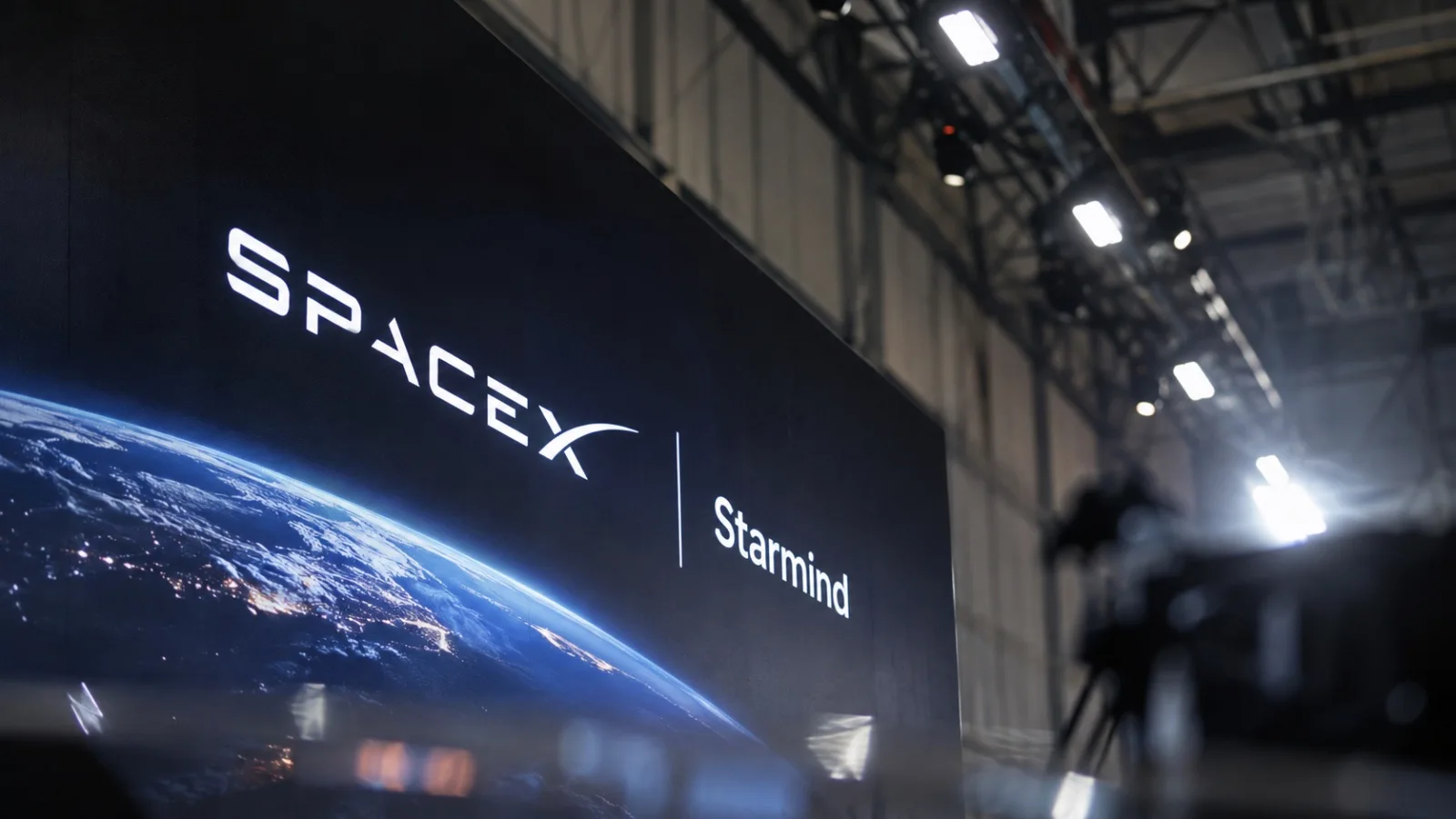
1. Why Musk wants data centers in space

The biggest bottleneck in AI is shifting from chip supply to power and infrastructure.

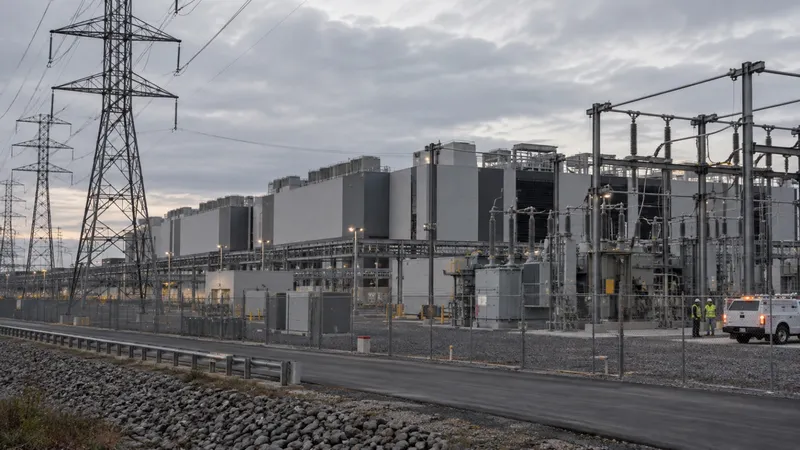
A ground-based data center needs more than GPUs. It needs large-scale power, cooling systems and a grid connection, and building one takes time.

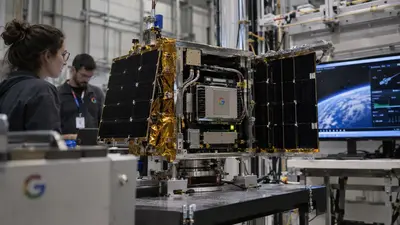
Musk wants to solve that constraint in orbit. The plan is to place satellites carrying large solar arrays and AI chips in sun-synchronous orbit. They would compute in space and send results to Earth over laser links and Starlink.

Key specifications of the AI1 satellite, as published by SpaceX:

SpecFigure
Average compute power175 kW
Peak power250 kW
Wingspan including solar panels75 m
Deployed height30 m

These are SpaceX's published design figures. They should be kept separate from the performance of any mass-produced unit or the net compute actually sellable to customers.

The design is interesting because each satellite acts as a small data center. About 5,714 satellites running at an average of 175 kW would add up to a nominal 1 GW.

But a failed GPU is hard to replace in space, and a vacuum rules out convective cooling. Generating power from sunlight matters, and so does a design that radiates the resulting heat away.

2. The number that matters more than 1 million satellites: 2028

SpaceX has filed with the FCC for a plan to operate up to 1 million satellites at altitudes of 500 to 2,000 km. The FCC accepted the filing and gathered comments. Acceptance does not mean final approval to operate.

What Musk stressed on Oct. 31 was not the total satellite count but the pace at which new AI compute is installed.

On his forecast, by the end of 2028 the compute newly deployed in space in a single month could exceed new deployments on the ground. In 2029, he argues, the gap widens.

One distinction matters here. This does not mean total compute in space would exceed existing ground data centers. It is a forecast that the pace of new supply would flip.

The first test is whether an initial launch at the end of 2027 and large-scale deployment in 2028 go as planned.

3. SpaceX's real edge is the rocket

Ground data centers build a great deal of infrastructure to get power. A space data center collects sunlight directly, but heavy chips and power equipment must be hauled into orbit.

That difference explains why Starship matters.

If Starship's mass transport and reuse become cheap enough, SpaceX could tie launch, satellite production, communications and AI compute into one business.

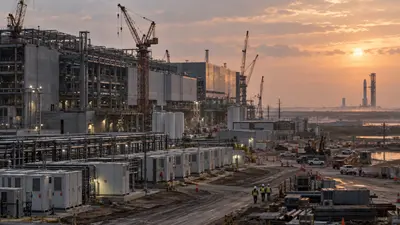
SpaceX is also developing a space-optimized system based on Nvidia's Vera Rubin NVL72, in cooperation with Nvidia. Its Gigasat factory in Bastrop, Texas, is the key facility preparing for mass satellite production.

Still, cheaper electricity than on the ground does not make AI compute cheaper overall. The comparison has to use total cost: launch, manufacturing, failures, replacement, communications and financing.

4. Who gains and who is challenged?

Company or industryLikely impact
SpaceXChance to expand from launch and Starlink into an AI compute provider
NvidiaPossible demand for space-specific AI chips on top of ground demand
TeslaNew supply chain opportunity if a joint chip production project takes shape
Ground data centersLong-term competitive pressure if some large AI workloads move to space
Power and cooling industriesCould keep benefiting from rising ground AI investment, though the very long-term demand mix may change

Not all compute will move to space. Workloads that move a lot of data, or that need very low latency, favor the ground.

Space may first prove economical for AI jobs that run heavy computation and send back only the results.

Orbital data centers aim to solve the power problem, but whether total cost will fall below ground-based compute is not yet confirmed.

Insight Times Editorial Desk

More by topic

Starting with this story's topics, then what readers are following now

Investor psychology, decision-making and books on investing

Data Centers

This story's topic89 storiesSee all →

A building that houses servers and networking gear and supplies them with powe…

US AI Data Centers Are Headed for 90GW. Gigawatts Now Matter More Than Dollars

Goldman Sachs expects US data center capacity to grow from 64GW at the end of 2026 to 90GW at the end of 2027. The AI race is moving from buying GPUs to building power plants and transmission lines alongside them.

Tech

Why the White House Swapped "AI" for "Super Intelligence"

Executive Order 14434 renames AI across the federal government without defining a new technology. The real story is about roughly $700 billion in capex, free cash flow and electricity.

Tech

Nvidia's Next Target After GPUs: Controlling What AI Agents Are Allowed to Do

OpenShell and Sentry are not about policing what an AI says. They are about controlling, at the server infrastructure level, which files and APIs an AI can touch, what it can execute, and who can actually pull the plug when something goes wrong.

Tech

2027 Investing Needs Alignment, Not Prediction

A new investing book argues the hard part was never picking the next winner. It's staying aligned with where value and bottlenecks are moving while keeping old human weaknesses in check.

Investor Mind

AMD Crossed $1 Trillion, and the Market Started Looking at CPUs Again

AMD's stock topped a $1 trillion market cap for the first time. The rally isn't just about being an Nvidia alternative. It reflects a reassessment of AMD as a full-stack AI infrastructure vendor, one that bundles CPUs, GPUs and networking, as AI shifts from chatbots to agents and reignites data center demand for CPUs.</deck> <parameter name="oneline">As AI moves from chatbots to agents, the market has started counting the CPU sitting next to the GPU again.

Tech

Why Nebius Is Keeping Some 2027 AI Capacity Off the Shelf

Nebius mixes long-term contracts, short-term premiums and auctions. Holding back capacity pays only if the servers stay busy, and it is not yet clear the pricing will last.

Tech

DeepSeek's $15 Billion Raise: Model Makers May Feel It Before Nvidia Does

China's DeepSeek is closing a round about twice its original target. For US investors, the question is less the size of the check than where the money goes and whose profits it could erode.

Tech

NVDA

This story's topic85 storiesSee all →

Amazon Goes After Nvidia's Strongest Moat, and It Is Software, Not GPUs

Amazon's open-source TorchNeuron aims to let existing AI code run on its Trainium chips. The contest comes down to the total cost of AI compute and the return on Amazon's $220 billion in annual capital spending.

Tech

The US-China Summit Didn't Erase Taiwan Risk for Chip Stocks
Washington's Taiwan policy held, but roughly $14 billion in arms sales is still on hold. For AI chip investors, the summit reads less like risk removed and more like a fragile balance extended.

Macro

AI's Next Bottleneck Is Money, Not Chips

Broadcom is lending Anthropic up to $42 billion, and Nvidia wants to build a $500 billion market for loans backed by GPUs. The AI race may turn on what rate buyers pay to borrow.

Tech

ASML Is Discussing 2030 Orders. How Long Can the AI Chip Supercycle Last?

Despite bubble worries, ASML sees equipment shortages through 2028. Investors should watch future production capacity, not just today's orders.

Tech

Tesla Energy's 13.7GWh Paradox: Expectations Ran Faster Than Deployments

Q2 deployments recovered but margins collapsed. Q3 set a record for deployments and still missed estimates. The issue is not the size of AI power demand but how fast it converts into Tesla revenue and profit.

Tech

Why Nvidia Is Happy to Help Make AI Models Nearly Free

Falling model prices can squeeze model makers. For Nvidia, the number that matters is the total volume of tokens generated worldwide and the compute that produces them.

Tech

The Number That Matters More Than How Smart AI Gets

This week's AI models got stronger and cheaper at the same time. The chart long-term investors should watch isn't the weekly benchmark leader, it's the falling cost of finishing a task successfully.

Tech

TSLA

This story's topic41 storiesSee all →

The Cybercab is not a $30,000 car. Tesla is selling hours, not vehicles

No steering wheel, no pedals. The economics of Tesla's robotaxi turn on how many paid hours a day it runs, not on what it costs to build.

Tech

Why Tesla Jumped: Barclays Sets a $450 Target on SpaceX Merger Hopes

Hopes for a SpaceX merger moved the stock. Whether the rally lasts likely depends on how robotaxis turn into profit and cash flow.

Investing

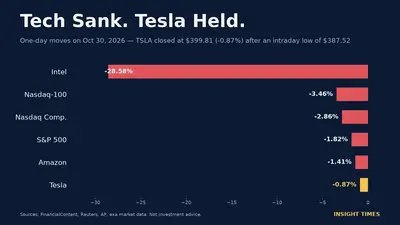
Dark navy bar chart titled 'Tech Sank. Tesla Held.' comparing one-day moves on Oct 30, 2026: Intel -28.58%, Nasdaq-100 -3.46%, Nasdaq Composite -2.86%, S&P 500 -1.82%, Amazon -1.41%, and Tesla -0.87% highlighted in gold.

Tesla Slipped Just 0.87% While the Nasdaq 100 Fell 3.46%. What Held It Up?

Tesla held up on a day of heavy tech selling. The reason is unconfirmed, and the long-term case rests on FSD, auto margins, energy and AI, not only a possible SpaceX merger.

Investing

Tesla and SpaceX: What Shareholders Should Watch in Musk's Next Chapter

A Roadster demo, a proposed stock gift to children and a new proxy-voting program have fueled merger talk. No deal has been announced, and the exchange terms would matter more than any one price.

Investing

The AI Bubble Question Has Changed: By Late 2026, It's ROIC Over GPUs

There is no sign yet that AI investment is slowing. If anything, hyperscaler spending forecasts keep climbing. But as the scale of that capital has grown, the market's question has shifted from "is AI growing" to "when, and how much, does this capital come back as cash."

Tech

Musk's Real AI Strategy Isn't the Model, It's a Chips-to-Space Physical Stack

On the All-In Summit stage, Elon Musk and Gwynne Shotwell laid out AI peer review, Terafab, Starship, and orbital data centers as if they were separate topics. Strung together, they reveal Musk betting the AI race is decided less by who builds the smartest model and more by who can deploy intelligence at the lowest cost and largest scale.

Tech

Tesla's FSD Clears Eight European Countries. The Number That Matters Now Is Paid Conversion

European regulatory barriers for FSD Supervised are falling. But investors who lump supervised software revenue together with the value of driverless robotaxis risk pricing the same news twice.

Tech

HBM

75 storiesSee all →

Memory stacked next to the GPU.

Has Memory Peaked? Prices Are Cooling, but the Shortage Looks Set to Run to 2028

Price growth has slowed and consumer demand is already breaking. Server and HBM supply remains short, and Micron says more than 75% of its 2027 volume is already committed to customers.

Tech

AI Chip Peak Check: Demand Still Rising, Risk Building in 2027-2029 Supply and Funding

DRAM and NAND contract prices are still climbing and HBM suppliers hold the edge. Power shortages, AI financing costs and simultaneous memory expansion are the risks for later years.

Investing

2027 Isn't the End: Citi's Case for a Memory Supercycle Running to 2031

Citi says the memory shortage timeline is stretching again. If AI shifts from "train once" models to continual learning, HBM, server DRAM and enterprise SSDs could all fall short at the same time.

Tech

AI Chips Haven't Peaked. The Real Risk Sits in 2028 Supply

HBM and server DRAM shortages are now spreading into enterprise SSDs. The question isn't today's strength, it's how much new capacity these prices are pulling in and when it lands.

Investing

Memory Chip Supercycle: Not at Peak Yet, But 5 of 6 Warning Signs Are Flashing

Memory prices are still climbing, but the pace is slowing and PC and smartphone demand is starting to crack under the weight of higher chip costs. This looks less like a price peak and more like a profit plateau building toward the next supply cycle.

Investing

China's DRAM Push Tests the Memory Supercycle for SK hynix, Samsung and Micron

Memory looks tight through 2027, with oversupply a risk from 2028. Investors in AI chips need to keep the two timelines apart.

Tech

The Real ASML Number Isn't the 3% Pop, It's the 30% Capacity Hike

ASML's rally isn't just an AI trade. Customers are already locking in 2027 tool slots, and ASML is raising Low-NA EUV capacity by roughly 30% to keep up.

Investing