Tesla and SpaceX: What Shareholders Should Watch in Musk's Next Chapter
A Roadster demo, a proposed stock gift to children and a new proxy-voting program have fueled merger talk. No deal has been announced, and the exchange terms would matter more than any one price.
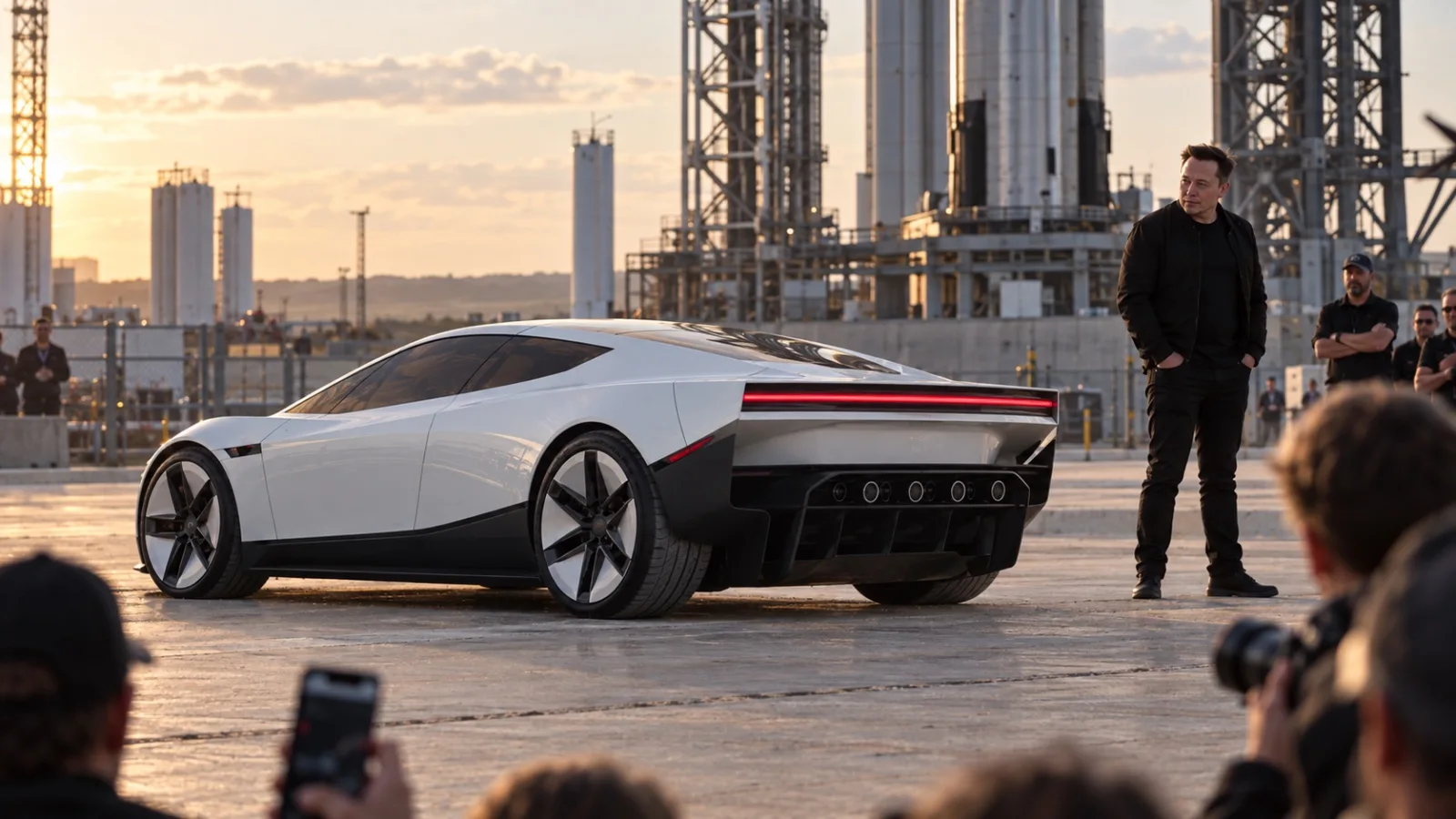
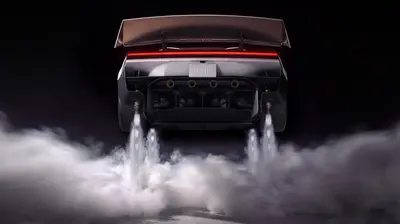
A Tesla Roadster lifted into the air. Elon Musk floated a plan to give SpaceX shares to American children. And Tesla introduced IVRVP, a program that makes it easier for individual shareholders to vote. A car, children and a shareholder meeting: three unrelated stories surfaced at about the same time.
Tie them together and a question follows. Are the AI, robotics and space technologies Musk has long pursued growing more closely linked? Wall Street is also analyzing the possibility of a Tesla-SpaceX merger. But no merger has been announced. Here is what can be expected, and what is already decided.
1. The Roadster showed more than a car's speed
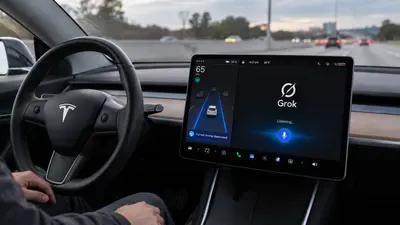
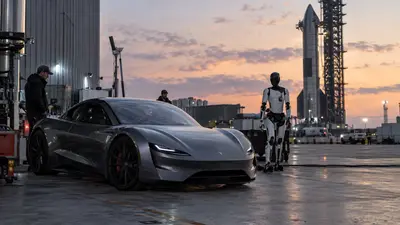
The demo, which applied SpaceX thrust technology to the Roadster, shows that the two companies' technologies can meet. Tesla develops electric vehicles, self-driving software, robots and batteries. SpaceX builds rockets, satellite communications and space infrastructure. xAI's artificial intelligence adds another link.
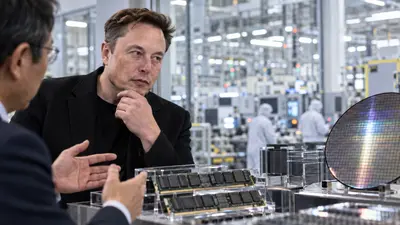
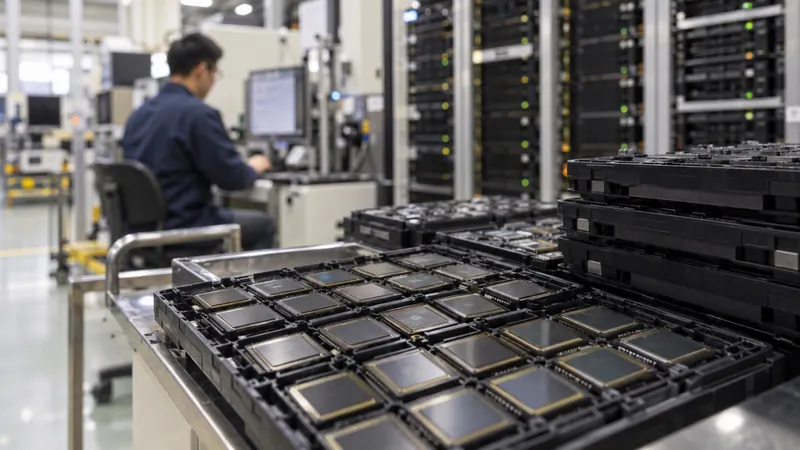
One can imagine robotaxis that drive themselves, Starlink helping with connectivity, and a stable supply of power and chips. The Terafab concept also points toward securing AI semiconductors over the long term.
That does not mean a merger is imminent. The two companies can remain separate entities and still expand technical cooperation. The question for investors is how much real cooperation could improve product performance, costs and revenue.
Technology links at a glance (conceptual diagram, not a confirmed merger)
- SpaceX + xAI: space, Starlink, AI
- Semiconductors and AI computing: the Terafab concept
- Tesla: robotaxi, Optimus, batteries
2. Why give stock to children
Musk's idea of gifting stock to children is unexpected, and very much his style. The pitch is to share the growth of a space company with the next generation. Suppose about 70 million people each received one share worth $150. The total would be about $10.5 billion. That is an illustration of scale, not a confirmed figure for any actual terms.
Owning stock from a young age could make people feel space development is tied to their own lives. The company's shareholder base could also widen. But there is little basis to read the plan as an effort to lock up votes for a merger in advance. A stock gift and a merger vote are separate matters.
Some read the plan as a way to introduce SpaceX to many American households and draw interest in the space industry and the company's growth from childhood. Whether it happens, and on what terms, remains to be confirmed.
About $10.5 billion = 70 million people × $150 per share. A simple scale calculation, not a confirmed payout.
3. Is IVRVP real, and how does it relate to this year's meeting?
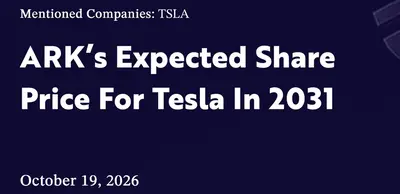
This can be checked against the SEC filing and Tesla's October 19 disclosure. IVRVP is real. Specifically, it is a voluntary program in which an individual shareholder consents in advance to have their shares voted at future shareholder meetings in line with the board's recommendation. On September 29, SEC staff issued a no-action letter saying it would not recommend enforcement action under the relevant rules if Tesla operates the program as described.
One fact matters here. The agenda for the 2026 annual meeting on December 3 does not include a Tesla-SpaceX merger. Enrolling in IVRVP at this meeting does not set automatic voting for this meeting. It applies from future meetings.
There are two choices. A shareholder can vote automatically with the board on every item, or exclude significant transactions that require shareholder approval, such as acquisitions and mergers, as well as contested director elections. Shareholders can vote directly or cancel the setting at any time.
IVRVP need not be seen simply as an "automatic yes" device. It is a meaningful attempt to address a long-standing problem: individual shareholders often do not take part. Still, if a major merger proposal does appear, it would be wise to read and decide on that item directly.
IVRVP in three points (based on Tesla's October 19, 2026 SEC additional proxy materials)
- December 2026 annual meeting: no merger item
- Automatic voting: applies from the next meeting onward
- Mergers and other major items: can be excluded from automatic voting
4. If there is a merger, how would Tesla shares be valued?
The merger story is interesting because of what the two companies might build together. But shareholders need to check one more thing: how much of the combined company their Tesla shares would be credited with.
Hypothetical Wall Street analyses have cited one case calculated around $370 per Tesla share and another assuming about $480. The $480 figure is not an official offer price. The $506 figure is a reference value, converting a specific market-cap hurdle in Musk's performance award into a per-share price. It is not a merger contract price.
More important than any figure is the exchange terms. If a deal gave shareholders SpaceX stock in place of Tesla stock, for example, they would need to look at both how many shares they receive and what those shares are actually worth.
Numbers that have appeared in merger scenarios
- Barclays base assumption: about $370
- RBC hypothetical takeover price: $480
- Per-share equivalent of the award's market-cap hurdle: about $506
Each figure is a different concept. None is an official merger price.
5. What matters more than the $480 figure
Take a hypothetical. Suppose one Tesla share is to be swapped for three SpaceX shares, and SpaceX trades at $160 at the time. The exchange value is $480. If SpaceX trades at $120 when the shares are actually received, the same three shares are worth $360.
That does not make a stock-swap merger bad. If the two companies grow together, the shares received could rise in value. The point is that the final stake and the terms matter more than one attractive number at the announcement.
Shareholders can check whether the exchange ratio adjusts for share-price moves, what happens to Musk's voting power after a merger, and how existing Tesla shareholders' rights would be preserved. Confidence in the future and shareholder questions can sit side by side.
Why the same three shares can differ in value (a hypothetical for illustration, unrelated to any confirmed deal)
- Day the swap is agreed: $480 (3 shares × $160)
- Day the shares are received: $360 (3 shares × $120)
6. In the end, how well the two companies grow
Tesla is expanding beyond cars into robotaxis, Optimus and energy storage. SpaceX is also investing heavily in Starlink and space infrastructure. Such businesses cost a lot at the start and take time to show results.
So investors need not look only at near-term earnings, nor only at the future story. The question is whether revenue is rising and whether money invested in factories and AI starts producing new cash. A key number here is free cash flow (FCF): the cash a company earns from its business minus what it spends on equipment and facilities.
For investors who back Tesla's bold push into AI and robotics, checking when that money turns into profit from real products and services may matter even more.
What to watch next
First, whether Tesla and SpaceX formally announce a merger. For now it is a matter of analysis and expectation.
Second, what products and services the two companies actually deliver through cooperation. Watch whether technical demos turn into revenue and cost savings.
Third, Tesla's capital spending and free cash flow. Check whether cash generation grows along with the future businesses.
Fourth, if a merger proposal does emerge, the share exchange ratio and shareholder rights. Look at whether the structure lets the value of a stake grow as the company grows.
Insight Times Editorial Desk