Why Musk Pointed to Chinese Memory, and What It Means for Samsung and SK hynix
Musk warned about China's ability to ramp output while also complaining about memory prices. Separating the technology race from a buyer's negotiating stance changes how the competitive picture looks for Korean memory makers.
The paradox in Musk's comments: why mention China while saying supply is short?
In mid-October, Elon Musk posted a run of views on X about RAM supply, China's ability to expand production quickly, and memory prices. To investors, it can sound like a plain technology forecast. But for companies building or planning large AI compute infrastructure, such as Tesla and xAI, memory prices directly shape costs and the speed of expansion.
When a buyer admits supply is tight, suppliers gain bargaining power. But when the same buyer says publicly that "China can scale production fast," it reminds the market that competing supply could emerge. The key point is that two messages arrive together: acknowledging today's shortage while stressing future supply growth.
This cannot be called a carefully designed pricing tactic with any certainty. Musk may genuinely be worried about Chinese chipmakers catching up. Still, economics can explain why a large buyer has an incentive to create a more favorable negotiating setup. The market should weigh a speaker's interests as well as the speaker's forecast.
The negotiating effect of diversified supply: why memory customers stress future alternatives
A chip buyer that leans too heavily on one supplier must accept higher prices and delivery delays in a shortage. When the number of qualifiable suppliers grows, there is room to negotiate price and volume in long-term contracts. The less a buyer depends on one supplier, the stronger its long-term pricing leverage. That is a basic principle of industrial purchasing.
The question is not only whether Chinese memory can replace the top-spec HBM that goes into Nvidia GPUs today. In markets with relatively broad supplier choice, such as PCs, general-purpose servers and system memory in some AI infrastructure, the prospect of Chinese output growth can itself become a reference point for future price talks.
In top-end HBM, by contrast, switching suppliers requires heavy validation and system integration work. Musk's comments may be a signal meant to influence memory pricing broadly, but that does not mean the same leverage appears instantly in every memory product.
The real threat from China's CXMT: how many hurdles lie between DDR5 and HBM?
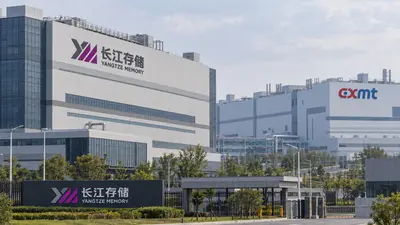
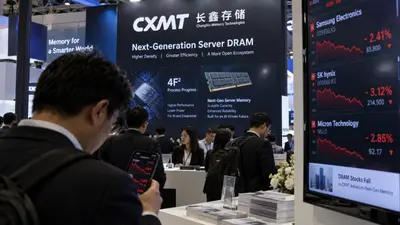
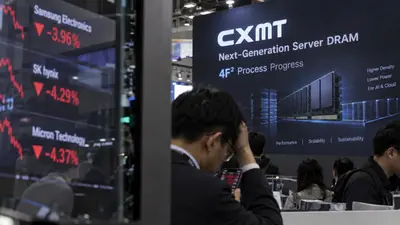
CXMT's plan for server DDR5 RDIMMs based on a 4F² cell design shows that China's goal is not limited to cheap DDR4. Shrinking cell area could affect density and cost competitiveness. But a design advantage on paper does not automatically translate into high mass-production yield or large-scale supply.
Judging this contest requires separating (1) product development, (2) yield and cost, (3) customer qualification and (4) stable high-volume delivery. Strong early sample performance can still be followed by a long validation process, and low yields make it hard to sustain a low-price push. A scenario in which Chinese capacity additions hit commodity DRAM prices first, then widen influence in server DDR5, is worth considering.
HBM3E and HBM4 are a different race. They combine through-silicon-via processes that stack multiple DRAM dies, heat and power management, advanced packaging, and joint validation with GPU customers. Even if CXMT launches a server DDR5 product, that does not mean it has secured comparable yield, qualification and supply reliability in advanced HBM in the short term. Nor should anyone assume the technology barrier lasts forever.
SK hynix and Samsung Electronics: same cycle, different advantages
SK hynix's core asset is its experience supplying advanced HBM tuned to customer platforms. A record of working with customers from the earliest design stage, adjusting yield, delivery timing and thermal characteristics, is hard to copy just by adding production lines. Investors should check whether that experience keeps feeding a rich product mix and operating cash flow through each HBM generation change.
Samsung's core asset is its vast DRAM manufacturing base and product range, plus room to strengthen its position in HBM. On Oct. 8, Samsung reported preliminary consolidated third-quarter 2026 revenue of about 195 trillion won and operating profit of about 107.4 trillion won. These are companywide consolidated figures, not semiconductor-only results, so they should not be read as HBM performance alone.
On Oct. 18, media reports said Samsung would use TSMC process technology for the base die of Nvidia's next-generation custom HBM. That should be kept separate from official mass-production qualification or a final supply volume. It can, however, be read as an example of Samsung's potential flexibility in adjusting how it manufactures to meet customer demands.
Both companies face the same China headlines, but the investment cases differ. For SK hynix, the question is how long its HBM lead lasts. For Samsung, it is how much it can strengthen its position in next-generation HBM while keeping DRAM profitability high.
The competitive picture at a glance: how China's supply growth affects Korean makers
Commodity DRAM
- Timeline of Chinese competition: CXMT's capacity additions can have a direct effect
- What investors should check: supply growth, contract prices, inventory
Server DDR5
- Timeline of Chinese competition: competition can widen after customer qualification
- What investors should check: RDIMM mass-production yield and delivery record
HBM3E / HBM4
- Timeline of Chinese competition: high barriers in technology, packaging and customer qualification
- What investors should check: customer qualification, supply volume, product mix
Where does pricing power in memory come from?
Memory is not a single commodity. Commodity DRAM is sensitive to supply volume, inventory and changes in contract prices. For server DDR5, customer qualification and the ability to deliver reliably matter most. Advanced HBM is tightly bound to customer platforms and hard to package, so supply cannot grow quickly. Even within the DRAM market, the power to set prices differs by product.
So if China caps the upper end of commodity DRAM prices, it cannot be assumed that HBM prices collapse at the same time. Conversely, HBM strength alone does not mean a drop in general DRAM prices leaves overall profitability untouched. Changes in revenue mix and margins by product are what matter.
That is why Musk's comments carry weight. Buyers want more suppliers, while suppliers defend pricing power with performance and qualification. The outcome of that tug of war will show up not in one line on social media but in deliveries, prices and margins over the next few quarters.
This article is analysis based on company filings and news reports and does not guarantee returns on any stock.
Insight Times Editorial Desk