SpaceX Revenue Up 14x in Two Years? What Investors Should Watch Instead

Sequoia Capital's Shaun Maguire sees SpaceX becoming a major AI compute company. The $731 billion figure matters less than how the business earns money, and what it costs to get there.
1. SpaceX is no longer just a rocket company

Most people hear "SpaceX" and think of rockets and Starlink.

Shaun Maguire, a partner at venture firm Sequoia Capital, sees a different future. In his view, SpaceX grows from rockets and satellite communications into a global AI computing company.

His revenue estimates:

SpaceX annual revenue forecast

YearRevenue
2026$51.5 billion
2027$274 billion
2028$731 billion

All figures for 2026 to 2028 are estimates from Maguire's financial model. They are not reported results or official company guidance.

Across the three years, revenue rises about 14.2 times. Maguire expects roughly $569 billion of the 2028 total to come from terrestrial AI data centers.

If those numbers became real, the yardstick for SpaceX would change. AI compute revenue and profitability would matter more than the number of launches.

2. Why could SpaceX be strong in AI?

The hardest problem in AI today is not only building a good model.

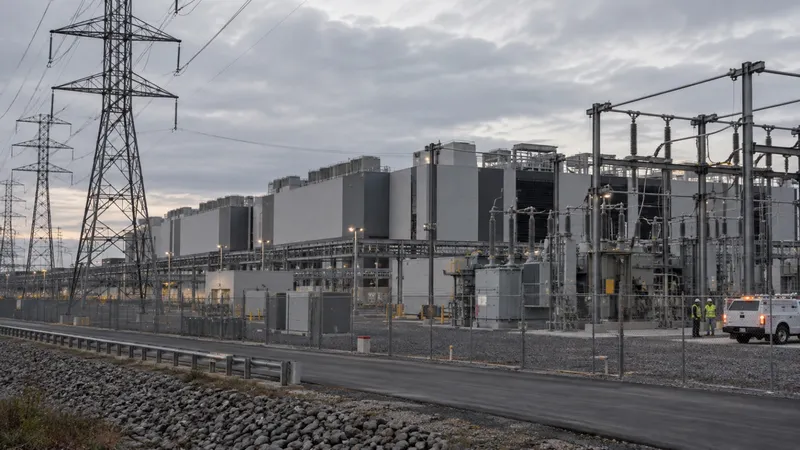
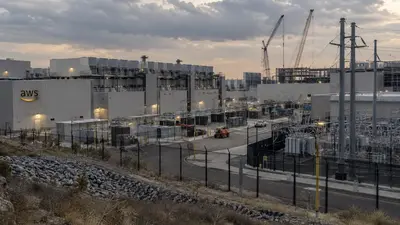
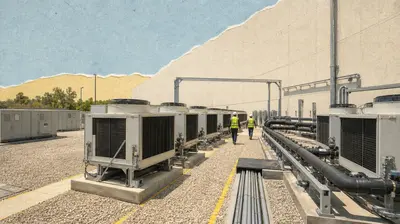
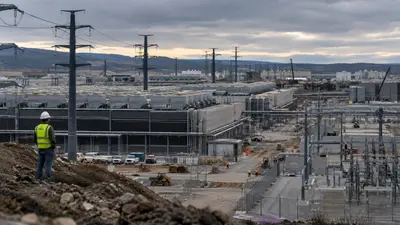
Someone has to build the data centers that run it. They need enormous amounts of electricity and cooling for the servers.

Money alone does not solve that quickly.

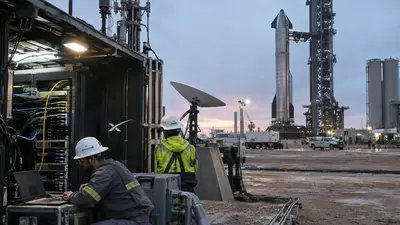
Maguire finds SpaceX's edge here. The company has developed complex technology in-house and built difficult facilities fast. That skill could help it expand AI data centers, he argues.

Then there is Starship.

If Starship can launch large numbers of satellites cheaply, Starlink's costs could fall. Over the long run, that would also help a space-based AI computing business.

Still, the competitiveness of ground-based AI data centers and of Starship launches should be judged separately. The two businesses can reinforce each other, but the conditions for success differ.

3. If revenue rises 14x, does the stock?

No.

One more number matters: capital expenditure.

Maguire's model has SpaceX investing about $369 billion in 2028 alone. That is how much building AI data centers could require.

If construction and operating costs rise faster than revenue, less profit reaches investors.

Share prices also reflect future growth in advance. Even if the revenue forecast is right, upside can be limited for someone who already paid a high price.

Three questions follow:

  • Can SpaceX expand its AI data centers as planned?
  • Are customers actually paying large sums?
  • After costs, is enough cash left over?

4. Three things to watch

  1. Real AI data center capacity: whether planned data centers are finished and serving actual customers.
  2. Starship launch cadence and cost: whether mass launches and reuse become routine business.
  3. Free cash flow: whether cash starts to remain even as heavy investment continues.

Bottom line

SpaceX is getting too big to judge by launch counts alone.

But a large future market does not automatically make a good investment.

Recognizing a good company and buying it at a good price are different problems.

For long-term investors, the better focus is less the glossy revenue forecast and more how that forecast turns into actual revenue and cash flow.

Even if the SpaceX revenue forecast proves right, investors still need to weigh capital spending, cash flow and the price they paid.

Insight Times Editorial Desk

More by topic

Starting with this story's topics, then what readers are following now

Investor psychology, decision-making and books on investing

Data Centers

This story's topic89 storiesSee all →

A building that houses servers and networking gear and supplies them with powe…

US AI Data Centers Are Headed for 90GW. Gigawatts Now Matter More Than Dollars

Goldman Sachs expects US data center capacity to grow from 64GW at the end of 2026 to 90GW at the end of 2027. The AI race is moving from buying GPUs to building power plants and transmission lines alongside them.

Tech

Why the White House Swapped "AI" for "Super Intelligence"

Executive Order 14434 renames AI across the federal government without defining a new technology. The real story is about roughly $700 billion in capex, free cash flow and electricity.

Tech

Nvidia's Next Target After GPUs: Controlling What AI Agents Are Allowed to Do

OpenShell and Sentry are not about policing what an AI says. They are about controlling, at the server infrastructure level, which files and APIs an AI can touch, what it can execute, and who can actually pull the plug when something goes wrong.

Tech

2027 Investing Needs Alignment, Not Prediction

A new investing book argues the hard part was never picking the next winner. It's staying aligned with where value and bottlenecks are moving while keeping old human weaknesses in check.

Investor Mind

AMD Crossed $1 Trillion, and the Market Started Looking at CPUs Again

AMD's stock topped a $1 trillion market cap for the first time. The rally isn't just about being an Nvidia alternative. It reflects a reassessment of AMD as a full-stack AI infrastructure vendor, one that bundles CPUs, GPUs and networking, as AI shifts from chatbots to agents and reignites data center demand for CPUs.</deck> <parameter name="oneline">As AI moves from chatbots to agents, the market has started counting the CPU sitting next to the GPU again.

Tech

Why Nebius Is Keeping Some 2027 AI Capacity Off the Shelf

Nebius mixes long-term contracts, short-term premiums and auctions. Holding back capacity pays only if the servers stay busy, and it is not yet clear the pricing will last.

Tech

DeepSeek's $15 Billion Raise: Model Makers May Feel It Before Nvidia Does

China's DeepSeek is closing a round about twice its original target. For US investors, the question is less the size of the check than where the money goes and whose profits it could erode.

Tech

CapEx

This story's topic67 storiesSee all →

Money a company spends on things it will use for years — plants, equipment, bu…

Amazon Goes After Nvidia's Strongest Moat, and It Is Software, Not GPUs

Amazon's open-source TorchNeuron aims to let existing AI code run on its Trainium chips. The contest comes down to the total cost of AI compute and the return on Amazon's $220 billion in annual capital spending.

Tech

Revenue

This story's topic8 storiesSee all →

What Matters More Than Tesla Semi's 2,500-Truck Order

Tesla was picked as lead supplier in the largest electric Class 8 truck group order in US history. The bigger story is that the fight in electric trucking is shifting from range to charging, financing, uptime and autonomy.

Tech

Why Microsoft Rebuilt Copilot: AI Billing Shifts From Seats to Workload

The redesign is less about new features than about Microsoft expanding its enterprise AI revenue model beyond the per-seat subscription into task delegation and agent execution.
Tech

AI Demand Is Proven. Now the $70 Billion Bill Comes Due

Oracle posted $19.3 billion in quarterly revenue and spent $28.5 billion on capex. The real question for the AI buildout is no longer whether demand exists, but how fast this spending turns into cash.

Tech

The money in AI runs two ways: one company pays for the power, the other sells it

Meta barely sells AI as a product. It recovers the value inside ad prices and time spent. Vertiv builds no models at all, and sells the power and cooling gear that keeps GPUs running. One side spends the capex. The other side books it as revenue.

Investing

AI Has Five Years to Find $4.2 Trillion in New Annual Revenue

The AI infrastructure question is no longer how many more GPUs to buy. It is how quickly the trillions already committed can produce enough cash flow.

Tech

AI Chips' Next Opening May Lie Beyond the GPU: What a 46% Jump in Optical Sales Says

A GPU is only as fast as the data reaching it. STMicroelectronics' results show why the links between chips matter as much as the chips.

Tech

AI's Real Turning Point May Not Be AGI. It May Be Profit.

Anthropic has reportedly told investors it expects two straight quarters of positive adjusted operating income. If true, it puts the first crack in the assumption that AI model companies can never make money because of GPU costs.

Tech

HBM

75 storiesSee all →

Memory stacked next to the GPU.

Has Memory Peaked? Prices Are Cooling, but the Shortage Looks Set to Run to 2028

Price growth has slowed and consumer demand is already breaking. Server and HBM supply remains short, and Micron says more than 75% of its 2027 volume is already committed to customers.

Tech

AI Chip Peak Check: Demand Still Rising, Risk Building in 2027-2029 Supply and Funding

DRAM and NAND contract prices are still climbing and HBM suppliers hold the edge. Power shortages, AI financing costs and simultaneous memory expansion are the risks for later years.

Investing

2027 Isn't the End: Citi's Case for a Memory Supercycle Running to 2031

Citi says the memory shortage timeline is stretching again. If AI shifts from "train once" models to continual learning, HBM, server DRAM and enterprise SSDs could all fall short at the same time.

Tech

AI Chips Haven't Peaked. The Real Risk Sits in 2028 Supply

HBM and server DRAM shortages are now spreading into enterprise SSDs. The question isn't today's strength, it's how much new capacity these prices are pulling in and when it lands.

Investing

China's DRAM Push Tests the Memory Supercycle for SK hynix, Samsung and Micron

Memory looks tight through 2027, with oversupply a risk from 2028. Investors in AI chips need to keep the two timelines apart.

Tech

The Real ASML Number Isn't the 3% Pop, It's the 30% Capacity Hike

ASML's rally isn't just an AI trade. Customers are already locking in 2027 tool slots, and ASML is raising Low-NA EUV capacity by roughly 30% to keep up.

Investing

Samsung, SK Hynix Sold Off on AI Fears. The Orders Haven't Followed Yet

The selloff reflects a market recalculating AI capex speed and memory earnings expectations, not confirmed cancellations. So far, the data show a gap between fear and reality.

Investing