Tesla Slipped Just 0.87% While the Nasdaq 100 Fell 3.46%. What Held It Up?
Tesla held up on a day of heavy tech selling. The reason is unconfirmed, and the long-term case rests on FSD, auto margins, energy and AI, not only a possible SpaceX merger.
1. Tech sold off, and Tesla cut its losses
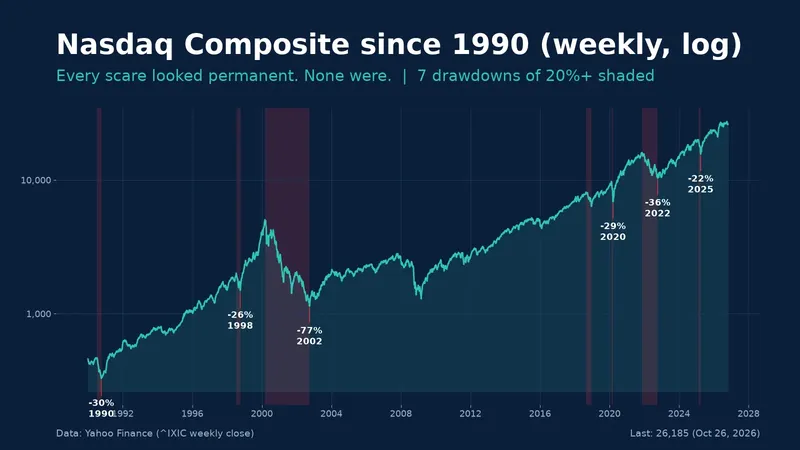
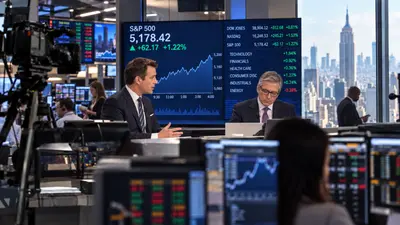
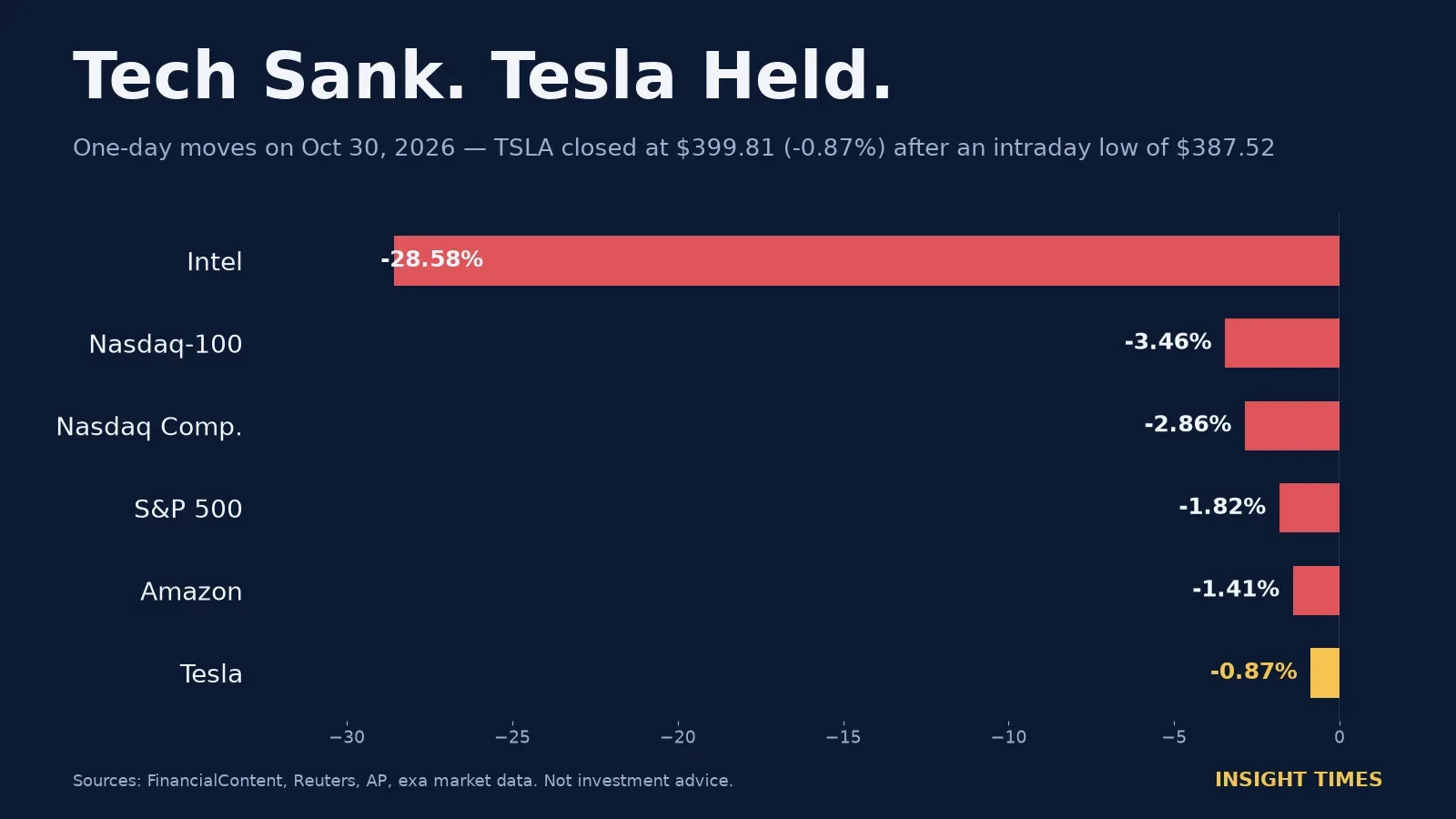
On Friday, Oct. 30, the US market was asking when the money poured into AI infrastructure would turn into profit. The Nasdaq Composite posted its biggest drop since June. Tesla's close told a different story from the market's.
| Index / stock | Change on Oct. 30 |
|---|---|
| Nasdaq 100 | -3.46% |
| Nasdaq Composite | -2.86% |
| S&P 500 | -1.82% |
| Intel | -28.58% |
| Amazon | -1.41% |
| Tesla | -0.87% |
Tesla fell from a prior close of $403.30 to $387.52 intraday, a drop of about 3.9%. It then closed at $399.81, about 3.2% above the intraday low. On a day when the market sold tech hard, Tesla's decline was relatively small.
That is a meaningful market reaction. But there is no confirmed evidence that net institutional buying or short covering drove the rebound. The fact that the stock held up is one thing. The explanation for why is another.
2. Musk's vision links several growth engines
Judging Tesla's future by vehicle sales alone misses something important. Musk's direction combines restoring auto profitability, widening the user base for the FSD driver-assistance software, and building out energy storage and AI and robotics.
FSD is the first of these to show up in numbers. The paid FSD take rate on new North American deliveries topped 75%, up about 20 percentage points from the prior quarter. Active FSD customers reached 1.74 million, up 67% from a year earlier. The figure combines one-time purchases and monthly subscriptions, with subscribers about half.
The possible shift is from a business that sells a car once to one that keeps a software relationship going after the sale. This is where long-term investors may find reason for optimism. But FSD (Supervised) requires driver supervision and is not the same as an unmanned robotaxi. Growth in FSD customers is not proof that driverless service is commercially ready.
3. Auto margin and cash flow: clues that could back up the optimism
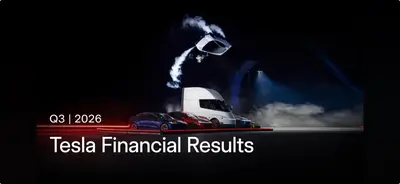
| Q3 2026 metric | Actual | Comparison |
|---|---|---|
| Revenue | $28.0 billion | Roughly flat year over year |
| Automotive gross margin | 18.1% | Excluding regulatory credits; 16.3% in prior quarter |
| Paid FSD take rate, North America | 75%+ | About +20 pts vs. prior quarter |
| Active FSD customers | 1.74 million | +67% year over year |
| Free cash flow | $1.531 billion | Prior quarter -$1.092 billion; -62% year over year |
| Operating income | $718 million | -56% year over year |
| Operating margin | 2.6% | Profitability still to be restored |
| Capital spending | $4.73 billion | +110% year over year |
| Energy revenue | -16% year over year | 2027 storage volume nearly sold out, per the company |
Automotive gross margin improved to 18.1% from 16.3% in the prior quarter. Passenger-car order backlog was the largest in four years. Free cash flow swung from a deficit in the prior quarter to a surplus. A recovering auto business and renewed cash generation are a real starting point for Musk's long-term plan.
The results are not yet complete, though. With revenue flat from a year earlier, operating income fell 56%, and free cash flow was 62% lower. Investors need to hold both conviction about growth and a cool assessment of current earnings.
Tesla cut its 2026 capital spending outlook from more than $25 billion to about $20 billion. It also secured a borrowing facility of up to $30 billion but has no plan to draw on it this year. Given the scale of the spending, what matters is what cash flow it eventually returns.
4. Energy and AI and robotics: options that remain open
Energy is a leg of the long-term case that has to be checked separately from autos. Q3 energy revenue fell 16% year over year, but the company said 2027 storage volume is nearly sold out on data center demand. Barclays has suggested shipments could grow more than 50%. That is an analyst forecast, not a confirmed result.
AI and robotics are also central to the future Musk describes. But the figures presented this time are not enough to calculate their commercial profitability or their contribution to company value. A positive view does not mean crediting potential as if it were already earnings. It means steadily checking the path from technology development to customer adoption to actual profit.
5. The SpaceX link: a reason for interest, but still under review
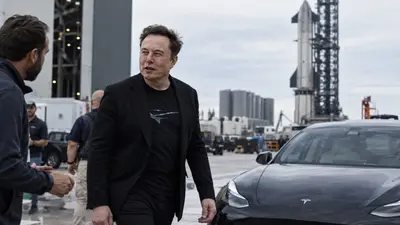
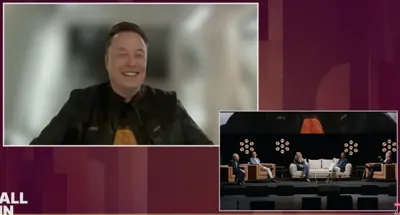
At SpaceX's Oct. 20 earnings presentation, Musk disclosed that special committees at Tesla and SpaceX are reviewing a possible merger. Each board formed a committee of independent directors, and Musk does not take part in the talks because of his conflict of interest.
Musk said the merger has "many advantages." He also made clear that terms have not been agreed and there is no guarantee of completion. He said it would be an exaggeration to treat a merger as certain. On the requirement for approval by a majority of Tesla's outstanding shares, he called it a "fairly high hurdle."
If two companies with similar long-term visions were joined, there is room to imagine how an AI and robotics strategy might expand. That is only an interpretation of possible synergy. The structure and terms are not agreed, and whether any synergy would materialize is not a confirmed fact.
6. Wall Street's bullish case, and a reality check
| Item | Barclays (10/26) | JPMorgan (10/22) |
|---|---|---|
| Rating | Equal weight to overweight | Neutral maintained |
| Price target | $370 to $450 | $415 to $430 |
| View | Possible shareholder premium in a merger; downside may be limited as shorts steer clear | Positive on auto margin and autonomy improvement; spending a burden |
| Conditions / risk | $250 downside scenario if merger fails | 2027-2028 earnings estimates need to rise |
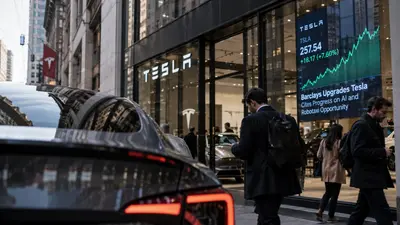
Barclays' Dan Levy raised his target to $450, about 12.6% above the Oct. 30 close. His analysis is that Tesla shareholders could receive a premium in a merger and that investors may avoid shorting ahead of any merger announcement. Barclays also expects an all-stock deal in which SpaceX acquires Tesla to be the most likely structure. That is its expectation, not an agreed structure.
JPMorgan kept its neutral rating and raised its target to $430. It called Q3 "incrementally positive" and acknowledged that merger talks could support the stock, but stressed rising spending and whether 2027-2028 earnings estimates improve. Caution is also a condition long-term investors should check.
In an LSEG tally reported Oct. 26, 25 of 49 covering analysts rated the stock buy or strong buy, and 22 rated it hold. Expectations are growing, but opinion is not unanimous.
7. For long-term holders, business evolution matters more than one day's defense
Adjusted for the 3-for-1 stock split, the Oct. 29, 2021 close of $1,114 equals $371.33. Against the Oct. 30, 2026 close of $399.81, the price return is about 7.67%, or about 1.49% a year.
For those who have held a long time, this record shows patience. But the fact that a stock has not risen much for years is not the same as a judgment that it is cheap today. What moves the stock from here is future earnings and the price already being paid for them, more than the holding period behind.
Long-term holding and dollar-cost averaging (DCA) can reduce the pressure of timing trades around daily news. They do not prevent losses by themselves. For investors who like Tesla's long-term vision, it is more reasonable to separate price swings from business results, check position size and risk tolerance, and keep a consistent standard.
8. Four things to watch
| Indicator | Change that would support the positive reading |
|---|---|
| Automotive gross margin | Whether the improvement to 18.1% carries into next quarter |
| FSD adoption and active customers | Whether 75%+ adoption and 1.74 million customers hold and turn into revenue |
| Energy shipments and cash flow | Whether the 2027 demand outlook converts into actual shipments and free cash flow |
| Earnings outlook and merger review | Whether 2027-2028 estimates improve, tracked separately from the special committees' review |
The reasons to see a bright future for Tesla are clear. Autos and FSD show verifiable signs of improvement, and energy and AI and robotics remain options for further growth. What ultimately needs checking is whether these possibilities build into repeatable earnings and cash flow.
This article is for information only and is not investment advice.
Insight Times Editorial Desk