Tesla Cut Its Capex Guide by $5 Billion. Good News or Bad?
Tesla protected cash, but its growth timetable now carries a question mark. The key issue is not how much it saved but what it pushed back.
Tesla Plans to Spend $5 Billion Less
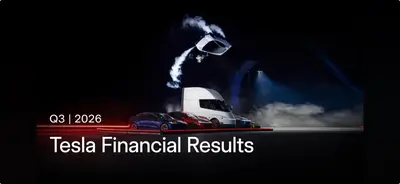
In its third-quarter results on Oct. 21, 2026, Tesla sharply lowered its full-year capital expenditure outlook.
In its second-quarter SEC filing, Tesla expected annual capex of more than $25 billion. The third-quarter filing revised that to more than $20 billion. The difference between the stated figures is $5 billion. Because both are "more than" thresholds, the exact gap between the actual forecasts is not confirmed.
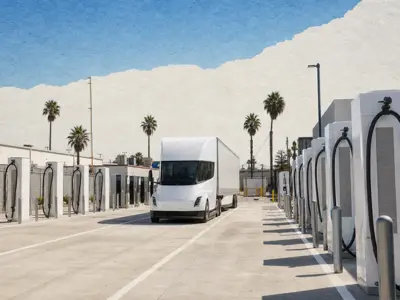
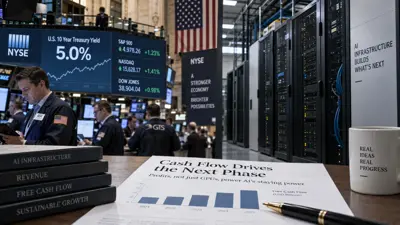
One distinction matters. Tesla's capex covers more than AI compute and data centers. It also includes production equipment, R&D facilities, robotaxi fleet vehicles and charging infrastructure. The full adjustment should not be read as a cut to AI spending. Tesla has not disclosed how much was trimmed in each business.
Operating Profit Halved, Cash Flow Positive
Tesla's third-quarter 2026 results tell two different stories.
| Metric | Q3 2026 | Change from a year earlier |
|---|---|---|
| Revenue | $28.046 billion | -0.2% |
| GAAP operating income | $718 million | -55.8% |
| Operating margin | 2.6% | about -3.2 points |
| Quarterly capex | $4.732 billion | +110.5% |
| Free cash flow | $1.531 billion | -61.6% |
| Cash and short-term investments | $45.447 billion | about +9.1% |
Revenue was essentially flat, and operating income fell by more than half. Operating cash flow, however, came in at $6.263 billion. Subtracting capex of $4.732 billion leaves free cash flow of $1.531 billion.
The nature of that surplus is the problem. Third-quarter capex was more than double the prior year's but lower than Wall Street had expected. The positive free cash flow is therefore hard to read as an improvement in underlying profitability.
Operating expenses rose to $4.776 billion from $3.430 billion a year earlier. Tesla is delaying some asset spending while still carrying higher R&D and operating costs.
Why Lower Spending Can Be Good News
Growing companies do not always do best by raising capex as far as possible.
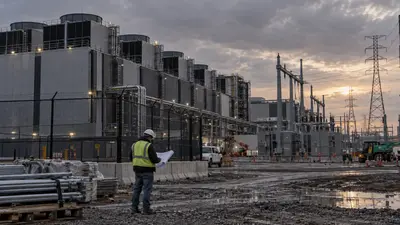
An AI data center is not finished once expensive chips are installed. Power, cooling, software and utilization all have to be in place before it earns money. Robots and robotaxis are similar. Committing capital at scale before demand and operations are ready can simply tie up cash.
If Tesla is reprioritizing projects and reaching the same goals with less capital, the decision is a positive one. Cash and short-term investments of more than $45.4 billion also give it considerable financial flexibility for technology development and production expansion.
But Growth Companies Face a Different Question
The market expects more from Tesla than today's auto profits. It is pricing the future cash flow from self-driving software, robotaxis, Optimus and AI compute infrastructure.
Those businesses need heavy up-front investment. If the lower capex guide reflects project delays rather than better investment efficiency, it could weigh on long-term value.
JPMorgan analysis cited by Reuters made a similar point: delaying investment reduces near-term cash burn but may also push back the point at which growth opportunities are realized. Based on explanations from Tesla management, spending could rise again in 2027 and 2028.
If so, the money has not disappeared. It may have been carried into the following years.
The Question for Investors
Tesla is hard to describe as a company cutting investment because it lacks money. It holds ample cash and appears to be adjusting the pace and order of its spending.
But investors should not be asking where the saved $5 billion went.
Can Tesla spend less and still reach the future it has promised at the same speed?
That is the most important question in this quarter's results.
Insight Times Editorial Desk