US Rewrites Lighting Rules for Cars With No Driver, but Robotaxi Hurdles Remain

NHTSA has proposed changes to a federal lighting standard to fit vehicles driven by software. The move matters for Tesla's Cybercab, but a rule change is not a safety approval.
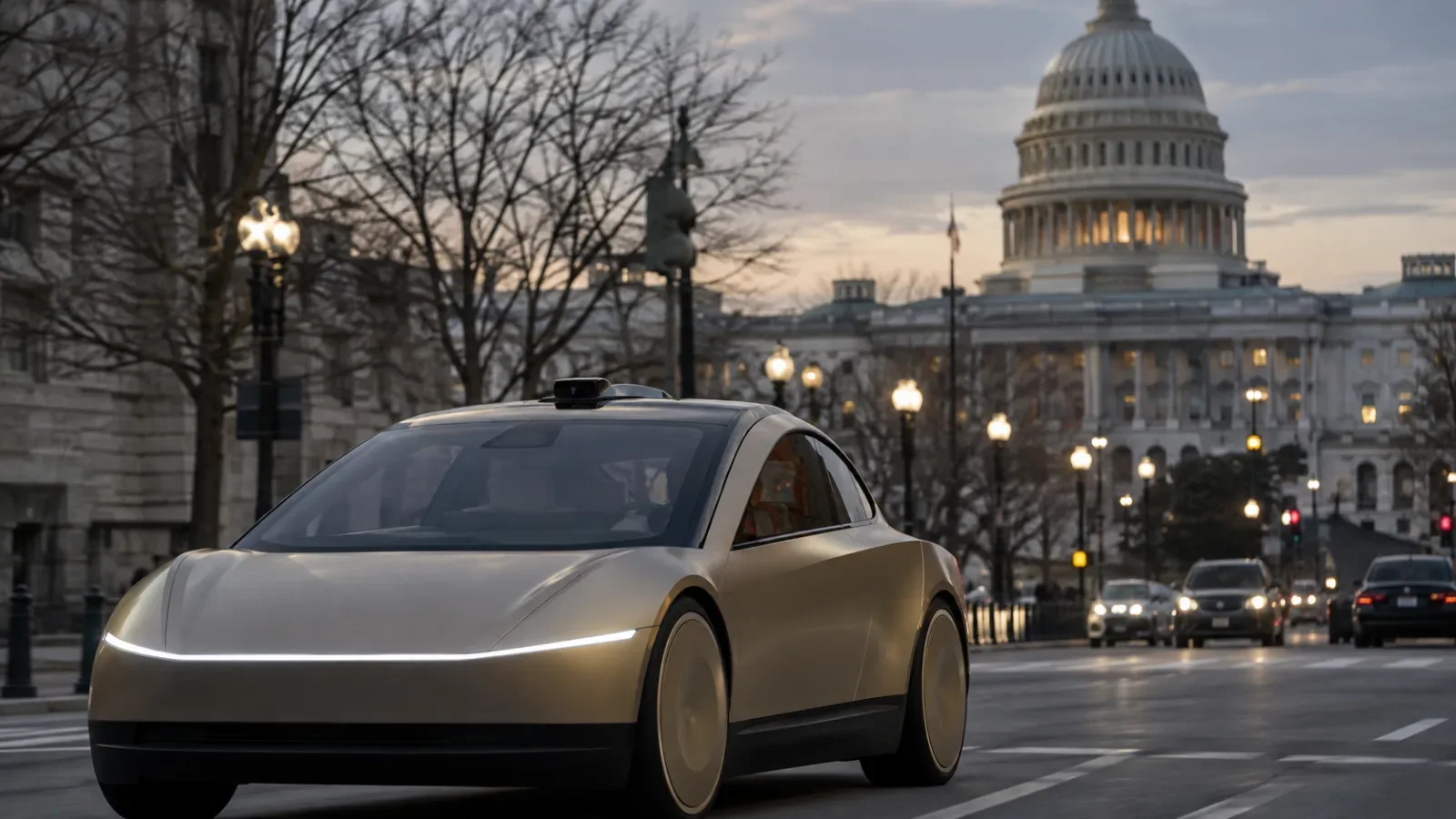
When the Driver Disappears, the Rulebook Becomes the Problem

If no one is there to work the turn signal stalk, does a car still need one?

The National Highway Traffic Safety Administration (NHTSA) on Oct. 23 announced a proposed amendment to Federal Motor Vehicle Safety Standard (FMVSS) 108. The standard governs vehicle lighting and was written on the assumption that a person drives. The proposal would adapt it for vehicles built to be driven only by automated systems.

The amendment would adjust some requirements for manual turn signals, hazard lights and headlight switching controls. It would also revisit requirements for the dashboard indicators a driver checks.

The key point is that this is not a deregulation that removes lighting. Turn signals and headlights must still work. The idea is that an automated driving system, rather than a person, can be designed to operate them.

What Does a Cyan Light Mean?

The proposal also covers a cyan indicator light that would tell people outside the vehicle that an automated driving system is in control.

The aim is to standardize color, placement, operating conditions and brightness so that police, pedestrians and other drivers can understand what state the vehicle is in.

The light would be optional equipment, not mandatory. It is also not meant to let driver-assistance systems that require constant human supervision be marked as fully autonomous.

NHTSA also plans to revise headlamp test voltage and vertical placement requirements. Those changes are a general modernization of lighting technology and are not limited to autonomous vehicles.

Why It Matters for Tesla's Cybercab

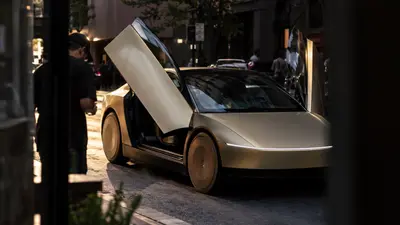
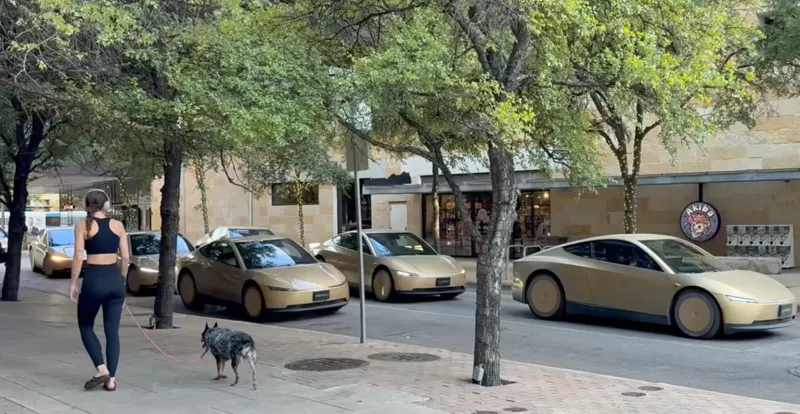
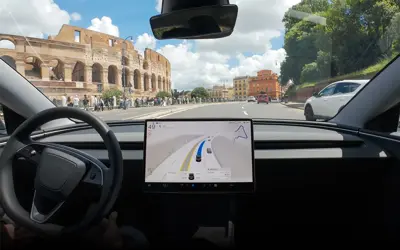
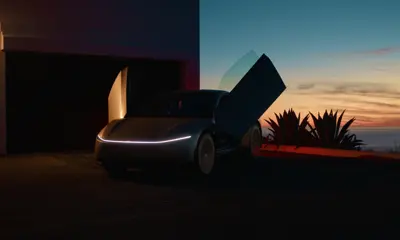
Tesla's Cybercab is designed without a steering wheel or pedals. Safety standards written around human-operated controls could therefore become an obstacle to commercialization.

On Sept. 4, NHTSA opened a formal inquiry into Tesla's self-certification of the Cybercab to safety standards. The process is meant to check how Tesla concluded that it meets existing federal standards.

Two separate tracks are involved.

DateActionWhat it is
Sept. 4Cybercab certification inquiryAn enforcement process that tests whether Tesla complies with current safety standards
Oct. 23Proposed lighting standard changeA rulemaking process to change the common standard for autonomous-only vehicles in the future

The two are separate. Even if the amendment is finalized, the Cybercab's existing certification does not automatically become valid.

NHTSA has also stated that current standards must be met until the existing rules are amended.

Three Gates to a Robotaxi Business

GateQuestion
TechnologyIs it safe across varied roads and weather without human intervention?
RegulationDoes it meet vehicle safety standards and the operating requirements for transport services?
EconomicsDoes it make money after vehicle purchase, insurance, maintenance and remote-assistance costs?

The proposal addresses part of the second gate.

It does not prove safety, the first gate, or confirm profitability, the third.

Removing the wheel and pedals could change how interior space is used and how parts are configured. Whether total manufacturing cost actually falls, once sensors, computers, safety equipment and validation costs are included, remains to be confirmed.

The same goes for robotaxi profitability. What matters more than miles driven is the share of miles with a paying passenger aboard. If empty-vehicle driving and remote-assistance costs grow, profit may stay limited even at high utilization.

The Bottom Line

The real change is not that the steering wheel is vanishing. Regulators have begun asking whether safety standards must always assume a human driver.

The future of the robotaxi will not be decided by technology alone. The law that permits the technology and a business model that can actually earn money both have to come together.

The U.S. has started adapting vehicle lighting rules to driverless cars, but that guarantees neither robotaxi safety nor profits.

Insight Times Editorial Desk

More by topic

Starting with this story's topics, then what readers are following now

Investor psychology, decision-making and books on investing

Robotaxi

This story's topic15 storiesSee all →

The Cybercab is not a $30,000 car. Tesla is selling hours, not vehicles

No steering wheel, no pedals. The economics of Tesla's robotaxi turn on how many paid hours a day it runs, not on what it costs to build.

Tech

Tesla's FSD Clears Eight European Countries. The Number That Matters Now Is Paid Conversion

European regulatory barriers for FSD Supervised are falling. But investors who lump supervised software revenue together with the value of driverless robotaxis risk pricing the same news twice.
Tech

Why Tesla Lined Up $30 Billion in Credit It Says It Won't Use This Year

Tesla's 2026 capex is set to nearly triple. The question is less about debt than about when spending on AI, robotaxis, chips and energy turns into cash flow.

Tech

Tesla's 546 Robotaxis and Hundreds-a-Week Optimus Bots: What the Numbers Miss

Tesla is scaling two "physical AI" products at once, but registration counts and production counts do not tell investors whether either one is actually making money.

Tech

Rates Hit 5% Again, But AI Held - Now Wall Street Wants Cash Flow, Not Just GPUs

The Fed raised rates and the 10-year yield broke back above 5%, yet the Nasdaq did not crack. This week's real story is not the end of the AI rally but a change in what the market is grading.

Investing

When Will Tesla's Rally Finally Hold? The Case for 2027

The next leg up for Tesla will not come from another product reveal. It will come when self-driving, AI investment and Optimus stop being "future stories" and start showing up as real profit and cash flow. The first real test window is likely 2027.

Investing

Tesla's biggest asset is not the car: when Robotaxi and Optimus stop being options

Tesla's AI value sits in autonomy and humanoids, and both could dwarf car manufacturing. The gap is between a demo and a fleet that earns cash per vehicle.

Tech

A building that houses servers and networking gear and supplies them with powe…

US AI Data Centers Are Headed for 90GW. Gigawatts Now Matter More Than Dollars

Goldman Sachs expects US data center capacity to grow from 64GW at the end of 2026 to 90GW at the end of 2027. The AI race is moving from buying GPUs to building power plants and transmission lines alongside them.

Tech

Tesla Energy's 13.7GWh Paradox: Expectations Ran Faster Than Deployments

Q2 deployments recovered but margins collapsed. Q3 set a record for deployments and still missed estimates. The issue is not the size of AI power demand but how fast it converts into Tesla revenue and profit.

Tech

Why the White House Swapped "AI" for "Super Intelligence"

Executive Order 14434 renames AI across the federal government without defining a new technology. The real story is about roughly $700 billion in capex, free cash flow and electricity.

Tech

Why Nvidia Is Happy to Help Make AI Models Nearly Free

Falling model prices can squeeze model makers. For Nvidia, the number that matters is the total volume of tokens generated worldwide and the compute that produces them.

Tech

Nvidia Put $2 Billion Into Lumentum. Optics May Be the Next Bottleneck, but the Stock Has Already Run

Optical networking is emerging as the next constraint on AI data centers. Investors need to separate the industry's growth potential from the price they are already paying for it.

Tech

Nvidia's Next Target After GPUs: Controlling What AI Agents Are Allowed to Do

OpenShell and Sentry are not about policing what an AI says. They are about controlling, at the server infrastructure level, which files and APIs an AI can touch, what it can execute, and who can actually pull the plug when something goes wrong.

Tech

AI Needs to Find $1 Trillion a Year From Somewhere to Pay Back Its Capex

Saying AI capex is big is no longer the point. The harder question is what end users have to pay for the buildout to pencil out, and Goldman Sachs puts that number at roughly $1 trillion a year.

Tech

HBM

63 storiesSee all →

Memory stacked next to the GPU.

Has Memory Peaked? Prices Are Cooling, but the Shortage Looks Set to Run to 2028

Price growth has slowed and consumer demand is already breaking. Server and HBM supply remains short, and Micron says more than 75% of its 2027 volume is already committed to customers.

Tech

AI Chip Peak Check: Demand Still Rising, Risk Building in 2027-2029 Supply and Funding

DRAM and NAND contract prices are still climbing and HBM suppliers hold the edge. Power shortages, AI financing costs and simultaneous memory expansion are the risks for later years.

Investing

How Far Can China Push DRAM Without EUV

CXMT says it has shrunk DRAM features to 11.95nm using quadruple patterning instead of EUV lithography. The real question is not whether China caught up, but how much more it now costs China to get there.

Tech

Memory Chip Supercycle: Not at Peak Yet, But 5 of 6 Warning Signs Are Flashing

Memory prices are still climbing, but the pace is slowing and PC and smartphone demand is starting to crack under the weight of higher chip costs. This looks less like a price peak and more like a profit plateau building toward the next supply cycle.

Investing

The Real ASML Number Isn't the 3% Pop, It's the 30% Capacity Hike

ASML's rally isn't just an AI trade. Customers are already locking in 2027 tool slots, and ASML is raising Low-NA EUV capacity by roughly 30% to keep up.

Investing

2027 Isn't the End: Citi's Case for a Memory Supercycle Running to 2031

Citi says the memory shortage timeline is stretching again. If AI shifts from "train once" models to continual learning, HBM, server DRAM and enterprise SSDs could all fall short at the same time.

Tech

Samsung, SK Hynix Sold Off on AI Fears. The Orders Haven't Followed Yet

The selloff reflects a market recalculating AI capex speed and memory earnings expectations, not confirmed cancellations. So far, the data show a gap between fear and reality.

Investing

NVDA

75 storiesSee all →

The US-China Summit Didn't Erase Taiwan Risk for Chip Stocks

Washington's Taiwan policy held, but roughly $14 billion in arms sales is still on hold. For AI chip investors, the summit reads less like risk removed and more like a fragile balance extended.

Macro

Nvidia's $500 Billion Experiment: Wall Street Asks Who Backs the GPU, Not Just the Chip

The real issue in Nvidia's financing platform is not chip sales. It is how far Wall Street will trust GPU resale prices and rental income three to four years out.

Tech

The AI Bubble Question Has Changed: By Late 2026, It's ROIC Over GPUs

There is no sign yet that AI investment is slowing. If anything, hyperscaler spending forecasts keep climbing. But as the scale of that capital has grown, the market's question has shifted from "is AI growing" to "when, and how much, does this capital come back as cash."

Tech

2027 Investing Needs Alignment, Not Prediction

A new investing book argues the hard part was never picking the next winner. It's staying aligned with where value and bottlenecks are moving while keeping old human weaknesses in check.

Investor Mind

What Jensen Huang sold at the G20 was not GPUs. It was national infrastructure

Nvidia's message is that AI should be laid down like electricity, roads and the internet. After the hyperscalers, the buyers are governments, telcos, regional clouds and industrial data centers.

Tech

ASML Is Discussing 2030 Orders. How Long Can the AI Chip Supercycle Last?

Despite bubble worries, ASML sees equipment shortages through 2028. Investors should watch future production capacity, not just today's orders.

Tech

Nvidia and AMD Back Common Design to Build AI Data Centers Like Lego Blocks

A new Open Compute Project spec aims to let one building host rival chip systems. Whether it speeds up construction is not yet confirmed.

Tech