Texas Solar Passed Nuclear. The Real AI-Era Trade Isn't the Panel
Elon Musk says solar's exponential growth will make nearly every other power source disappear. The direction is right, but the investable story runs through storage, grids, transformers and interconnection, not solar modules alone.
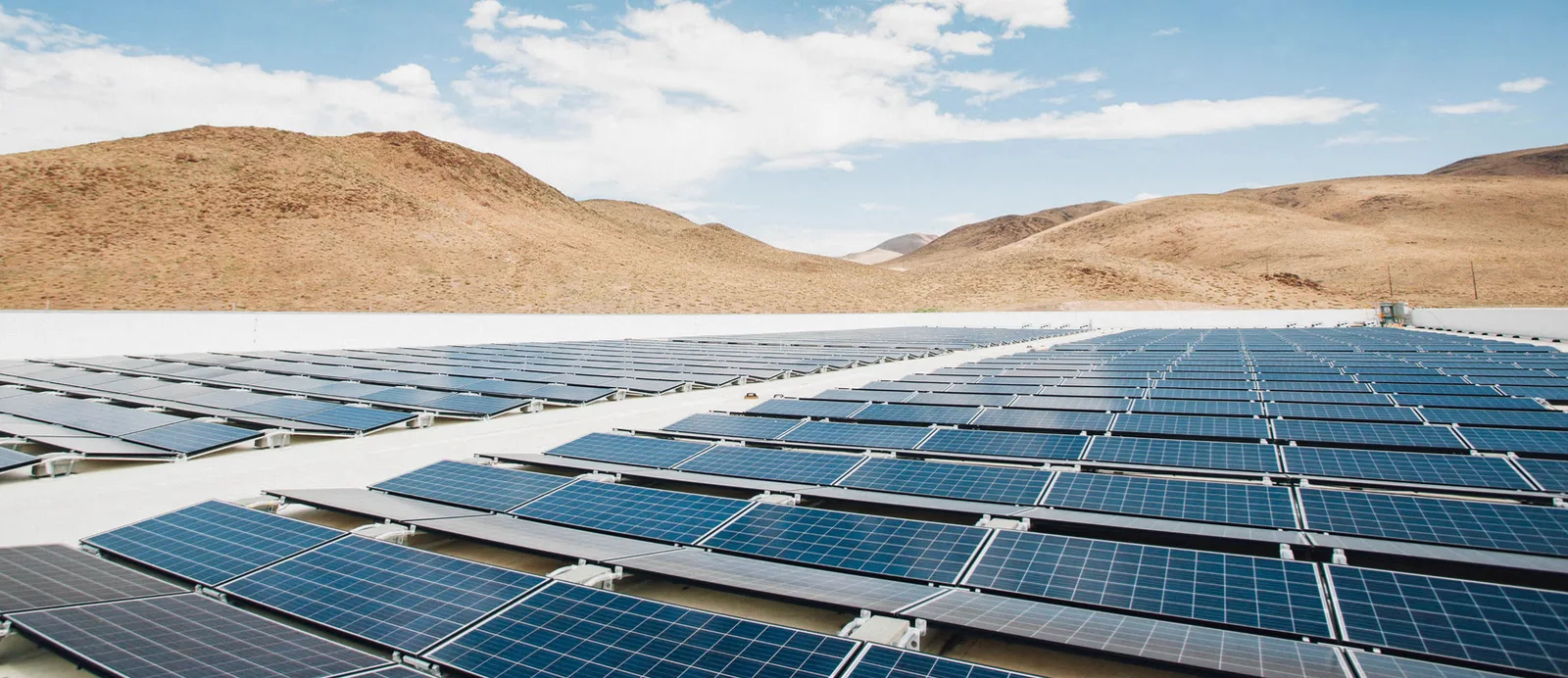
The Texas chart shows a grid being rebuilt, not just solar winning
ERCOT's long-run generation chart makes a strong first impression. Nuclear has sat flat near 40TWh for years. Solar has climbed sharply since the early 2020s. Coal has been sliding the other way. The direction lines up with official data.
The EIA projects Texas's grid operator will generate 78TWh from utility-scale solar in 2026, versus 60TWh from coal. Solar already overtook coal in monthly output for the first time in March 2025, and the EIA expects solar to outproduce coal in every month except January and December by 2027. Natural gas, which supplied roughly 44% of ERCOT generation on average from 2021 to 2025, remains the largest single source by far.
So Musk's claim about solar's "exponential growth" has real footing. But his suggestion that every other energy source will fade below 0.1% is far from where official forecasts sit today. The EIA's 2026 outlook for the entire US generation mix calls for natural gas at 40%, nuclear at 18%, coal at 16%, wind at 11% and solar at 8%. Even with solar scaling quickly, the grid will need multiple power sources working together for a while yet.
Solar is fast because it's a factory product, not a fuel
Solar's edge lies in how plants get built. Gas plants and nuclear reactors are massive, one-off construction projects. Solar is thousands of standardized modules stamped out in factories and assembled on site. That makes it behave more like manufacturing, where costs fall as production scales and supply chains learn.
Costs don't fall in a straight line every year, though. Lazard's 2026 LCOE+ report noted that tariffs, inflation and higher financing costs have pushed up costs across new generation broadly. Even so, the report still concluded that renewables remain the most cost-competitive new-build power source, even excluding subsidies.
An important distinction
"Solar generation costs have fallen over the long run" and "solar-related stocks deliver high returns" are two very different statements. Falling module prices are good news for installers and power buyers, but can mean falling average selling prices and margins for manufacturers. Rising power demand and shareholder returns are not the same thing.
In the AI era, power that shows up when needed gets pricier than the cheapest power
Solar's weaknesses are well known. It doesn't generate at night. Output drops when clouds roll in. There's a glut of electricity at noon while data centers need to keep running at 3am. That's why the more important commodity in the AI power market isn't raw megawatt-hours, it's firm power: electricity actually available on demand, whenever it's needed.
That's where batteries come in. According to the EIA, US developers plan 86GW of new utility-scale generating capacity in 2026, with solar accounting for 43.4GW, or 51%, and batteries for 24GW, or 28%. Together those two categories make up about 79% of new capacity. Notably, 53% of new battery capacity, 12.9GW, is planned for Texas. Storage tends to grow wherever solar grows.
Batteries alone don't solve everything, though. Multi-day cloudy stretches, seasonal demand swings and large-scale outages still require gas, nuclear, long-duration storage and transmission working together. The IEA also views the additional power demand from data centers as being met by a diversified mix: renewables and natural gas in the lead, with nuclear and geothermal filling in.
AI is expanding the whole demand picture
This shift has become an investment theme because of AI. In the IEA's latest outlook, global data center electricity consumption nearly doubles, from 485TWh in 2025 to roughly 950TWh by 2030. In the US, data centers are expected to account for close to half of all power demand growth through 2030.
Demand growth of that scale isn't just a matter of building a few more power plants. Transformers, circuit breakers, switchgear, substations, transmission lines, grid interconnection, cooling and on-site EPC work all have to scale up together. For AI data centers, the bottleneck is less about how much power gets generated and more about how fast it can actually be connected.
| Investment angle | Why demand is rising | Companies to watch | Key risks |
|---|---|---|---|
| Grid equipment | Transformers and distribution gear are needed regardless of whether solar, gas or nuclear capacity grows | Eaton, GE Vernova, Hubbell, Powell | Elevated valuations, normalizing order backlogs |
| EPC and transmission | Connecting data centers and new power plants to the actual grid | Quanta Services | Project delays, rising labor and material costs |
| Energy storage (ESS) | Shifting midday solar output to evening and overnight | Tesla, Fluence | Falling ASPs, competition from Chinese cell makers, tariffs |
| Generation assets | Demand for round-the-clock firm power and long-term data center contracts | Vistra, Constellation, NRG, NextEra | Power prices, regulation, fuel costs |
| Solar manufacturing | Rising installation volumes | First Solar, Enphase, others | Chinese oversupply, policy shifts, residential demand swings |
Tesla Energy is a good case study, but more deployment doesn't automatically mean more profit
Tesla deployed 46.7GWh of energy storage in 2025, and revenue from its energy generation and storage segment rose 27% year over year to $12.77 billion. Sales tied to Megapacks that xAI bought from Tesla in 2025 came to $430 million, disclosed separately. That's real evidence that AI and ESS demand is converting into actual revenue.
The first half of 2026 tells a more sobering story, though. Storage deployments came to 22.3GWh, but energy segment revenue was $5.55 billion, up only about 1% year over year. Gross margin in the segment also slipped, from 29.6% to 28.7%, over the same six months. Tesla said the second-quarter revenue increase came from higher Megapack deployment volumes, but that a lower average selling price for Megapacks partly offset the gain.
The lesson here is straightforward. The ESS market can keep growing fast even as hardware prices fall. So investors watching this space should look past gigawatt-hours deployed and track average selling prices, gross margins, battery cell procurement costs, and revenue from software and power trading.
Insight Times Editorial Desk