Texas Just Hit Pause on Its Data Center Boom
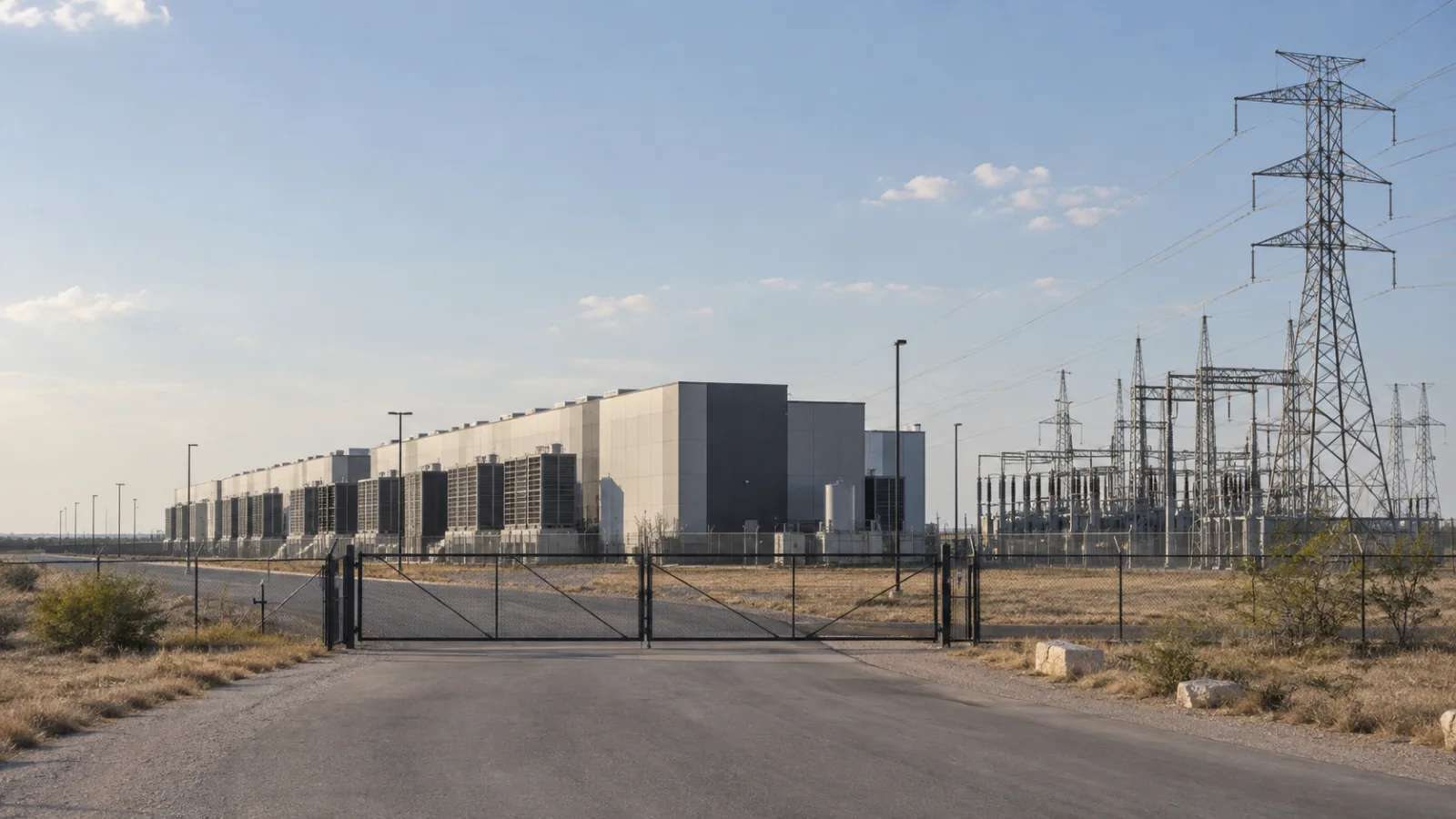
Requests to connect to the Texas grid have hit 474 gigawatts, about five times the state's record demand, and the state has stopped issuing new permits until it can verify which projects are real.
How big is 474 gigawatts, really
A gigawatt is a billion watts. A large nuclear reactor produces roughly 1GW, so 474GW is comparable, in nameplate terms, to hundreds of large reactors. That comparison is not exact. Power plants run at a capacity factor below 100%, and data centers do not draw their full requested load every hour either.
A sharper comparison exists. ERCOT's record peak demand in 2026 was about 91GW. That means the total of pending grid-connection requests in Texas is more than five times the highest amount of electricity the entire state has ever used at once.
474GW The volume of large-load grid connection requests ERCOT is currently reviewing. This is not confirmed construction, and it may include large loads beyond data centers.
About 91GW ERCOT's record peak demand. 474GW is roughly 5.2 times that figure.
5x and rising The issue is not that all 474GW will get built. It is that requests have surged so far past real demand that the grid operator now has to sort out which projects are genuine.
Why you should not take 474GW at face value
A developer can file connection requests for a single data center at multiple candidate sites. A company might apply for 1GW each in Dallas, Austin and Houston, then build in only one of them. Early-stage projects that have not closed financing or signed customer contracts can also be sitting in that pipeline.
That is why Governor Abbott's first move in August was not a simple freeze, but a call for verification and audit. The order asked the state to confirm whether projects are actually likely to get built, whether the grid can handle them, and to check water use and tax incentives as well. On September 21, the state went a step further: it had the Texas Commission on Environmental Quality (TCEQ) stop issuing permits for data center projects, and the announcement directed other state agencies to hold off on related regulatory approvals until the necessary information is gathered.
AI scales at software speed. Power scales at infrastructure speed
For the past few years, the bottleneck in AI infrastructure has been GPUs, HBM memory and advanced packaging. That bottleneck still matters. But the Texas episode adds a new question ahead of it.
Can you actually turn that GPU on?
GPU generations turn over roughly every year or so. Data center buildings can also go up relatively fast. But large transformers, transmission lines, substations, gas turbines and new power plants need far longer lead times for ordering, permitting and construction. Reuters reported in 2026 that lead times for high-voltage transformers in the US have stretched to as long as 160 weeks in some cases.
That gap in speed is a structural bottleneck for the AI industry. Computing demand surges the way software does. Power infrastructure moves at the pace of land, construction, permitting and equipment supply chains.
| AI infrastructure layer | Past bottleneck | Emerging bottleneck |
|---|---|---|
| Compute | GPUs, HBM, CoWoS packaging | Compute-per-watt, actual time to power-on |
| Facility | Server racks, cooling | Substations, transformers, switchgear, power and water for cooling |
| Grid | A relatively minor variable | Grid interconnection, generation mix, permitting, community costs |
| Investment KPI | GPU count, announced GW | Energized GW, time-to-power |
The fix is not just building more power plants
Adding power supply is necessary. AI demand is already broadening investment into gas turbines, nuclear, transmission, batteries, transformers and switchgear. But given supply chain and permitting timelines, new generation alone is unlikely to solve this in the near term.
That is what makes the AI Energy Management Alliance, launched September 16 by Nvidia, Google and Emerald AI, worth watching. Its idea is to treat data centers as a flexible load rather than a fixed one: delay some training workloads when the grid is tight, discharge batteries, run on-site generation, or shift compute to periods when power is more available.
The solution to AI's power problem is likely to run on two tracks: adding supply faster, and moving demand more intelligently.
Investors should watch "energized GW" now
Picture two AI cloud providers that both secure 100,000 of the latest GPUs. Company A has already locked in 2GW of power connection, substations, cooling, land and permits. Company B has GPU purchase contracts, but its power connection is not scheduled until 2029.
Same GPU count, different economic value. Company A can turn those chips on and generate tokens and revenue. Company B's assets can sit idle until the power infrastructure is ready.
That is why the next KPI for the data center industry may shift from announced GW to energized GW and time-to-power. What will matter is not how many gigawatts a company has announced, but when the power actually turns on, whether that supply is secured long-term, and who ends up paying for the added grid costs.
Insight Times Editorial Desk