Has the AI Investment Case Changed? What the Post-Midterm Rout Altered, and What It Didn't
The selloff gives little reason to think AI's long-term growth story has collapsed. It does raise questions about how fast, and on what terms, that growth becomes earnings.
The 20-second read
Investors want to know more than when the Nasdaq will rebound after this selloff. A more basic question sits underneath.
The short answer: there is little evidence that the long-term AI growth thesis was broken by the election. But one assumption does need revising: that every company taking part in that growth will expand revenue at the planned pace and earn the expected returns.
After the US midterm elections, worries grew about tighter data center regulation. On Nov. 5, the Nasdaq Composite fell 5.5%. That does not mean construction rules have been imposed across the board, or that AI spending has stopped. The better reading is that policy uncertainty piled onto concerns about valuations and free cash flow that had been building since before the vote. (Reuters analysis of market participants)
What has begun to change is less the need for AI than the conditions under which that need turns into corporate profit.
Four assumptions were hidden in the old AI thesis
AI investing has been explained as one natural chain: more AI use, more demand for compute, more data centers, more purchases of GPUs, memory and power equipment, and then earnings growth for the companies involved.
The chain is not wrong. But four conditions sit inside it.
- The data centers that are needed can be built on time.
- Power supply and permitting problems can be solved at a reasonable cost.
- Operators can raise the money needed to finish construction.
- The added revenue leaves enough profit and cash.
What the election shook most directly was not customers' appetite for AI but the first three conditions. If those wobble, the fourth, profitability, is affected too.
Investors need to separate two statements. "AI is useful" and "AI-related stocks justify their current prices" are not the same claim.
Change one: infrastructure that can run on time, not just infrastructure that is needed
Investors have focused on the size of data center contracts and spending plans. But a contract is the starting point for revenue, not a finished cash flow.
Revenue arrives only after a facility is built, power is connected, equipment is installed and the customer starts using it. If that process slips, the timing of revenue and cash shifts even if no customer walks away.
On Nov. 5, AI data center operator IREN said delivery of some infrastructure for Microsoft had been delayed. The causes were network design changes requested by Microsoft and supplier schedules. There is no evidence the election caused the delay. The company said there are no contractual penalties tied to it.
Even so, the date for exceeding its $4 billion annualized revenue target moved from the end of 2026 to January 2027, with a possible slip to the end of February. At the same time, the company laid out about $15 billion in capital spending for the rest of its fiscal year. (Reuters on IREN's results)
The case shows execution risk in turning demand into revenue more than a problem of vanishing demand. It is also worth noting that $4 billion is a target for annualized revenue, not realized annual revenue.
So the question should change. Not only "how big is the contract?" but "when will it go live, and how much more money is needed until then?"
Two companies with the same backlog are hard to value the same way if one has secured power and land and the other is still waiting on permits and financing.
Change two: winning the buildout race is not the same as winning on returns
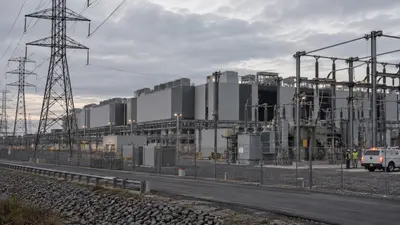
If building new data centers becomes harder, facilities already running and projects that already hold permits could become scarce. In that case, companies that already own assets may have an edge over those that announced the most aggressive spending plans.
Reuters Breakingviews and Business Insider have argued that large operators such as Amazon, Microsoft and Alphabet could gain a relative advantage, given their existing data centers, multi-region networks and strong access to funding. Heavily indebted neocloud companies, by contrast, would struggle to absorb construction delays and higher financing costs. (Reuters Breakingviews · Business Insider)
But that does not make regulation an unconditional win for Big Tech. Even if prices for existing capacity rise, cloud growth is constrained if a shortage of added capacity leaves customer demand unmet. The benefit of scarcity and the cost of limited expansion exist side by side.
Four things matter in the end. Who already owns assets that can be switched on? Who can expand into other regions? Who can negotiate with customers on price? Who has the cash to wait out delays?
That is why execution and the quality of capital may matter more than before in the AI market.
Change three: separate long-term chip demand from near-term growth
"If AI compute is still needed, don't GPUs and memory keep benefiting?" That holds when describing the direction of long-term demand. But it cannot by itself justify revenue growth over the next few quarters, or current share prices.
If data centers come online later, customers can adjust delivery and installation schedules. Even if the compute they need does not disappear, chip purchases and revenue recognition can be pushed back.
This does not mean order cancellations have been confirmed at every chip company. It is a possible path by which construction problems at data centers could reach supply-chain earnings. (Reuters analysis of market participants)
The most important distinction here is cancellation versus deferral. A cancellation changes the size of final demand. A deferral mostly changes when that demand is realized. The long-term effects differ, but either can weigh in the short term on companies whose high growth rates are already in the price.
So the chip thesis needs refining more than scrapping. Alongside total AI demand, investors should watch shipment timing, customers' capital spending guidance, inventories and gross margins.
Change four: a bottleneck does not benefit everyone
Investors looking at power, cooling and transmission equipment face the same test.
The argument that AI uses a lot of electricity and therefore needs a stronger grid is sound. But if a particular data center project is postponed, orders for the transformers, cooling systems and power equipment it needs can be delayed too.
A bottleneck existing and earnings growing at the companies that resolve it are different matters. A project has to be approved, funded, ordered and then recognized as revenue.
Power infrastructure companies cannot be judged as one group either. The risk differs depending on whether a company also serves demand outside data centers, such as replacing aging grids and reinforcing transmission and distribution networks, or whether its revenue is concentrated in new AI data center construction.
In fact, this selloff spread beyond chips to power companies tied to data centers. Some argued, however, that the share price reaction may be excessive because long-term power demand remains intact. (Reuters market analysis · MarketWatch)
Why value can fall even if demand holds
Suppose a company does eventually reach the revenue it expected. But if it takes longer to get there, needs more funding and costs more, what is left for shareholders changes.
A simple calculation shows why. If $100 is received three years from now instead of today, and a 10% annual discount rate is applied, the present value is about $75. The total cash is the same, but present value is about 25% lower. Real company valuation has to account for all future cash flows, added investment, borrowing costs and risk, so this is an illustration of the principle.
That makes "AI demand hasn't fallen, so fundamentals are unchanged" an incomplete sentence. Even if the long-term direction of demand holds, a change in the cost of capital or in the payback period means the value has to be recalculated.
A share price does not buy only an industry's future. It buys the shareholder's portion of that future.
When should the thesis really change?
A politician's remarks or a one-day drop in prices is not enough reason to discard a long-term strategy. But it is worth sorting, step by step, whether uncertainty is turning into actual business change.
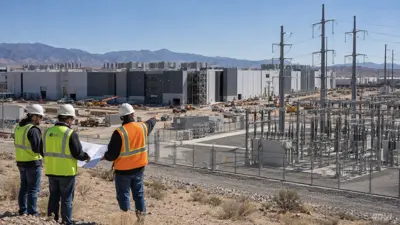
According to a UBS estimate cited by Reuters, about 30% of expected new US data center capacity additions in 2028 could be exposed to potential construction halts. That is neither volume that has actually been canceled nor the effect of confirmed regulation. Outcomes depend on how strict the policy is and how widely it applies. (Reuters on policy concerns)
| What is observed | What it means for the thesis |
|---|---|
| Regulatory worries grow, but schedules and contracts hold | Separate damage to business value from a market repricing |
| Startup or delivery dates actually slip | Recalculate the timing of revenue and the cash payback period |
| Added capital costs and funding burdens grow | Reassess profitability, financial stability and dilution risk |
| Order cancellations and lower long-term demand forecasts are confirmed | Revisit the growth-rate assumption itself |
The table does not declare that every deterioration has occurred. It is a standard, set in advance, for which confirmed changes would lead an investor to revise their view.
The final judgment
"AI will grow, so I buy related companies." That sentence alone is no longer enough.
Among those companies, the task is to pick the ones that can actually run facilities, bear the costs and leave cash behind, and then to check how much is already being paid for that ability.
This is not giving up optimism about AI. It is turning optimism into a judgment that can be invested on.
What long-term investors have to endure is share price volatility, not unverified assumptions.
- No. The market first priced in the possibility of tighter regulation and approval delays down the road.
- Published estimates of risk exposure should not be read as the volume of projects actually canceled.
- Existing facilities, financing capacity, and a choice of locations can be competitive advantages.
- But if new capacity is short, winning customers and growing cloud revenue can also be constrained.
- Not necessarily. Adjustments to installation schedules can push shipments back.
- But if repeated deferrals turn into order cancellations, lowered guidance, or reduced customer investment, growth assumptions need to be revised.
- The first things to check are not the size of the price drop but the revised earnings outlook, the funding required, and current valuations.
- Even within the same AI theme, the risk differs greatly between companies that generate plenty of cash and those that need additional financing.
What to watch
Insight Times Editorial Desk