AI Stops Just Talking, Starts Working: The Second Infrastructure Cycle
The center of the AI race is shifting from chatbot performance to agents that finish real work. For investors, what matters is not model rankings but how a single query turns into dozens of inference calls, pulling demand beyond GPUs into CPUs, HBM, networking and power.

The next competitor after chatbots is "digital labor"
Until now, the flagship interface for generative AI has been the chat window. A user asks, the model answers, the session ends. Agentic AI works differently. Given a goal, it breaks the work into steps, hunts down the data it needs, and moves across browsers, email, calendars, documents and coding tools to keep the task moving.
Recent reports say OpenAI is building features to compete with personal and workplace agents like SpaceX's Grok Bot and Meta's Muse. Meta's Muse points toward agents that send emails, book travel and fill out web forms, and keep working even after the user closes the app. What matters is not which specific product wins. It is that the yardstick for AI products is shifting from "how smart does it sound" to "how reliably does it finish the job."
One query becomes many rounds of computing
To understand the economics of agents, look at the anatomy of a single task: understand the goal, plan, retrieve data, call tools, verify results, re-reason, execute, and repeat. What used to be one or two model calls in a chatbot can turn into dozens of rounds of inference and data movement.
Goldman Sachs Research has suggested that the spread of agents could sharply lift token consumption by 2030. The key is separating unit price from total volume. If the cost per token falls, service prices fall too, but that same drop makes more automation economically viable. If cheaper prices trigger more usage, total compute demand may not shrink at all.
So the equation "cheaper inference equals weaker chip demand" is too simple. What investors should watch is not the price per token, but the total compute consumed per customer, per agent, per task, and whether that compute actually translates into cost savings for the customer.
Focusing only on GPUs misses the second cycle
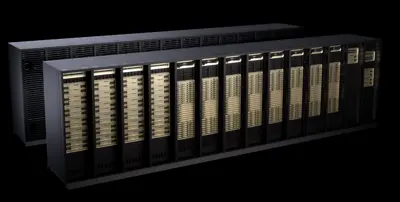
GPUs remain central in the agent era. But GPUs do not finish the job alone. CPUs handle data retrieval, API calls, sandboxed execution, memory and I/O management, security policy, and orchestration across virtual machines and enterprise applications. AMD has said agentic AI is structurally lifting server CPU demand heading into 2026, and it raised its 2030 server CPU market opportunity estimate from $60 billion to more than $220 billion. That figure is the company's own forecast, not a confirmed market size, but the direction it points to, a resurgent role for CPUs, matters.
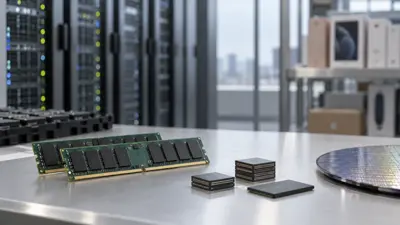
Memory matters for the same reason. Keeping long documents, task history and conversation context alive puts growing pressure on the capacity and bandwidth of HBM and server DRAM. Networking has to stitch together vast numbers of accelerators and servers so they behave like a single giant computer. In the end, agents look less like a replacement for GPU demand and more like a force multiplier that lifts demand for the CPUs, memory and networking gear that sit around the GPU.
The AI value chain comes into focus as four layers
The model is the thinking engine. The agent uses that engine to plan and act. The platform connects data, apps, payments, identity and permissions so real actions can happen. Physical infrastructure, the data centers, power, cooling and optical links, is what keeps all of it running continuously.
In this structure, the line between software and hardware actually gets tighter, not looser. Even the best model cannot do the job without access to the right data. Even a capable agent cannot turn usage into revenue if a data center sits idle waiting for a grid connection. Competitiveness is likely to be decided less by any single model's benchmark score than by the cost, reliability and execution speed of the whole system.
| Layer | Core role | What investors should watch |
|---|---|---|
| Model | Inference, code, multimodal | Accelerators, HBM, cost efficiency |
| Agent | Planning, tool use, execution | CPU, memory, call volume |
| Platform | Data, identity, permissions, payments | Security, APIs, workflow |
| Physical infrastructure | Data centers, power, cooling | Operating gigawatts, networking, cooling |
What $31.6 trillion is actually telling you, and it is not "GPU purchases"
$31.6T — Projected cumulative data center capex, 2026-2050 $0.8T → $1.8T — Projected annual capex, 2026 vs. 2050 4-6 years — Replacement cycle for servers, GPUs and other ICT equipment
PwC projects that global cumulative data center capex from 2026 through 2050 could reach $31.6 trillion under its base case. Annual investment could grow from roughly $800 billion in 2026 to $1.8 trillion by 2050. These are forecasts, and actual spending could swing significantly depending on the pace of AI adoption, semiconductor supply chains, power availability and regulation.
The more important point is the composition of that spending. PwC stresses that because servers, GPUs and other ICT equipment need replacing every four to six years, AI infrastructure is likely to become a recurring investment cycle rather than a one-time build-out. Power was flagged as the key constraint determining which regions actually capture this investment.
In other words, the bottleneck for the second AI infrastructure cycle is widening from "does the money exist to buy chips" to "does the power, cooling and networking exist to actually run the chips once they are plugged in."
Where investors should check the numbers
First, do not just track how much hyperscaler capex is rising. Check whether AI revenue and cash flow are keeping pace. If investment outruns revenue for too long, valuation pressure builds.
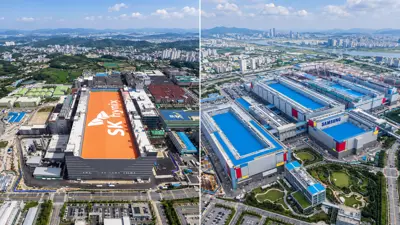
Second, watch HBM contract prices, server DRAM prices and advanced-packaging lead times together. Even if GPU shipments rise, bottlenecks in memory and packaging can cap system shipments.
Third, track the generational transition in networking and optics. The shift from 800G to 1.6T, and the penetration of high-speed Ethernet and optical modules, can serve as a leading indicator of how fast cluster scale is actually growing.
Fourth, watch data centers' secured power capacity, power density per rack, and cooling investment. Actual grid interconnection and go-live timing matter far more than announced data center plans.
Fifth, for agents, look past paid-user counts to task completion rates, reuse rates, the share of tasks still requiring human intervention, and the actual time and cost savings customers realize. Only once these are verified does infrastructure investment turn into durable, sustainable demand.
Insight Times Editorial Desk