Why Is Meta Planning Up to $95 Billion in Stock Issuance?

Meta holds $82.45 billion in cash and securities, yet it has outlined an equity raise of up to $95 billion. AI data center spending is growing faster than the cash on hand.
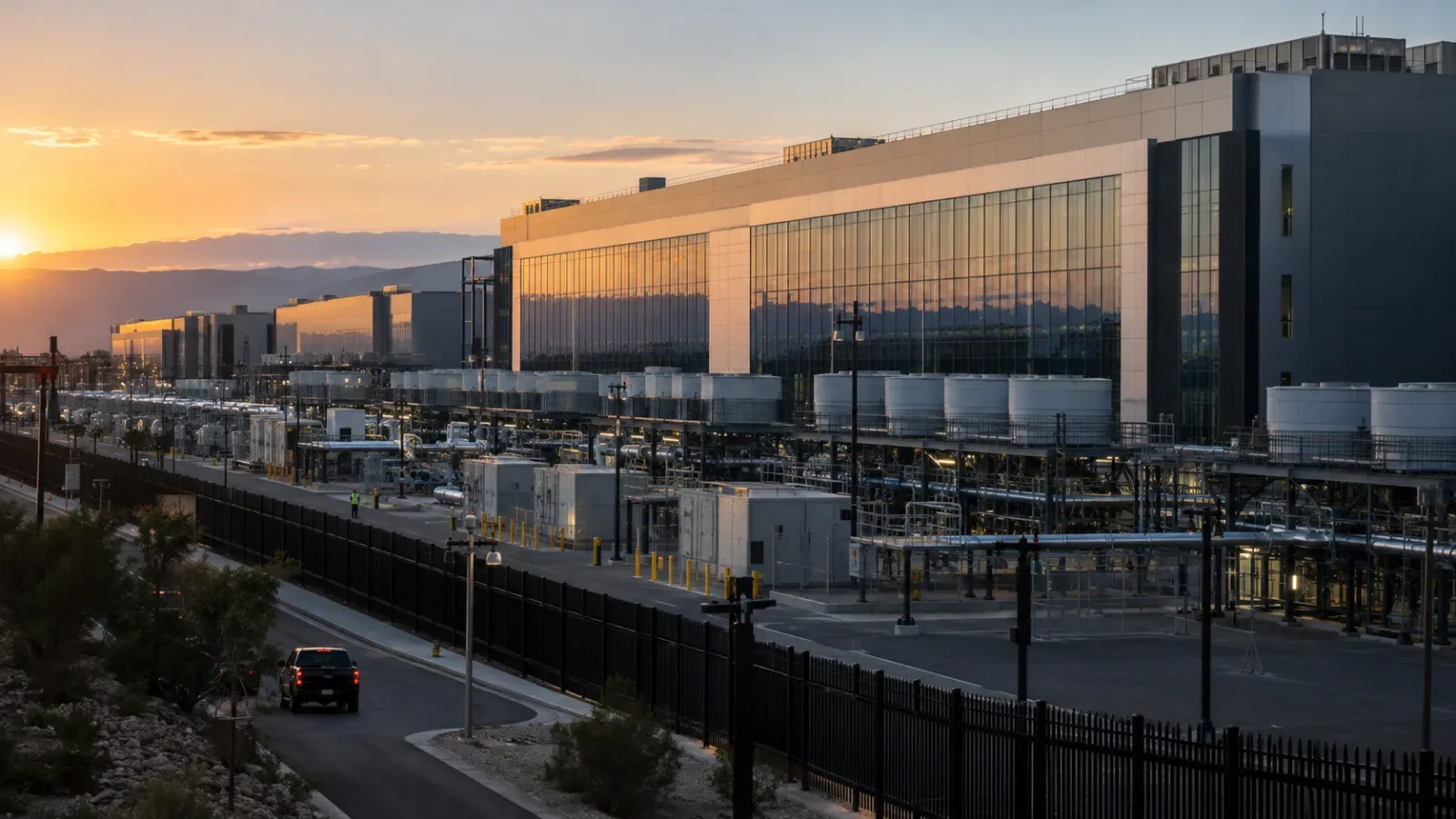
Meta holds $82.45 billion in cash and marketable securities. On Oct. 26, it disclosed a plan to raise up to $95 billion through stock issuance.

Is the company short of cash? Not necessarily. The issue is that the money Meta needs to spend is growing much faster than the money it has now.

The $95 billion will not arrive all at once

Meta's financing plan has two broad stages.

ItemSizeDetails
Initial common stock forward sale$22.5 billionCash comes in later through settlement
Initial mandatory convertible preferred$12.5 billionConverts to common stock under certain conditions
Future Class C issuanceUp to $60 billionAt-the-market (ATM) program planned after Q1 2027
TotalAbout $95 billionPlanned size, not confirmed cash inflow

In a forward sale, the company does not receive cash immediately even though the sale transaction is under way. Meta plans to deliver shares and receive payment when the contract settles.

Mandatory convertible preferred shares can turn into common stock, so they could dilute existing shareholders. The $60 billion ATM program sells shares in portions as market conditions allow. The contract is not final, and the actual amount issued has not been set.

Why does a highly profitable Meta need outside money?

  • 2026 full-year capex forecast: $135 billion to $145 billion
  • Operating cash flow, first three quarters: $96.87 billion
  • Cash and securities at end of September: $82.45 billion
  • Q3 2026 free cash flow: -$2.12 billion

Meta's third-quarter revenue was $64.6 billion, up 26% from a year earlier. The business itself is not breaking down. But the cost of building data centers, GPUs and servers is catching up with the pace at which the company generates cash.

Q3 operating cash flow was $32.79 billion. After capital expenditures and repayment of finance lease principal, free cash flow was negative $2.12 billion. A year earlier it was positive $10.63 billion, so the swing is large.

Long-term debt is about $80.92 billion, only about $1.53 billion more than cash and securities. That alone does not make this a financial crisis. Meta still generates substantial operating cash flow.

The key issue is not the profitability of the business. It is the scale of the capital it needs to invest and what that capital will cost.

What does a stock issuance mean for existing shareholders?

When new shares raise the share count, existing shareholders own a smaller percentage of the company. That is dilution.

How dilution works: a simple hypothetical

  • Before issuance: $1,000 per share (company value of $1 trillion divided by 1 billion shares)
  • Assuming 1.1 billion shares: $909 per share (company value held fixed at $1 trillion)

One existing share's ownership stake falls by about 9.1%. But cash raised from the new shares also adds to company assets, so per-share value does not necessarily fall to $909.

Issuing stock is not automatically bad. If the return Meta earns on the new capital is higher than its cost of capital, long-term shareholder value could even rise.

If AI data centers fail to generate the expected returns, existing shareholders would bear both a larger share count and lower capital efficiency.

A different calculation for Nvidia, AMD and Broadcom

Nvidia, AMD and Broadcom have expressed interest in buying up to $5 billion in Meta Class A shares combined. This is not a confirmed investment.

These companies supply Meta with chips and related technology. If Meta secures funding, it has more room to keep or expand future AI infrastructure orders.

But suppliers buying a customer's stock links their interests. Equity investment and chip sales revenue should not be added together as the same money. Still, the durability of future demand and the customer's own ability to generate cash need to be checked separately.

The ability to raise capital is a strength for Meta. How much that capital can earn is still a question that needs to be tested.

Meta is not short of cash today, but its AI capex is growing faster than its cash flow, and the equity raise puts dilution and returns on capital in focus.

Insight Times Editorial Desk

More by topic

Starting with this story's topics, then what readers are following now

Investor psychology, decision-making and books on investing

META

This story's topic31 storiesSee all →

Meta's Muse Wonder Is a Bid for the AI Operating System, Not Just a Model

An AI agent that remembers, decides and acts is Meta's next platform bet. Whether it pays off depends on user trust and sustainable profit, not just model quality.

Tech

Nvidia's $500 Billion Experiment: Wall Street Asks Who Backs the GPU, Not Just the Chip

The real issue in Nvidia's financing platform is not chip sales. It is how far Wall Street will trust GPU resale prices and rental income three to four years out.

Tech

S&P 500 Flat, 10-Year Yield at 5.16%: 5% Rates Split AI Winners From Losers

Headline indexes barely moved, but underneath, Meta jumped 4.50% and AMD gained 2.38% while Arm sank 7.88% and Oracle fell 3.47%, as the market judged AI names less on growth and more on how fast that growth becomes cash flow.

Tech

AI Agents Started Shopping, So Amazon Locked the Door

Amazon blocked Meta's shopping agent Muse, citing terms of service and security. The bigger question: when AI, not humans, searches, compares and buys, who sees the ads and who owns the front door?

Tech

AI Agents May Kill the Economy of Hassle Before They Kill Jobs

We keep paying for unused subscriptions, stay at low-rate banks and skip price comparisons for one reason: it is a hassle. Agents may attack that friction cost first.

Tech

In the AI Agent Era, the Real Power May Sit With the OS Makers, Not the Model Labs

Apple is tightening Full Disk Access on macOS after the Meta Muse dispute. The bigger story is who controls access to files, mail, messages and payments.

Tech

10-Year Yield at 5.34%: The Problem Isn't a Missing Buyer, It's the Price

Washington and the AI industry are pulling in huge sums at once, and the bond market is demanding higher yields to absorb it. Equity investors now need to watch long-term rates, financing costs and AI payback alongside the Fed's next move.

Macro

A building that houses servers and networking gear and supplies them with powe…

US AI Data Centers Are Headed for 90GW. Gigawatts Now Matter More Than Dollars

Goldman Sachs expects US data center capacity to grow from 64GW at the end of 2026 to 90GW at the end of 2027. The AI race is moving from buying GPUs to building power plants and transmission lines alongside them.

Tech

Tesla Energy's 13.7GWh Paradox: Expectations Ran Faster Than Deployments

Q2 deployments recovered but margins collapsed. Q3 set a record for deployments and still missed estimates. The issue is not the size of AI power demand but how fast it converts into Tesla revenue and profit.

Tech

Why the White House Swapped "AI" for "Super Intelligence"

Executive Order 14434 renames AI across the federal government without defining a new technology. The real story is about roughly $700 billion in capex, free cash flow and electricity.

Tech

Why Nvidia Is Happy to Help Make AI Models Nearly Free

Falling model prices can squeeze model makers. For Nvidia, the number that matters is the total volume of tokens generated worldwide and the compute that produces them.

Tech

Nvidia Put $2 Billion Into Lumentum. Optics May Be the Next Bottleneck, but the Stock Has Already Run

Optical networking is emerging as the next constraint on AI data centers. Investors need to separate the industry's growth potential from the price they are already paying for it.

Tech

Nvidia's Next Target After GPUs: Controlling What AI Agents Are Allowed to Do

OpenShell and Sentry are not about policing what an AI says. They are about controlling, at the server infrastructure level, which files and APIs an AI can touch, what it can execute, and who can actually pull the plug when something goes wrong.

Tech

AI Needs to Find $1 Trillion a Year From Somewhere to Pay Back Its Capex

Saying AI capex is big is no longer the point. The harder question is what end users have to pay for the buildout to pencil out, and Goldman Sachs puts that number at roughly $1 trillion a year.

Tech

HBM

63 storiesSee all →

Memory stacked next to the GPU.

Has Memory Peaked? Prices Are Cooling, but the Shortage Looks Set to Run to 2028

Price growth has slowed and consumer demand is already breaking. Server and HBM supply remains short, and Micron says more than 75% of its 2027 volume is already committed to customers.

Tech

AI Chip Peak Check: Demand Still Rising, Risk Building in 2027-2029 Supply and Funding

DRAM and NAND contract prices are still climbing and HBM suppliers hold the edge. Power shortages, AI financing costs and simultaneous memory expansion are the risks for later years.

Investing

How Far Can China Push DRAM Without EUV

CXMT says it has shrunk DRAM features to 11.95nm using quadruple patterning instead of EUV lithography. The real question is not whether China caught up, but how much more it now costs China to get there.

Tech

Memory Chip Supercycle: Not at Peak Yet, But 5 of 6 Warning Signs Are Flashing

Memory prices are still climbing, but the pace is slowing and PC and smartphone demand is starting to crack under the weight of higher chip costs. This looks less like a price peak and more like a profit plateau building toward the next supply cycle.

Investing

The Real ASML Number Isn't the 3% Pop, It's the 30% Capacity Hike

ASML's rally isn't just an AI trade. Customers are already locking in 2027 tool slots, and ASML is raising Low-NA EUV capacity by roughly 30% to keep up.

Investing

2027 Isn't the End: Citi's Case for a Memory Supercycle Running to 2031

Citi says the memory shortage timeline is stretching again. If AI shifts from "train once" models to continual learning, HBM, server DRAM and enterprise SSDs could all fall short at the same time.

Tech

Samsung, SK Hynix Sold Off on AI Fears. The Orders Haven't Followed Yet

The selloff reflects a market recalculating AI capex speed and memory earnings expectations, not confirmed cancellations. So far, the data show a gap between fear and reality.

Investing

NVDA

75 storiesSee all →

The US-China Summit Didn't Erase Taiwan Risk for Chip Stocks

Washington's Taiwan policy held, but roughly $14 billion in arms sales is still on hold. For AI chip investors, the summit reads less like risk removed and more like a fragile balance extended.

Macro

The AI Bubble Question Has Changed: By Late 2026, It's ROIC Over GPUs

There is no sign yet that AI investment is slowing. If anything, hyperscaler spending forecasts keep climbing. But as the scale of that capital has grown, the market's question has shifted from "is AI growing" to "when, and how much, does this capital come back as cash."

Tech

2027 Investing Needs Alignment, Not Prediction

A new investing book argues the hard part was never picking the next winner. It's staying aligned with where value and bottlenecks are moving while keeping old human weaknesses in check.

Investor Mind

What Jensen Huang sold at the G20 was not GPUs. It was national infrastructure

Nvidia's message is that AI should be laid down like electricity, roads and the internet. After the hyperscalers, the buyers are governments, telcos, regional clouds and industrial data centers.

Tech

ASML Is Discussing 2030 Orders. How Long Can the AI Chip Supercycle Last?

Despite bubble worries, ASML sees equipment shortages through 2028. Investors should watch future production capacity, not just today's orders.

Tech

Nvidia and AMD Back Common Design to Build AI Data Centers Like Lego Blocks

A new Open Compute Project spec aims to let one building host rival chip systems. Whether it speeds up construction is not yet confirmed.

Tech

AI Data Centers in Space? The Real Test Launches This Week

On October 1, a SpaceX rocket carries a sub-50kg satellite with a Nvidia Orin NX chip and Google TPU test hardware into orbit. It is too early to call this a "space data center," but the signal is clear: the AI industry is rethinking where computing should physically sit.

Tech