AI Agents May Kill the Economy of Hassle Before They Kill Jobs
We keep paying for unused subscriptions, stay at low-rate banks and skip price comparisons for one reason: it is a hassle. Agents may attack that friction cost first.

If chatbots cut the cost of answers, agents cut the cost of action
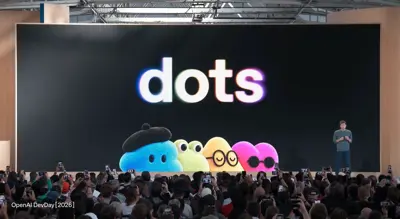
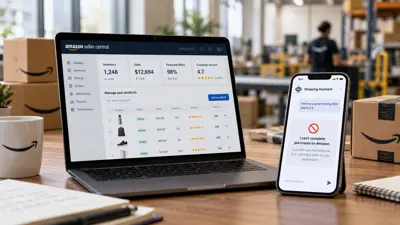
Meta's Muse, released Sept. 8, is not like a chatbot that answers questions. It browses the web, books, buys, fills out forms and links several apps to get real work done. As a finance example, Meta points to a feature that finds recurring charges and helps cancel unused subscriptions.
In economic terms, the core of an agent is less a robot that thinks like a human than software that sharply lowers transaction costs and switching costs. Until now, consumers who knew a better product existed often did not move. Researching, comparing, opening accounts and canceling took too much effort. Companies earned money from that inertia.
Why Wall Street started looking at travel, subscriptions, finance and tax at once
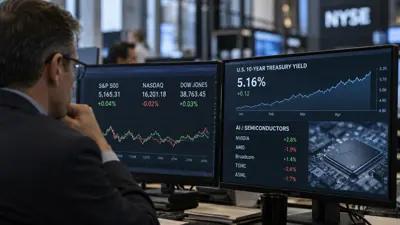
According to Reuters Breakingviews, the S&P 500 was mostly flat in September, but Meta's market value rose by about $450 billion. Booking and Expedia fell about 20%. Netflix fell 18%, Spotify 12% and Planet Fitness 20%. H&R Block and Intuit fell about 20%, and Capital One and Bank of America dropped more than 10%.
- About 20%: one-month drop for Booking and Expedia
- 18%: one-month drop for Netflix
- More than 10%: one-month drop for Capital One and Bank of America
Not all of these moves should be pinned on Muse. Reuters also names high interest rates and energy prices as separate causes. The more useful reading is which industries the market now sees as first candidates for agent disruption.
What agents attack is not inefficiency but the margin that inefficiency creates
A travel platform's value lay in letting users compare many hotels and flights on one screen. If an agent visits multiple sites, compares prices and cancellation terms, and books, users have less reason to open an online travel agency's screen themselves.
Banks are similar. Customers who know deposit rates are low often do not move money because finding, opening and funding a new account is a chore. If an agent can compare rates daily and shift funds to better terms, the pressure falls not on banking itself but on the lending spread that comes from customer inertia.
Subscription services face the same logic. As software that keeps checking usage and cancels what goes unused becomes common, revenue from forgetful payers loses value. Industries that earn fees from information asymmetry and complicated comparisons, such as tax prep, insurance and car sales, sit in the same position.
The front door of the internet changes again
- Internet: Google → Website → Consumer
- Mobile: App → Consumer
- Agent: Consumer → Agent → Service
In the agent era, the key question may shift from "who provides the service" to "who owns the interface between consumer and service." Users would not open Booking, compare bank apps or tour insurers' sites. They would tell an agent, "Book my New York business trip next month in the most sensible way."
Competition changes for companies too. After SEO for search engines and ASO for app stores, Agent Optimization may matter. That means making price, inventory, delivery, refunds, fees, reliability and API access easy for an agent to read and compare.
AI agent disruption map
| Company structure | Agent-era effect | Why it matters |
|---|---|---|
| High switching costs | Higher risk | Automated comparison and switching weaken customer inertia |
| Reliance on brokerage fees | Higher risk | If agents search, compare and transact directly, the interface loses value |
| Reliance on unused subscription revenue | Higher risk | Automated usage checks and cancellation shrink leaked revenue |
| Margins built on information asymmetry | Higher risk | The cost of comparing prices, rates and terms collapses |
| Exclusive physical assets | Strong defense | Agents can change the interface but cannot create scarce real supply |
| Exclusive data and services | Strong defense | With few substitutes, agents end up choosing that supplier anyway |
| Strong network effects | Possible defense | Value grows with the number of participants |
| Compute infrastructure | Possible beneficiary | If consumers and companies both use agents, inference and negotiation volume rises |
In the end, agent versus agent
Consumers tell their agents to buy at the lowest price. Companies can tell theirs to protect the highest margin. If pricing, promotions, advertising, inventory and negotiation are automated at far higher frequency than humans manage, the inference needed for a single transaction could actually grow.
That is why Reuters Breakingviews sees chip companies as potential beneficiaries. Whoever wins the negotiation, both agents must keep computing. Even here, though, "more agents" does not mean "every chipmaker benefits." Actual inference volume, model efficiency gains, falling prices and the spread of in-house chips all need to be watched together.
Insight Times Editorial Desk