10-Year Yield at 5.34%: The Problem Isn't a Missing Buyer, It's the Price
Washington and the AI industry are pulling in huge sums at once, and the bond market is demanding higher yields to absorb it. Equity investors now need to watch long-term rates, financing costs and AI payback alongside the Fed's next move.
Start with the mechanics: Treasuries are a question of price
More Treasury issuance, or less appetite to buy → lower Treasury prices → higher yields → new buyers step in at the higher yield → a new equilibrium forms.
So the claim that "nobody is buying Treasuries" is closer to an exaggeration. The accurate question is how high yields must rise for the market to absorb the new supply.
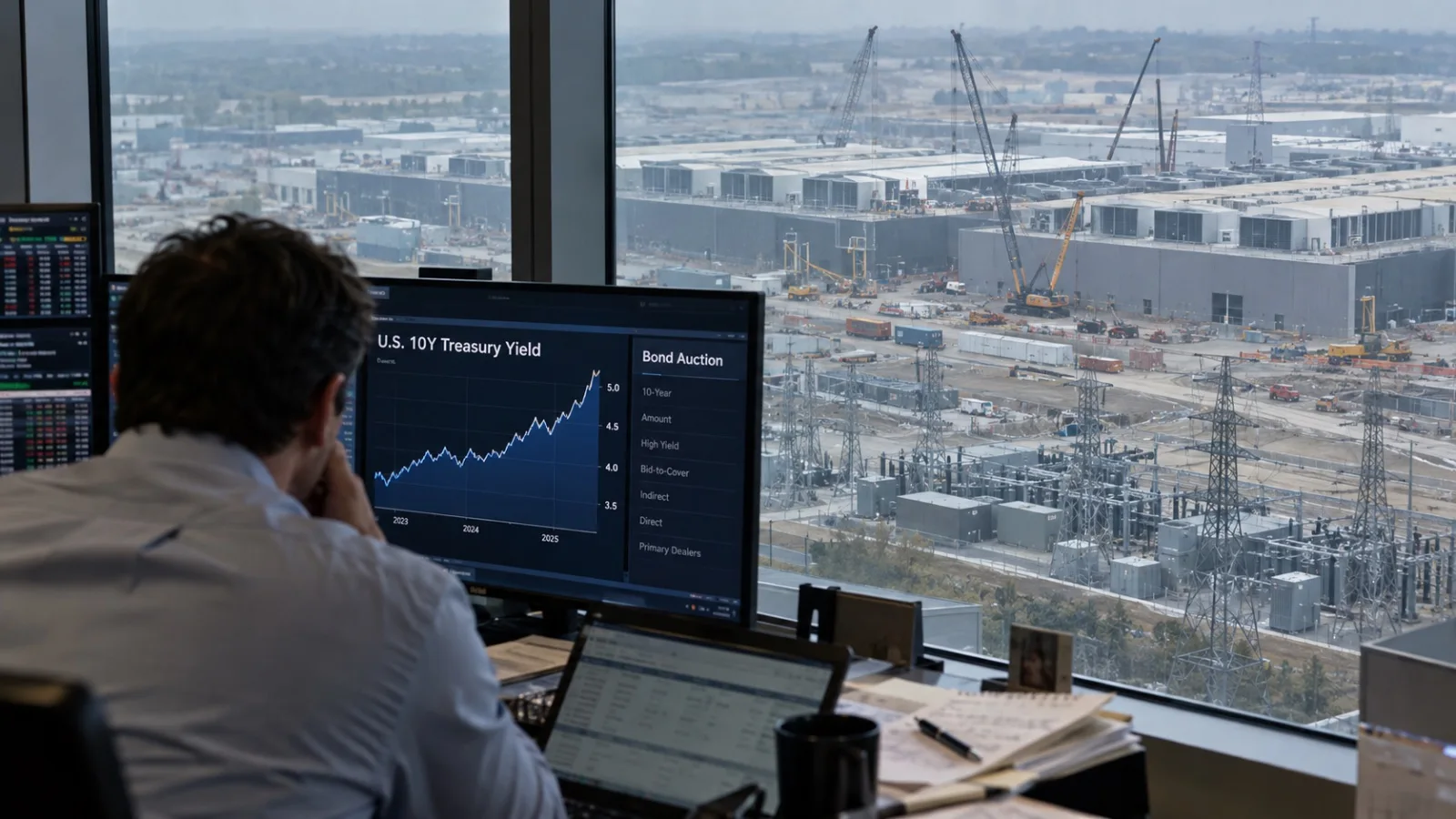
The 10-year Treasury yield hit 5.342% intraday on Oct. 1, its highest level since 2002. Market function has not broken down, though. The move looks more like a repricing in which higher yields draw in new demand.
Three forces are pushing yields up
- $628B: Treasury's projected private-sector net marketable borrowing for the fourth quarter of 2026
- 5.342%: Intraday high for the 10-year Treasury yield on Oct. 1
- $27B: Size of the bond deal tied to Meta's Hyperion data center project
First, Treasury supply. Fiscal deficits, maturing debt that must be refinanced and high interest costs structurally raise the government's need to borrow. Treasury expects to borrow a net $628 billion from the private sector in October to December 2026 alone.
Second, inflation and the term premium. High oil prices and services inflation can delay Fed easing. Add fiscal and supply uncertainty, and investors demand extra compensation for tying up money for 10 or 30 years.
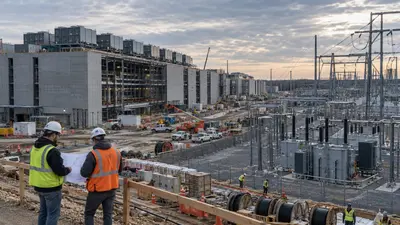
Third, AI's arrival in the capital markets. Meta's large data center bond, up to $42 billion in financing for Anthropic's infrastructure and Amazon's proposed $8 billion special purpose vehicle for GPU assets show AI spending moving beyond what cash flow can fund and into the credit market.
One important correction: this is not QT
It is wrong, on timing, to list the Fed's quantitative tightening as a direct cause of today's higher long-term yields. The FOMC ended the reduction of its securities holdings in December 2025. In its September 2026 decision, the Fed again said it would roll over all maturing Treasury principal and reinvest agency securities principal into Treasury bills.
In other words, the Fed is not steadily shrinking its Treasury holdings and adding to supply pressure as it once did. The better explanatory variables now are the higher policy rate, fiscal supply, inflation and the term premium.
Foreign investors don't buy on US yields alone
Japanese and European investors look at yield after currency hedging, not the headline rate. Even if US yields are high, Treasuries lose relative appeal when dollar hedging costs are steep or when yields on home-country bonds rise.
Japan is an especially important case. Rising Japanese yields and high hedging costs are weakening Japanese institutions' appetite for foreign bonds. Even so, this looks less like a Treasury dump and more like marginal buyers becoming more price sensitive.
By Treasury's TIC data, holdings of US Treasuries in July 2026 were $1.1039 trillion for Japan and $618.0 billion for China. China's holdings fell from a year earlier, but foreign official institutions were net buyers of $44.4 billion in long-term US securities overall that month. That is why it is hard to say foreign demand has vanished.
Five indicators for US equity investors
| Indicator | What to watch | Interpretation |
|---|---|---|
| 10-year and 30-year yields | Whether long maturities rise on their own, apart from the policy rate | Possible sign of a larger term premium and fiscal strain |
| Treasury auctions | Bid-to-cover, tails, dealer takedown share | At what yield new supply is being absorbed |
| Oil and inflation expectations | Brent, 5y5y | Whether higher yields reflect growth or prices |
| AI credit market | Corporate issuance, spreads, project finance | How far AI capex depends on debt beyond cash flow |
| AI payback | Free cash flow, ROIC, utilization, capex relative to revenue growth | Whether AI generates enough cash to outrun the rate burden |
Conclusion
The essence of the rise in long-term Treasury yields is not that "buyers of Treasuries have disappeared." It is closer to the market demanding a higher price while the US government must keep borrowing heavily, inflation risk lingers and the AI industry also seeks long-term capital on a large scale.
The shift matters for equity investors for the same reason. Long-term yields, Treasury auctions, AI corporate bonds and credit spreads, and how quickly companies turn capex into actual cash flow are becoming more important than any single FOMC meeting.
Insight Times Editorial Desk