AI Could Raise Prices Before It Lowers Them, and the Fed Is Watching 2027
Fed Governor Lisa Cook sees AI infrastructure spending creating inflation pressure that may not fade quickly. The first effect of the buildout may be higher power and construction costs, not lower prices.
The Fed questions the belief that AI is a deflationary technology
The familiar bullish case for AI is simple. The same worker does more. Unit costs fall for companies. The economy's capacity to supply goods and services grows. Over the long run, that is plausible.
But the Fed is looking at the period before those long-run gains arrive.
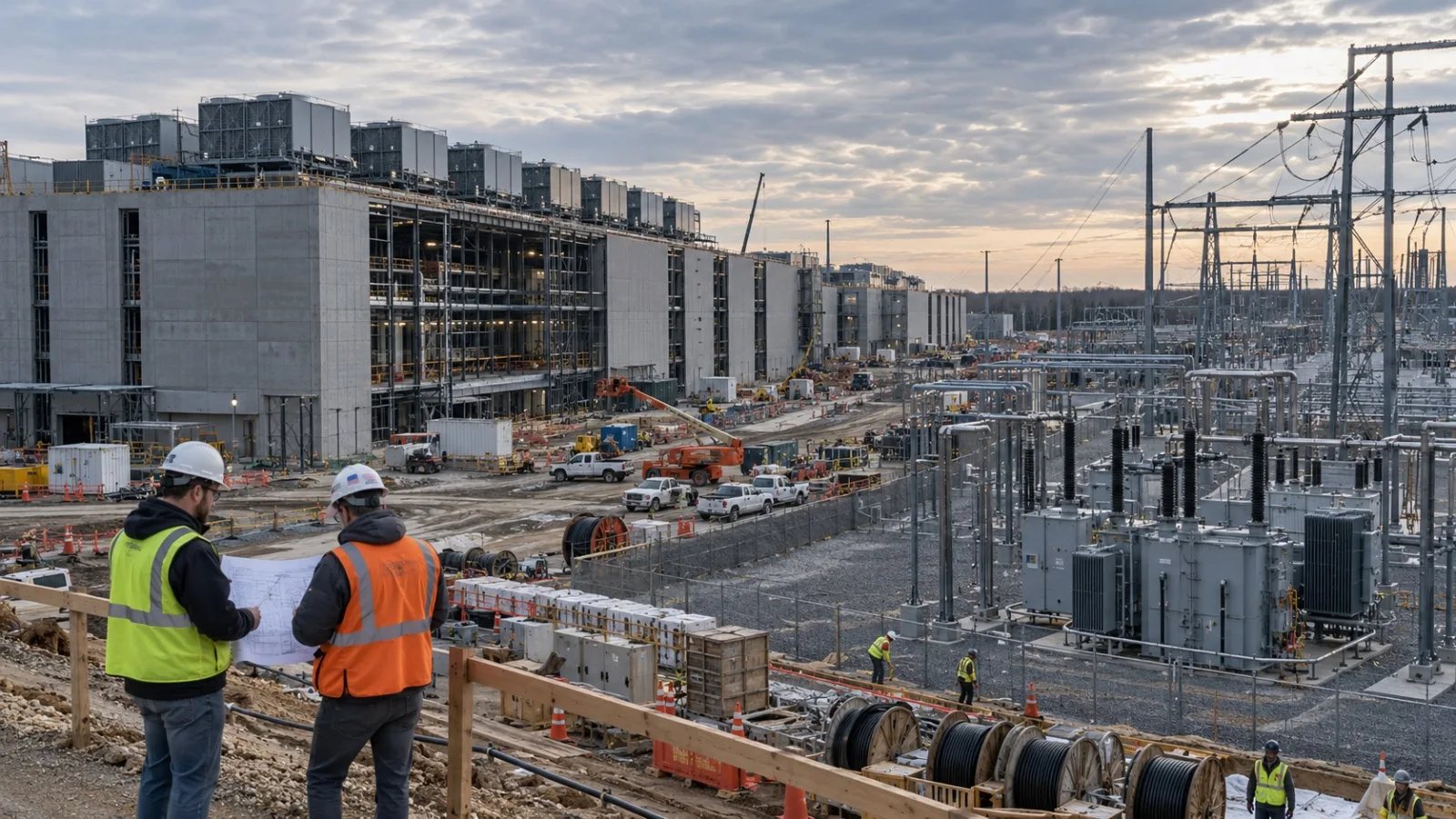
On Oct. 1, Fed Governor Lisa Cook said AI infrastructure construction is creating "inflation pressure that may not resolve quickly." She said she sees it as one of the main risks for 2027. She also kept her view that AI will raise productivity over the long term. The question is when the productivity shows up, and where the next bottleneck appears in the meantime.
The remark is not a sudden turn. In a Sept. 28 speech, Cook said AI-related price increases first looked like relative-price changes in specific industries. But the construction labor and energy that data center investment needs are shared with other industries, so the pressure could spread into broader prices.
An investment shock comes before the productivity shock
Stage 1: AI capex surges. Data centers, GPUs, HBM, optical networking, power generation equipment, cooling, land.
Stage 2: Bottlenecks and rising relative prices. Power, transformers, construction costs, skilled labor, cost of capital.
Stage 3: Productivity spreads. Unit costs fall in software, back office, research and customer support.
Cook noted that only a portion of the roughly $2 trillion in data center investment plans companies have announced has actually been spent. That suggests the bottlenecks may not be ending. The investment pipeline may still have a long way to run.
- $2T: Announced data center investment plans Cook cited. Actual spending is still only a portion.
- 3.4%: Year-over-year rise in US PCE prices in August 2026, still well above the Fed's 2% target.
- About 5%: The rise in electricity and water costs over the past year, per Cook. AI is not the only cause, but it hints at pressure from infrastructure demand.
It would be wrong to say AI structurally lifts all US prices
The strongest counterargument is this. Higher prices for transformers, gas turbines, HBM and data center sites do not translate directly into equal increases in household CPI and PCE.
First, AI infrastructure costs are concentrated in a small number of large companies. With high cash flow and margins, they can absorb costs, or choose to compete by pricing AI services low.
Second, high prices draw in supply. If strong profits in HBM, advanced packaging, optical networking, power equipment and generation encourage expansion and new entrants, bottlenecks ease over time.
Third, AI's productivity effects may spread faster than those of other technologies. In a Fed small-business survey that Cook cited, many small firms using AI reported productivity gains. If those gains spread quickly through software development, customer support, accounting, logistics and R&D, they could offset the inflation from the buildout sooner than expected.
In a Sept. 29 speech, the New York Fed likewise said AI-related demand is pushing up some prices. It also said there is no evidence yet that this has spread into broad, persistent inflation. The difference matters.
"AI relative-price shock" is more accurate than "AI inflation"
| What may get more expensive first | What may get cheaper later | Why it matters |
|---|---|---|
| Power, grid interconnection, generation equipment | Cost per unit of AI compute | Total power demand can rise while compute efficiency improves at the same time. |
| Transformers, cables, cooling, data center construction | Software development and IT operating costs | Physical infrastructure is scarce, while digital work gets automated. |
| HBM, advanced packaging, optical networking | Unit cost of knowledge work | Higher AI supply chain prices and better corporate productivity can coexist. |
| Financing cost of AI projects | SG&A and labor costs at some companies | Cost of capital rises, but labor productivity can improve. |
So what changes first is likely to be relative prices, more than the overall US price level. Electricity and data center land get pricier. The unit cost of coding and document processing falls. What the Fed most needs to guard against is not higher power and construction costs themselves. It is a second-round spread into wages, service prices and inflation expectations.
The paradox for investors: if AI is too strong, the discount rate on AI stocks can rise too
A stock price is a contest between two forces: how large future cash flows become, and the rate at which they are discounted.
Strong AI capex lifts revenue and earnings at Nvidia and at makers of memory, networking, power equipment and cooling, and at data center companies. That grows the numerator of equity value.
But if the same investment boom lifts US growth, power demand, corporate bond issuance and competition for capital, and makes inflation sticky, long-term and real yields can rise. That grows the denominator.
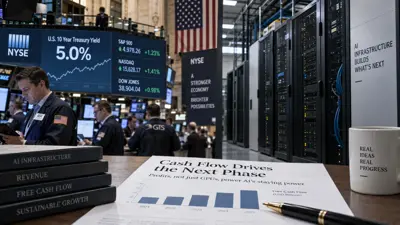
In early October, the 10-year Treasury yield hovered above 5.3%, its highest level in more than 20 years. Reuters cited competition for capital from AI infrastructure investment as one backdrop, along with strong growth and inflation worries.
Three paths for 2027
| Scenario | What happens | What matters for markets |
|---|---|---|
| Bottlenecks last | AI capex keeps growing while power, construction and equipment supply fail to keep up. | Sticky core inflation, higher long-term yields, pressure on multiples for long-duration growth stocks. |
| Productivity arrives early | Companies apply AI to real work quickly, improving revenue per employee, SG&A and unit labor costs. | Growth holds, price pressure eases, and AI benefits spread to user industries. |
| Capex rolls over | AI monetization is delayed, or power and financing limits push projects back. | Price pressure eases, but earnings estimates across the GPU, memory and power equipment supply chain could be shaken. |
Insight Times Editorial Desk