AI Memory Supercycle: Earnings Have Exploded, and Stocks Now Ask How Long It Lasts
Micron's record quarter is good news for Samsung Electronics and SK hynix. But the market's next question is whether earnings estimates can keep rising through 2027, and whether HBM4 and long-term contracts can protect margins.
Half of South Korea's exports were chips
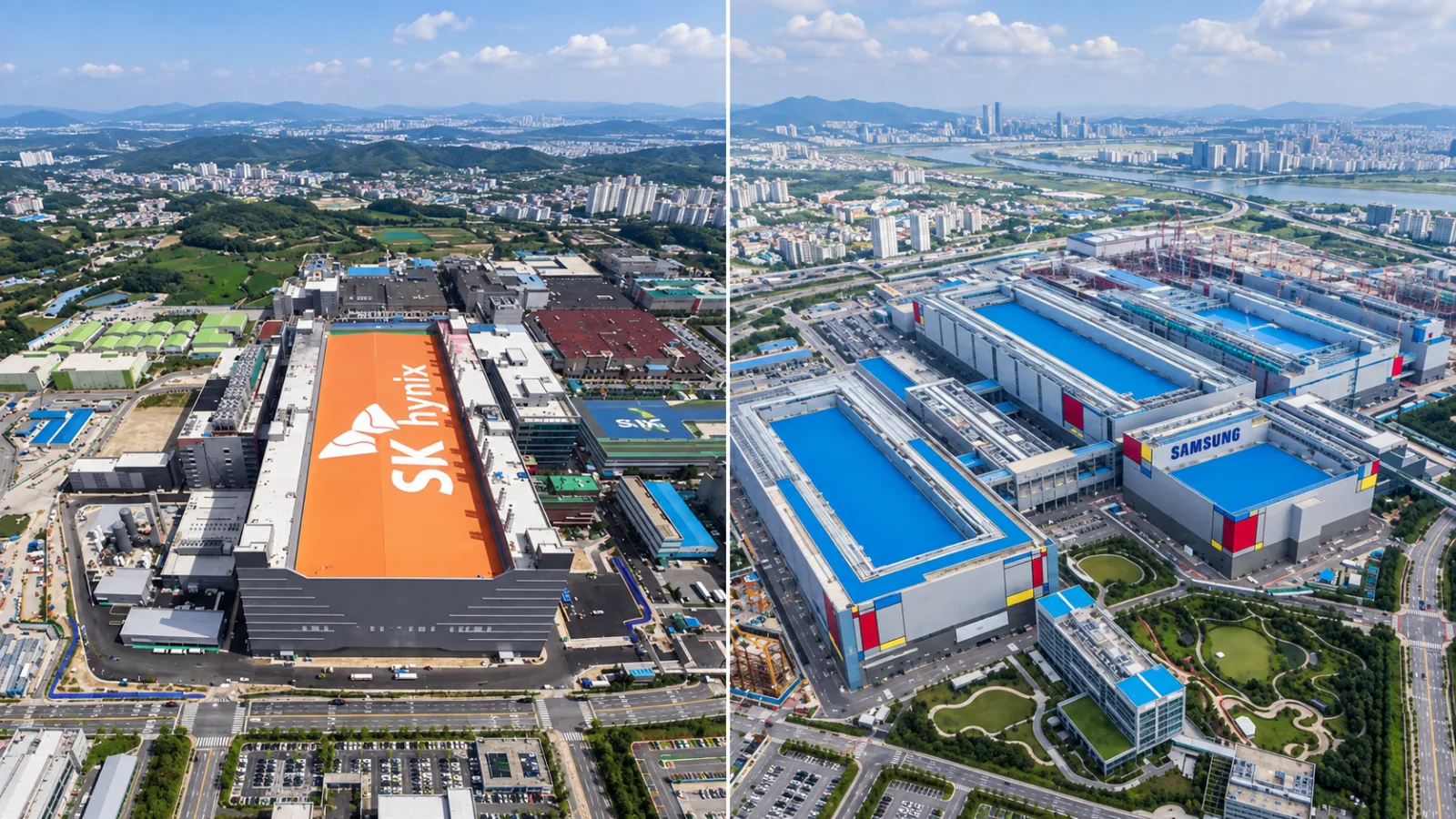
South Korea's September exports reached $120.94 billion, up 83.5% from a year earlier. Semiconductors made up $60.3 billion of that. Chip exports jumped 262.8% and accounted for 49.9% of the total.
Memory alone was $54.07 billion, up 358.6% from a year earlier. That is roughly ten times the $5.54 billion in system-chip exports. The surge is better described as AI-driven gains in memory prices and volumes at the same time than as a broad boom across Korean chips.
Contract prices for 16Gb DDR5 rose about 28%, from $37.5 in May to $48 in September. Prices for 128Gb NAND rose about 15% over the same period, from $26.5 to $30.6. Price strength is spreading beyond HBM to server DRAM and storage.
- $60.3B: September Korean chip exports, up 262.8% year on year
- $54.07B: September memory exports, up 358.6% year on year
- $48: September 16Gb DDR5 contract price, up about 28% from May
A $188 billion-won profit forecast, and a market already asking the next question
The absolute scale of earnings is historic. As of Oct. 1, FnGuide consensus for third-quarter operating profit was about 110.3 trillion won for Samsung Electronics and about 78.1 trillion won for SK hynix. Combined, that is about 188.3 trillion won. If Samsung reaches its figure, it would post quarterly operating profit above 100 trillion won for the first time.
- 110.3 trillion won: Samsung Q3 operating profit consensus (FnGuide)
- 78.1 trillion won: SK hynix Q3 operating profit consensus (FnGuide)
- 188.3 trillion won: combined forecast, a market estimate and not a confirmed result
The point is not simply that chipmakers are earning a lot. AI memory demand has lifted more than HBM prices. It has also tightened supply of server DRAM and commodity DRAM, so the upturn now runs through the whole income statement of Korea's memory makers.
The same numbers show why shares can shrug at good results. If the market already expects Samsung above 100 trillion won and SK hynix in the high 70 trillions, a record print is not new information. In Samsung's preliminary results next week, what matters is less the record itself than how far it beats consensus, and whether guidance supports raising estimates for next quarter and 2027.
Micron's real signal is not the $61.5 billion
Micron's fiscal fourth-quarter revenue was $54.23 billion, about 4.8 times the year-earlier figure. Non-GAAP EPS was $33.42 and non-GAAP gross margin was 87.0%. Guidance for next-quarter revenue is $61.5 billion, plus or minus $1.5 billion.
The number that deserves a longer look is future volume. Financial commitments that customers have placed on long-term supply agreements rose about 45%, from $22 billion in June to $32 billion. Remaining performance obligations (RPO) rose 50%, from $100 billion to $150 billion.
Long-term contracts cut both ways. They add visibility on volume and revenue and can dampen the extreme earnings swings of the memory industry's past. But when spot prices spike, suppliers may struggle to capture all of the increase. So the question going forward is less whether long-term agreement volume is growing than whether those contracts hold up alongside high operating margins.
HBM also shares wafer capacity with conventional DRAM. Samsung expects HBM to take about 30% of the industry's total DRAM wafer capacity in 2027. The higher the HBM share, the less capacity is left for conventional DRAM. Growth in AI memory is itself tightening supply of commodity DRAM.
Samsung and SK hynix: the same boom, different questions
In the second quarter of 2026, global HBM revenue share was 50% for SK hynix, 33% for Samsung Electronics and 18% for Micron. SK hynix still leads but slipped from 58% the previous quarter. Samsung jumped from 21% to 33%. As HBM4 starts to show up in revenue in the second half, the basis of competition shifts from whether a company supplies HBM to how much HBM4 it can supply at high yield and margin.
| SK hynix | Samsung Electronics | |
|---|---|---|
| Current strength | No. 1 in HBM; earnings highly sensitive to AI server memory | No. 1 in overall DRAM; HBM share recovering fast |
| What the stock is asking | Can HBM3E leadership carry over to HBM4? | Can it narrow both its HBM discount and its foundry discount at once? |
| Next catalyst | HBM4 revenue growth, long-term agreements with key customers, higher 2027 estimates | HBM4 revenue surge, sustained memory margins, smaller foundry losses |
| Key risks | Rivals gaining share, missed expectations, a stronger won | HBM4 execution delays, pace of customer qualification, non-memory losses |
SK hynix: holding the lead is the key
SK hynix reflects the AI memory cycle in its earnings more directly than any other company. At its second-quarter report, it said it had finished negotiating long-term supply agreements with about 10 customers, including key ones, and that it began volume HBM4 supply in the second quarter.
The focus now is not that HBM demand is strong but whether it can keep its technology lead and high margins in HBM4. With its HBM share down from 58% to 50% in the second quarter, the pace of catch-up by Samsung and Micron is a variable that needs checking.
Samsung Electronics: closing the discounts matters more than the memory boom
Samsung's structure is more complex. It expects third-quarter HBM4 revenue to rise more than threefold from the prior quarter, and HBM4 to account for more than 60% of second-half HBM revenue. If confirmed, the market could price in a recovery in HBM competitiveness along with higher memory profit.
Foundry has also become important. Some brokerages see a possible third-quarter foundry return to profit if incentive provisions are excluded. That is not confirmed. If it happens, Samsung's stock story could shift from a memory-cycle beneficiary to a broader re-rating in which HBM4 and narrowing non-memory losses advance together.
Why shares can stall before earnings do
On Oct. 1, Samsung Electronics rose 2.79% and SK hynix rose 3.21%. Those are clear gains. But early in the session, the U.S. 10-year Treasury yield rose above 5.3%, and neither stock found momentum. Gains widened later as Micron's results and the export data were digested. Micron's own shares edged lower in U.S. trading that day despite record results and guidance.
That reaction matters. The market is asking less whether results are good and more how long they can last. With rising long-term yields, already high expectations and worries about more supply in 2027 all present at once, the response to record numbers can be limited.
Equity markets price how much better results are than expected before they price the absolute level. For that reason, the real warning sign for memory stocks may appear not when operating profit falls, but when the pace of upward revisions to profit forecasts slows.
In fact, in FnGuide consensus at the end of September, third-quarter forecasts for Samsung and SK hynix were still at record highs, but the one-month estimates were lower than the three-month ones. One-month operating profit consensus was about 105.6 trillion won for Samsung and about 74.1 trillion won for SK hynix. The decline from the three-month figures was attributed more to a stronger won than to any weakening in memory conditions.
A stronger won matters especially for Korean memory makers. A large share of their revenue is earned in dollars, so a stronger won can reduce revenue and profit when translated into won. Even if the cycle stays strong, a fast drop in the exchange rate could slow the rise in won-based profit consensus.
Insight Times Editorial Desk