Tesla Optimus Isn't a Robot Problem Anymore. It's a Factory Problem
Tesla is auditing Chinese suppliers not because Optimus moves more naturally, but because the company is now testing whether joints and actuators can be built at scale, at cost, and at consistent quality.
<span class="kicker">TESLA · ROBOTICS</span>
<section>
The word to watch here is not "order." It's "audit"
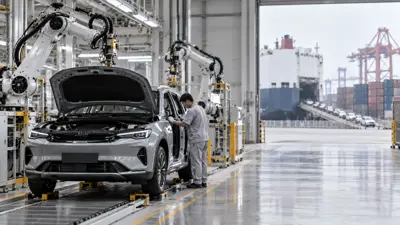
On September 21, Chinese outlet The Paper reported that Tesla's robotics team had spent the prior week visiting factories belonging to Yangtze River Delta suppliers, including Tuopu Group, Sanhua Intelligent Controls and Joyson Electronics, conducting plant audits. The audits were not confined to Ningbo. They extended to Hangzhou and Shanghai, and many of the companies involved already supply Tesla's car business.
The key detail: some suppliers reportedly received Optimus-related orders before the audits took place. That sequencing matters, because an audit like this is not a technical meeting. It is a review of whether a specific production line meets quality standards, regulatory compliance and repeatable output. Tesla has not disclosed which parts each supplier will make for Optimus or how large the orders are. That distinction matters. Tuopu, Sanhua and Joyson being named as candidate suppliers for the robot's supply chain is one fact. What each company actually ships, and in what volume, is a separate and still-unconfirmed one.
The gap between those two facts is the whole story. A prototype only needs a few skilled engineers to hand-assemble a handful of units. A mass-produced product needs the millionth unit to deliver almost the same torque, heat output, precision and durability as the first. The central question around Optimus is shifting from "can it walk" to "can Tesla keep making it to the same quality, again and again."
</section>
<section>
The real hard problem in humanoid robots: building the same joint 10,000 times
A humanoid robot is a product where dozens of joints, sensors, motors, reducers, controllers, wiring and structural parts all interact. A small deviation in an elbow or a finger can compound into errors, noise, heat and failure rates across the whole machine.
| Production variable | Why it matters | Signal for investors to watch |
|---|---|---|
| Cycle time | A longer build time per unit raises equipment and labor costs | Simplified assembly steps, rising automation share |
| Yield | Defects in actuators and hand modules drive costs up sharply | Falling rework rates, lower early-defect rates |
| Consistency | Small per-joint deviations add up to unstable overall motion | Repeatable torque, precision and heat specs across units |
| Cost | Commercialization depends on more than performance; it needs to beat the economics of human labor | Falling component prices, supplier diversification, design simplification |
China's 21st Century Business Herald reported that this round of audits is aimed at actual mass-production readiness, and that orders have already gone out into the supply chain. Earlier audits reportedly examined automotive-grade production cycles, high yield rates, per-component cost and suppliers' ability to manage their own sub-suppliers. If accurate, that suggests Tesla is now treating Optimus less like a robotics research project and more like a manufacturing problem, the way it treats a car.
</section>
<section>
Why Fremont matters more than any supplier headline: Tesla actually moved money and floor space
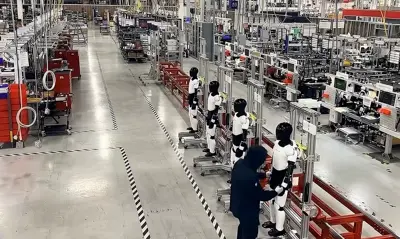
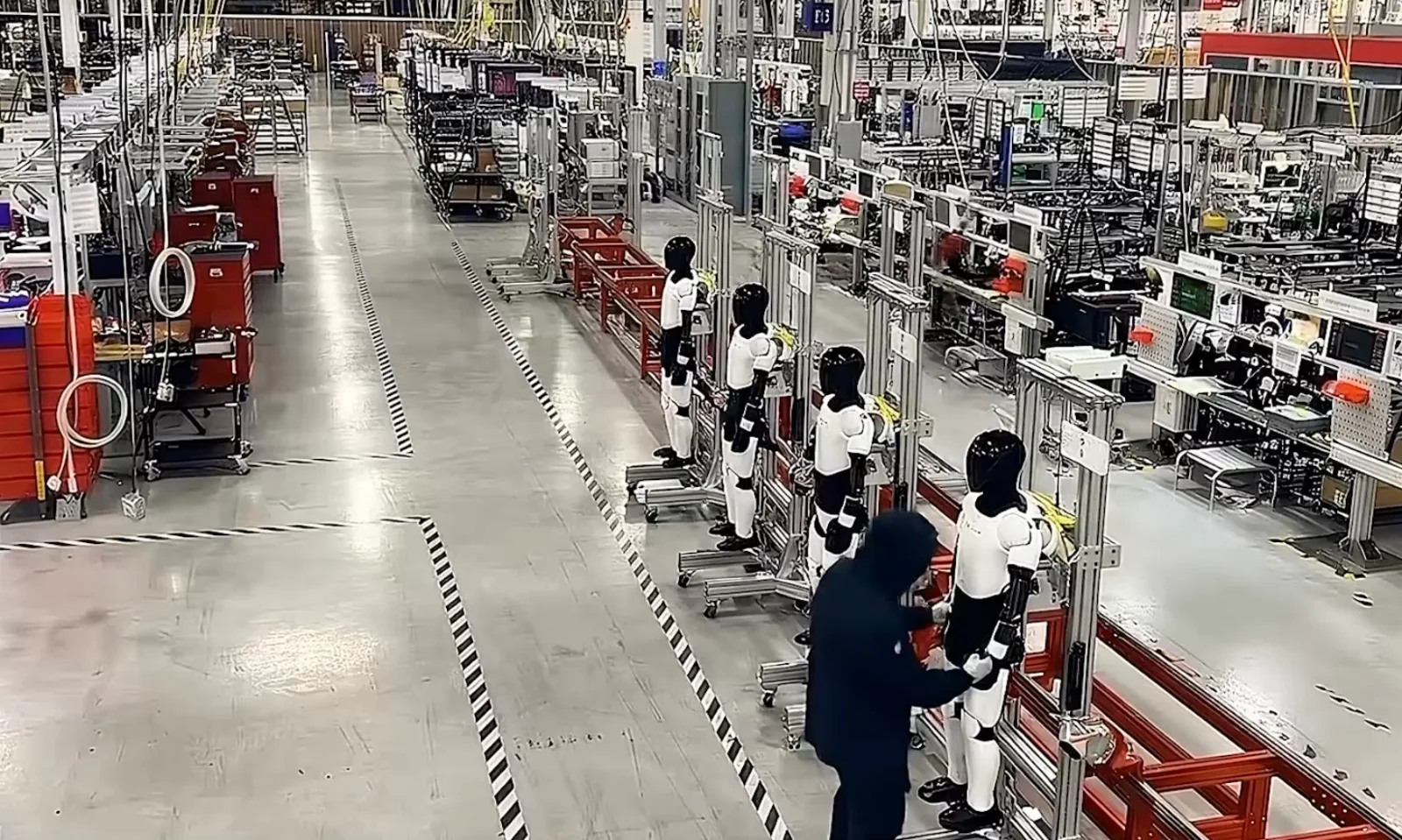
The strongest signal on the record comes from Fremont, not from supplier reports. In its second-quarter 2026 update, Tesla said it had torn out the Model S and Model X production lines and is installing Optimus's first production line in that same space. The first units off that line are meant for "Optimus Academy," where they will be used to collect training data and develop new capabilities. Construction of an Optimus production facility is also underway in Texas.
One distinction needs to stay clear here. In Tesla's own production capacity table, both the California and Texas Optimus lines show blank capacity figures, with status listed as "Construction." Tesla itself has noted that installed capacity and actual production rate are different things, and that ramp-up can run into constraints such as equipment utilization, parts supply and factory upgrades.
That means figures circulating in outside reports, like a claimed one million units a year out of Fremont, should not be read as current production capacity. A large long-term design target and stable, high-volume production in 2026 are two very different claims.
</section>
<section>
China's supply chain could pull Optimus forward on both speed and cost, and cut both ways
There is a clear upside if Tesla expands its existing Chinese auto suppliers into robotics. These are companies that already run automotive-grade quality control, precision machining, large-scale sourcing and fast capacity expansion. Using them instead of building a new supply chain from scratch could shorten development lead times and speed up Tesla's move down the cost curve.
There is a risk on the other side too. The more that core mechanical parts and electronics get concentrated in one region, the more tariffs, export controls, localization requirements and geopolitical friction can affect cost and supply stability. Even if initial assembly happens in the United States, a globally sourced parts ecosystem means Optimus's real manufacturing cost will stay sensitive to supply-chain policy.
</section>
Insight Times Editorial Desk