Humanoid Robots Sold Just 7,000 Units Worldwide Last Year
Tesla Optimus, Unitree and Figure demo videos make the humanoid era look like it has already arrived. Real 2025 sales tell a smaller, stranger story.
The humanoid era has started, but the labor market hasn't
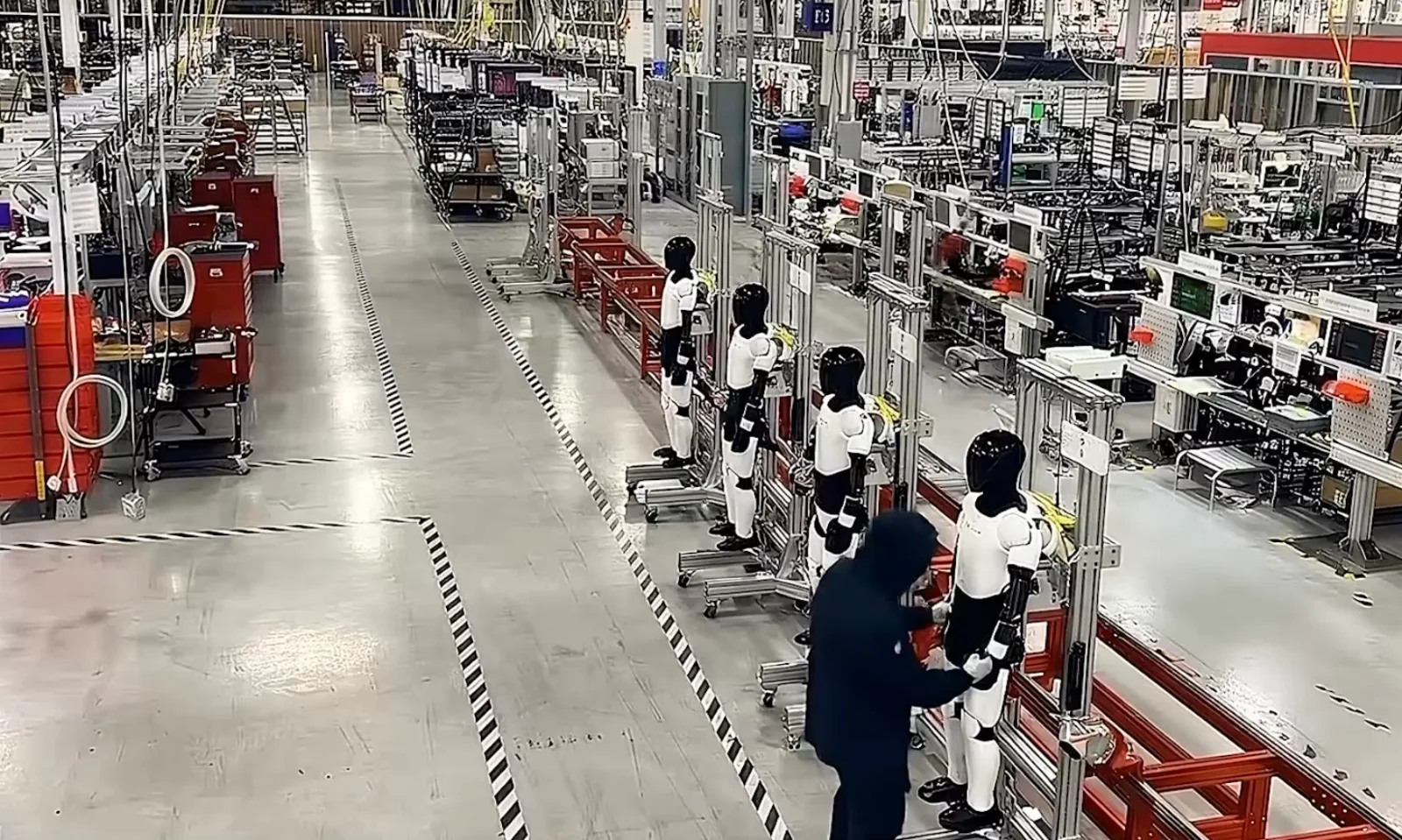
The International Federation of Robotics (IFR) has begun tracking humanoid robot sales as a separate category, giving the industry its first real baseline for comparison. IFR defines a humanoid as a robot with a human-like form that can work autonomously without major changes to environments built for people. Two legs aren't required. A wheeled base still counts if the robot has a human-like torso, arms, sensing and autonomy.
The numbers are still small. IFR data cited by Reuters puts 2025 humanoid sales at roughly 7,000 units. For comparison, the most recent full-year figures show about 542,000 traditional industrial robot installations in 2024, plus roughly 199,000 professional service robots. The years don't line up perfectly, so this isn't an exact apples-to-apples comparison, but it's clear humanoids remain a tiny, early-stage slice of the broader robotics market.
Humanoid shipment outlook
- 2025, actual (IFR): 7,000 units — industrial and professional service sales
- 2026, forecast (Bank of America): 90,000 units — about 12.9x the 2025 actual
- 2030, forecast (Bank of America): 1.2 million units — about 171x the 2025 figure
Chaining those forecasts together implies a compound annual growth rate of roughly 180% from 2025 to 2030. The 2026 and 2030 figures come from Bank of America Global Research forecasts, not confirmed outcomes.
The bigger surprise is where these robots are actually being used
Most humanoids sold today aren't replacing a single worker on a production line. According to Reuters, many purchases come from research institutions and companies buying units for AI development and behavioral data collection. Deployments at automakers remain mostly small-scale pilots.
That distinction matters. A robot being sold is not the same as a robot providing economically useful labor. The same unit could be gathering pick-and-place data in a lab, running demos in a showroom, or being tested on a factory floor for a few supervised hours a day.
Take an automaker that buys 100 humanoids. If the stated reason is "AI research," it's still an experiment. But if the numbers start reading "100 units running three shifts of logistics work with minimal human intervention, paying back the investment in 2.3 years," the character of the industry changes. At that point the robot stops being a technology demo and becomes capital equipment on the factory floor.
From 7,000 to 1.2 million: what needs to be proven
| What to track | Why it matters | Good signal |
|---|---|---|
| Actual sales / shipments | Confirms the market is growing on orders, not announcements | Manufacturing and logistics customers growing faster than research buyers |
| Robot-hours | Shows how many hours robots are actually doing productive work | Rising hours that look like paid labor, not demo time |
| Task success rate | Share of tasks completed successfully | High success rates in real deployments, not controlled demos |
| Human intervention rate | How often a human has to teleoperate or rescue the robot | Steadily declining intervention rates |
| Total cost per hour / payback period | The final gate between technology and economics | Total cost comparable to human labor costs, with shortening payback periods |
When watching Tesla Optimus, watch these numbers, not the dance moves
For Tesla investors, Optimus is a large long-term option. But a big long-term total addressable market is a different question from how much of that success can reasonably be priced into the stock today. What matters right now isn't how natural the demo videos look. It's the cost to build one unit and how much money one unit actually earns or saves.
Manufacturing cost. How fast do costs for actuators, gearboxes, hands, sensors, batteries and compute come down as production scales.
Uptime. How much time a unit actually spends working, once charging, breakdowns and maintenance are excluded.
Autonomy. How quickly the share of tasks completed without human teleoperation rises.
Payback period. Including purchase price and operating costs, how many years it takes a customer to recoup the investment.
The question in the end is simple: when does one robot start working cheaper and more reliably than one human? That date is likely to determine when the humanoid market actually becomes commercially real.
Insight Times Editorial Desk