Before Robots Sell, Chips Sell First: Following the Money in the Humanoid Race

Billions of dollars are moving before humanoid robots reach mass sales. Compute suppliers may see revenue first, but that does not guarantee stock returns.
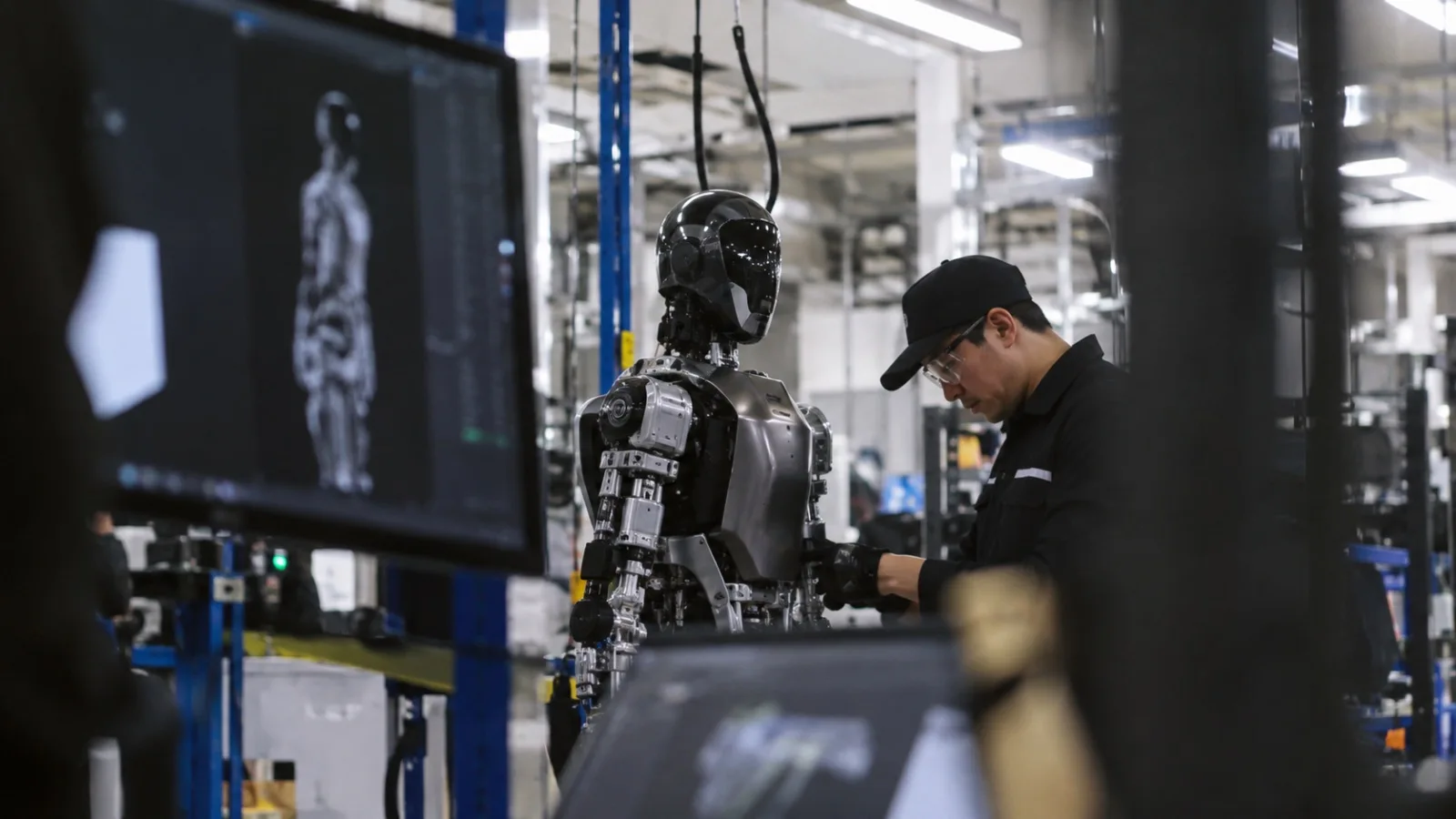
Billions of dollars are moving before humanoid robots go on sale in volume. Robot makers pay up front to train their AI. Chip and AI infrastructure suppliers get a chance to book revenue from that development race. But revenue arriving first does not guarantee a stock return.

What $3.5 billion says about the order of money

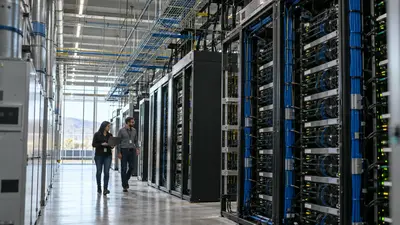
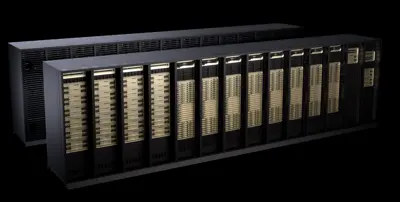
In September 2026, humanoid developer Figure announced an initial $3.5 billion compute commitment with AI cloud company Nscale. It also said it intends to expand the deal to more than $6 billion. The potential plan involves up to 100,000 Nvidia GPUs, with an initial deployment target in the second half of 2027. Nscale announcement

The figure should not be read as $3.5 billion of revenue Nvidia has already secured. What Figure wants to buy is Nscale's compute service. Actual GPU orders, equipment supply, data center start-up and revenue recognition are separate steps. The "more than $6 billion" is an intention to expand, not a firm commitment.

An upfront cost for Tesla, an upfront opportunity for chips

Robot companies must collect data, train AI models, and go through repeated testing and manufacturing before they can cut real customers' costs. They have to spend before they earn.

Chip suppliers can find business in development compute demand even if robots are not yet mainstream. But chips bought by a cloud company do not automatically become permanent demand from a robot company. Shortfalls in development funding, delays in securing data center power, a switch to in-house chips and gains in training efficiency can all change that demand.

Optimus: hours worked, not units built

In its third-quarter 2026 materials, Tesla said it had started Optimus production on a high-volume line in Fremont. The stage the company cites is an early ramp. That does not mean it is selling in volume to outside customers at a profit. Tesla Q3 update

Tesla has its car factories as a test environment. The first question is whether robots can do useful work internally and lower labor costs, defects and work time. The next stage is purchases and reorders by outside companies. Unit output alone should not be counted as success at both stages.

Investors should check several measures together: hours of unsupervised continuous work, success rates, human supervision time, breakdown and repair costs, and total cost of ownership per robot.

Nvidia's market is more than the robot's body

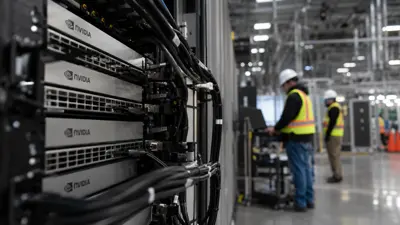
Nvidia divides robotics compute into training, simulation and on-device inference. Data centers teach behavior, virtual environments let robots rehearse risky attempts repeatedly, and the chips inside the robot sense and decide in the real world. Nvidia robotics

While robot sales are small, training infrastructure may grow first. As real deployments increase, on-device inference chips, sensors and power-management parts could matter more. But the three markets should not be assumed to have the same growth rates or margins.

What Figure shows about production versus sales

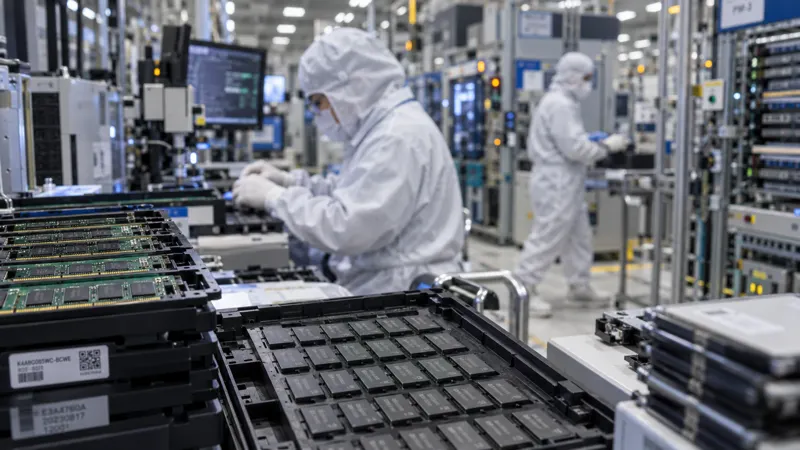
In April 2026, Figure said it had built more than 350 Figure 03 units and raised its production pace to about one per hour. The company also explained that a larger robot fleet is meant to build up training data and operating experience. In other words, production figures are not paid external sales figures. Figure announcement

A humanoid is tested three times: can it be built, can it work reliably, and will customers pay repeatedly. Investors should keep these three questions separate.

Three compute markets in robot AI

MarketWhere the money goesWhat investors should check
TrainingData center GPUsActual purchases and utilization
SimulationVirtual testing infrastructureSoftware usage and revenue
On-device inferenceChips inside robotsUnits deployed and revenue per chip
Development compute contracts may grow before robot sales do, but that is not confirmed revenue for chipmakers or a promise of stock gains.

Insight Times Editorial Desk
More by topic

Starting with this story's topics, then what readers are following now

Investor psychology, decision-making and books on investing

Data Centers

This story's topic80 storiesSee all →

A building that houses servers and networking gear and supplies them with powe…

US AI Data Centers Are Headed for 90GW. Gigawatts Now Matter More Than Dollars

Goldman Sachs expects US data center capacity to grow from 64GW at the end of 2026 to 90GW at the end of 2027. The AI race is moving from buying GPUs to building power plants and transmission lines alongside them.

Tech

Tesla Energy's 13.7GWh Paradox: Expectations Ran Faster Than Deployments

Q2 deployments recovered but margins collapsed. Q3 set a record for deployments and still missed estimates. The issue is not the size of AI power demand but how fast it converts into Tesla revenue and profit.

Tech

Why the White House Swapped "AI" for "Super Intelligence"

Executive Order 14434 renames AI across the federal government without defining a new technology. The real story is about roughly $700 billion in capex, free cash flow and electricity.

Tech

Why Nvidia Is Happy to Help Make AI Models Nearly Free

Falling model prices can squeeze model makers. For Nvidia, the number that matters is the total volume of tokens generated worldwide and the compute that produces them.

Tech

Nvidia Put $2 Billion Into Lumentum. Optics May Be the Next Bottleneck, but the Stock Has Already Run

Optical networking is emerging as the next constraint on AI data centers. Investors need to separate the industry's growth potential from the price they are already paying for it.

Tech

Nvidia's Next Target After GPUs: Controlling What AI Agents Are Allowed to Do

OpenShell and Sentry are not about policing what an AI says. They are about controlling, at the server infrastructure level, which files and APIs an AI can touch, what it can execute, and who can actually pull the plug when something goes wrong.

Tech

AI Needs to Find $1 Trillion a Year From Somewhere to Pay Back Its Capex

Saying AI capex is big is no longer the point. The harder question is what end users have to pay for the buildout to pencil out, and Goldman Sachs puts that number at roughly $1 trillion a year.

Tech

NVDA

This story's topic79 storiesSee all →

Amazon Goes After Nvidia's Strongest Moat, and It Is Software, Not GPUs

Amazon's open-source TorchNeuron aims to let existing AI code run on its Trainium chips. The contest comes down to the total cost of AI compute and the return on Amazon's $220 billion in annual capital spending.

Tech

The US-China Summit Didn't Erase Taiwan Risk for Chip Stocks
Washington's Taiwan policy held, but roughly $14 billion in arms sales is still on hold. For AI chip investors, the summit reads less like risk removed and more like a fragile balance extended.

Macro

ASML Is Discussing 2030 Orders. How Long Can the AI Chip Supercycle Last?

Despite bubble worries, ASML sees equipment shortages through 2028. Investors should watch future production capacity, not just today's orders.

Tech

AI's Next Bottleneck Is Money, Not Chips

Broadcom is lending Anthropic up to $42 billion, and Nvidia wants to build a $500 billion market for loans backed by GPUs. The AI race may turn on what rate buyers pay to borrow.

Tech

Nvidia's $500 Billion Experiment: Wall Street Asks Who Backs the GPU, Not Just the Chip

The real issue in Nvidia's financing platform is not chip sales. It is how far Wall Street will trust GPU resale prices and rental income three to four years out.

Tech

AMD Crossed $1 Trillion, and the Market Started Looking at CPUs Again

AMD's stock topped a $1 trillion market cap for the first time. The rally isn't just about being an Nvidia alternative. It reflects a reassessment of AMD as a full-stack AI infrastructure vendor, one that bundles CPUs, GPUs and networking, as AI shifts from chatbots to agents and reignites data center demand for CPUs.</deck> <parameter name="oneline">As AI moves from chatbots to agents, the market has started counting the CPU sitting next to the GPU again.

Tech

The AI Bubble Question Has Changed: By Late 2026, It's ROIC Over GPUs

There is no sign yet that AI investment is slowing. If anything, hyperscaler spending forecasts keep climbing. But as the scale of that capital has grown, the market's question has shifted from "is AI growing" to "when, and how much, does this capital come back as cash."

Tech

GPU

This story's topic55 storiesSee all →

A chip built to draw graphics, whose ability to run thousands of identical cal…

2027 Investing Needs Alignment, Not Prediction

A new investing book argues the hard part was never picking the next winner. It's staying aligned with where value and bottlenecks are moving while keeping old human weaknesses in check.

Investor Mind

If GPUs Are the Muscle, the Network Is the Nervous System

AI data centers do not get faster just by buying more GPUs. When thousands of accelerators cannot exchange data on time, the most expensive asset in the building sits idle. That is the whole investment case for Arista.

Investing

Why Nebius Is Keeping Some 2027 AI Capacity Off the Shelf

Nebius mixes long-term contracts, short-term premiums and auctions. Holding back capacity pays only if the servers stay busy, and it is not yet clear the pricing will last.

Tech

Nvidia and AMD Back Common Design to Build AI Data Centers Like Lego Blocks

A new Open Compute Project spec aims to let one building host rival chip systems. Whether it speeds up construction is not yet confirmed.

Tech

AI Has Five Years to Find $4.2 Trillion in New Annual Revenue

The AI infrastructure question is no longer how many more GPUs to buy. It is how quickly the trillions already committed can produce enough cash flow.

Tech

AI Data Centers in Space? The Real Test Launches This Week

On October 1, a SpaceX rocket carries a sub-50kg satellite with a Nvidia Orin NX chip and Google TPU test hardware into orbit. It is too early to call this a "space data center," but the signal is clear: the AI industry is rethinking where computing should physically sit.

Tech

Nvidia's New GPU Is 3.7x Faster. The Number That Matters More Is 99%

Nvidia scaled from 72 GPUs to 288 and throughput rose almost fourfold. That number shows the AI data center race is no longer just about who builds the fastest chip.

Tech

Semiconductors

This story's topic52 storiesSee all →

The whole business of designing, fabricating and testing chips.

Memory Chip Supercycle: Not at Peak Yet, But 5 of 6 Warning Signs Are Flashing

Memory prices are still climbing, but the pace is slowing and PC and smartphone demand is starting to crack under the weight of higher chip costs. This looks less like a price peak and more like a profit plateau building toward the next supply cycle.

Investing

The Real ASML Number Isn't the 3% Pop, It's the 30% Capacity Hike

ASML's rally isn't just an AI trade. Customers are already locking in 2027 tool slots, and ASML is raising Low-NA EUV capacity by roughly 30% to keep up.

Investing

Musk's Real AI Strategy Isn't the Model, It's a Chips-to-Space Physical Stack

On the All-In Summit stage, Elon Musk and Gwynne Shotwell laid out AI peer review, Terafab, Starship, and orbital data centers as if they were separate topics. Strung together, they reveal Musk betting the AI race is decided less by who builds the smartest model and more by who can deploy intelligence at the lowest cost and largest scale.

Tech

Lam Research Falls 12%: The Problem Is the Timing of AI Growth, Not Its End

Revenue up 54%, an operating margin above 40% and $3.2 billion in free cash flow were not enough. The selloff likely reflects worry that revenue arrives later than hoped.

Investing

Musk's Terafab: What a $119 Billion Chip Plant Is Really For

From Tesla's robots to SpaceX's orbital data centers, Musk wants to control chip production itself. The open question is whether he can make advanced chips at high yield.

Tech

Stocks Bounce, but the AI Selloff May Not Be Over: A Two-Week Playbook

The Dow rose more than 1% while the Nasdaq barely moved and semiconductors kept falling. A W-shaped retest looks more likely than a V, and the task now is surviving the next drop.

Investing

Samsung Posts 107 Trillion Won Profit, TSMC Sales Jump 50%. Why Did the Shares Fall?

The AI chip supercycle has not ended. But the market's question has changed: not how fast earnings grow, but how long today's enormous margins can last.

Tech