Why Oracle Is Buying More Nvidia GPUs and Adding Google TPUs Too
Oracle will expand Nvidia's next-generation AI systems to multi-gigawatt scale while becoming the first big outside cloud to offer Google's TPUs. The move shows competition shifting from single-chip speed to the running cost of whole systems.
Key points
- Oracle is not cutting Nvidia. It plans to expand Vera Rubin NVL72 infrastructure to multi-gigawatt scale.
- Google's TPU is moving to another major cloud. Oracle will be the first hyperscale cloud outside Google to offer TPUs. Service is scheduled to start in 2027.
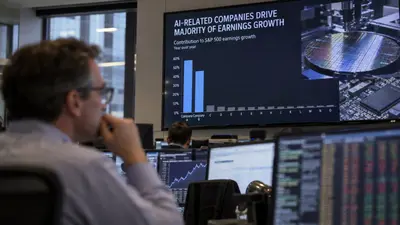
- The key variable for investors is not chip share alone. Training and inference costs, software compatibility, networking and the cloud provider's return on investment all matter.
Buying more Nvidia, and a rival's chips too
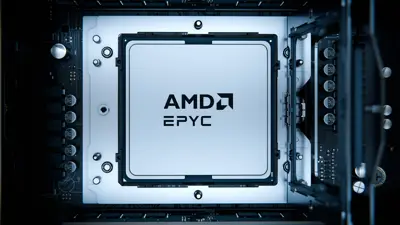
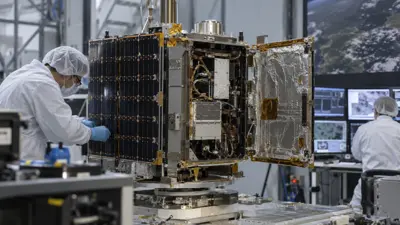
Oracle will offer Google's eighth-generation TPU 8t and TPU 8i to cloud customers. The TPU 8t is designed for training large AI models. The TPU 8i is built for inference. Service starts in 2027 and is planned to expand over several years after that.
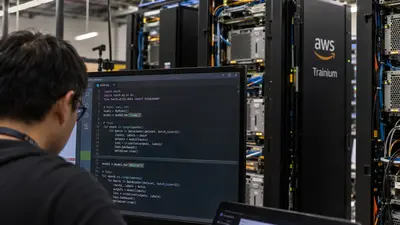
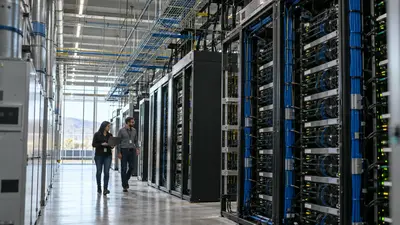
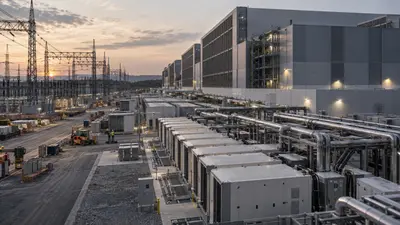
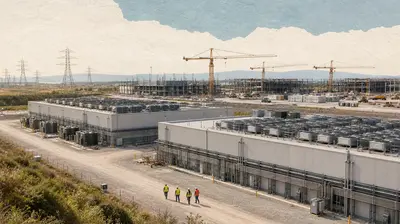
At the same time, Oracle said it will expand Nvidia Vera Rubin NVL72 systems to multi-gigawatt scale. Inference chips from Cerebras and SambaNova are also part of the plan. For networking, Oracle will use its own Acceleron technology. On Nvidia systems, it will combine its own technology with Nvidia networking.
The core of the strategy is not replacing Nvidia. It is offering different kinds of compute depending on the work a customer needs to run. The value of the Google TPU deal and the power capacity to be assigned to TPUs have not been disclosed.
GPU vs. TPU: what is the difference?
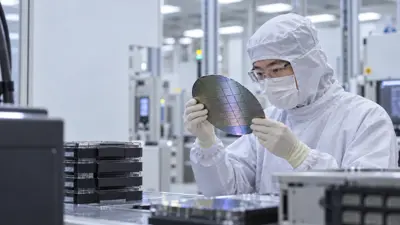
GPU. A parallel-processing chip that grew out of graphics computing. It is widely used across AI models and workloads. Nvidia supplies software and systems built around CUDA.
TPU. A dedicated accelerator Google designed for AI computation. It aims to improve power and cost efficiency on certain training and inference jobs. That does not mean it is faster than a GPU at everything.
Put simply, a GPU is a powerful, versatile work machine, and a TPU is a specialist tool focused on AI math. Real performance depends on the model, data size, software optimization and how the chips are connected.
The AI chip market is not split into just two camps
- Training: Building a model's capability. Large numbers of chips working together and stable run time matter most.
- Inference: A finished model answering queries. Response latency and cost per answer matter most.
- Agents: Repeated cycles of inference and tool use. CPU, memory and network efficiency matter alongside GPUs.
Google's split between the 8t and 8i is one response to this shift. But the idea that GPUs only handle training and TPUs only handle inference is wrong. Both can be used for training and inference, and customers choose based on real performance and total cost.
Rising inference use could widen the opportunity for specialized chips. At the same time, more complex reasoning models could increase demand for powerful GPUs. Growth in inference does not automatically mean a shrinking market for Nvidia.
Nvidia's real moat lies outside the chip
Nvidia's strength is not only GPU performance. CUDA is the software base that helps developers run and optimize AI programs on GPUs. Moving an existing program to another chip can require code changes, performance validation and staff retraining. That is the switching cost of an ecosystem.
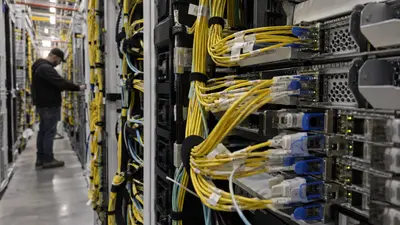
Networking matters too. When many chips train one large model, delays in data exchange leave expensive equipment idle longer. Nvidia optimizes GPUs, chip-to-chip links, data center networking and software together.
On the other side, Google is improving TPU software compatibility, and Oracle is using Acceleron to control part of the data center interconnect itself. That is why the arena is moving from the performance of a single chip to the real operating cost of the entire system.
Who gains and who carries the burden
| Company | Opportunity | Risk to watch |
|---|---|---|
| Nvidia | Wider Vera Rubin deployment and keeping CUDA-based customers | Substitution in some inference demand, competition for networking revenue |
| Broader TPU distribution and a bigger software ecosystem | Pace of real customer adoption, profitability and operational stability | |
| Oracle | Chip choice by customer and service differentiation | Heavy capital spending, financing and utilization |
| Inference chip makers | Price and power competition on specific workloads | Versatility, developer tools, economies of scale |
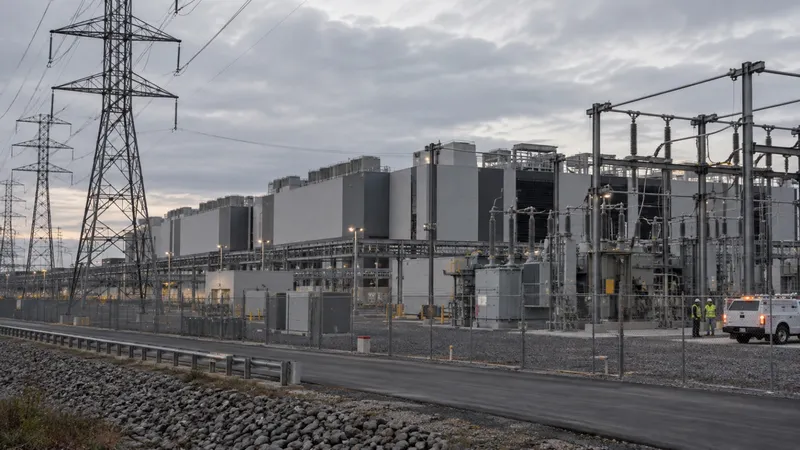
Oracle's fiscal 2027 capital spending outlook is roughly $90 billion to $95 billion. That is the company's existing overall investment outlook, not the value of the Google TPU deal. Spending turns into revenue and cash flow only when equipment is actually installed and customers use it enough.
The announcement is not evidence that Nvidia's lead has suddenly collapsed. Oracle is, in fact, expanding Nvidia systems on a larger scale. Still, this may no longer be an era in which every AI workload has to be tied to the same chip and network.
Long-term investors need to separate overall market growth from the margins of individual suppliers. If several chips coexist and the cost of using AI falls, total demand could grow. But unit prices and margins could come under pressure in areas where competition intensifies. This view would prove wrong if the real performance of alternative chips, or the software switching costs, turn out higher than expected.
Insight Times Editorial Desk