Apple's Real AI Bet Isn't a Chatbot. It's Siri Running Your Apps
Apple has stepped back from the race to build a smarter chatbot than ChatGPT. Instead it is building an "OS agent" that connects Mail, Photos, Calendar and hundreds of thousands of apps to actually finish tasks. 2026 is the first year that strategy gets tested as a product, not a keynote promise.
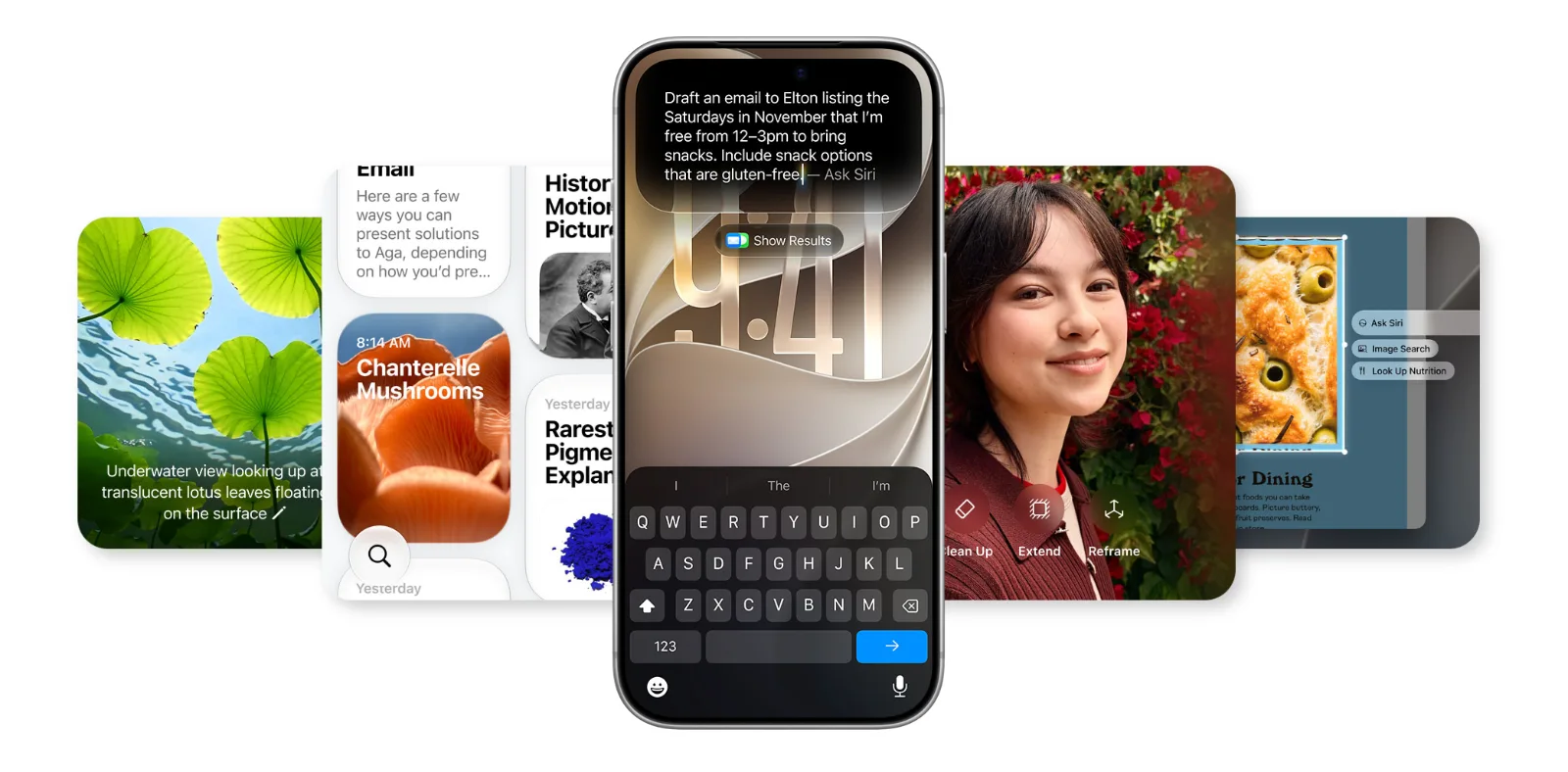
Apple didn't build an AI model late. It built a different one
The biggest misconception about Apple's AI strategy is the claim that "Apple has no model of its own, so it borrows Google Gemini." That's only half true.
In June 2026, Apple unveiled its third generation of Apple Foundation Models, AFM 3. The version that runs on the iPhone itself, AFM 3 Core, has 3 billion parameters. The larger on-device model, AFM 3 Core Advanced, has 20 billion parameters. The latter uses a sparse architecture that activates only about 1 billion to 4 billion parameters per request, depending on what's asked.
On the server side, Apple runs AFM 3 Cloud through Private Cloud Compute, with AFM 3 Cloud Pro handling more complex reasoning and tool use. Cloud Pro in particular draws on technology from Google and NVIDIA, and it's built to preserve Apple's privacy architecture even while running on NVIDIA GPUs inside Google Cloud.
In January 2026, Apple and Google formalized a multi-year agreement to use Gemini technology as a foundation for the next generation of Apple Foundation Models. That's a much deeper partnership than simply plugging in a backup chatbot. Read the other way, it also means Apple chose not to control every layer of its model stack with proprietary technology. Whether that turns out to be capital efficiency or long-term technical dependence is still an open question.
Siri isn't chasing ChatGPT's job
Apple doesn't want "the AI that solves the hardest math problem in the world." It wants an AI that handles the dozens of small tasks a user does by hand every day.
Take a request like: "Find the restaurant Minsu sent me last week and add it to Saturday's schedule." That single sentence bundles message search, identifying a person, understanding a location, checking a calendar and creating an event. A general chatbot can answer well, but taking the actual action is a different problem.
The new Siri AI ties together three things. First, it pulls personal context from Messages, Mail, Photos and similar sources. Second, it understands what's currently on screen. Third, it calls app functions that developers have exposed through App Intents to take action.
This is where App Intents matters. Rather than having AI click around a screen the way a person would, Apple has developers tell the system: "This app offers search, payment, photo editing, message sending through this specific structure." It's less flexible, but it's easier to make reliable and secure.
That's a different philosophy from Google's general-purpose agent approach. Where Google-family agents lean toward directly manipulating the web and the screen broadly, Apple wants to move apps through structured channels the operating system explicitly permits. Apple is closer to prioritizing reliability over autonomy.
Why the strategy is interesting to investors: it's about how the money gets spent
While Microsoft, Alphabet and Meta pour enormous capital expenditure into AI data centers, Apple's numbers look entirely different.
Apple's revenue for the third quarter of fiscal 2026 was $109.4 billion, up 16%, with services revenue at $30.7 billion. Services gross margin reached 75.6%. Even if AI never becomes an independent business line, it produces a large economic effect simply by nudging iPhone upgrades, boosting iCloud+ usage, or increasing time spent in the app ecosystem.
That's the core logic of Apple's AI investment. Apple is not a company that has to recover hundreds of billions of dollars in data center spending by selling AI model APIs. If it can sell more $2,000 iPhone Duo units, more premium iPhones, and more high-margin services, it can generate returns on AI investment through an entirely different route.
The flip side: if Siri AI stays a "fun feature" and fails to move iPhone upgrade rates or services spending, the story changes. Apple has to prove it remains the center of the platform in the AI era in order to keep earning its premium valuation.
The real weakness isn't the models. It's ecosystem execution speed
Siri's real bottleneck is probably not whether the model has 3 billion or 20 billion parameters. It's how many apps support App Intents deeply.
Integration among Apple's own built-in apps works well, but if banking apps, airline apps, shopping apps and workplace SaaS tools expose only limited functions, what Siri can actually do drops off sharply. That's why a headline number like "300,000 apps connect to Siri" matters less than what specific actions Siri can reliably complete inside the apps people actually use every day.
Regional gaps are significant too. iOS 27 launches in Korea on September 15, but Siri AI ships in English first, with Korean support planned later this year. On EU iPhones and iPads, initial rollout is limited due to regulatory issues, and in China, Siri AI won't be available until regulatory requirements are resolved. The picture of turning every iPhone user in the world into an AI user at once may play out more slowly in practice.
Apple's AI win won't be decided by topping a benchmark. It will be decided by getting people who don't use AI to use it anyway
We don't think the only question worth watching is whether Apple can build a stronger general-purpose model than OpenAI or Google. Apple's rarest asset isn't the model. It's the device already sitting in a user's hand, the operating system permissions, the context of personal data, and the payment relationship.
Just as Google turned the search bar into the front door of the internet in the search engine era, Apple wants to turn Siri, in the agent era, from "an interface that opens apps" into "an interface that uses apps on your behalf."
If it works, users call a car without opening the Uber app, edit a photo without opening the Photos app, and find and send a document without opening Mail. At that point, Siri becomes the interface that sits above the app icon. That is exactly where the platform power Apple wants would live.
But this logic isn't a settled fact yet. Siri AI is currently in beta, and regional restrictions remain. Over the next six to twelve months, real-world task success rates and repeat usage will need to be confirmed. For Apple investors, the question that matters isn't "did Siri get smarter." It's "how much of the user's behavior has Siri actually taken over."
Insight Times Editorial Desk