Google's Real Moat May Not Be Search. It May Be What You Were Curious About
The EU's new legal fight with Google raises a bigger question than search regulation. In the AI era, the edge may not end with who builds the best model, it may shift to who can legally see the proprietary data and user context behind it.
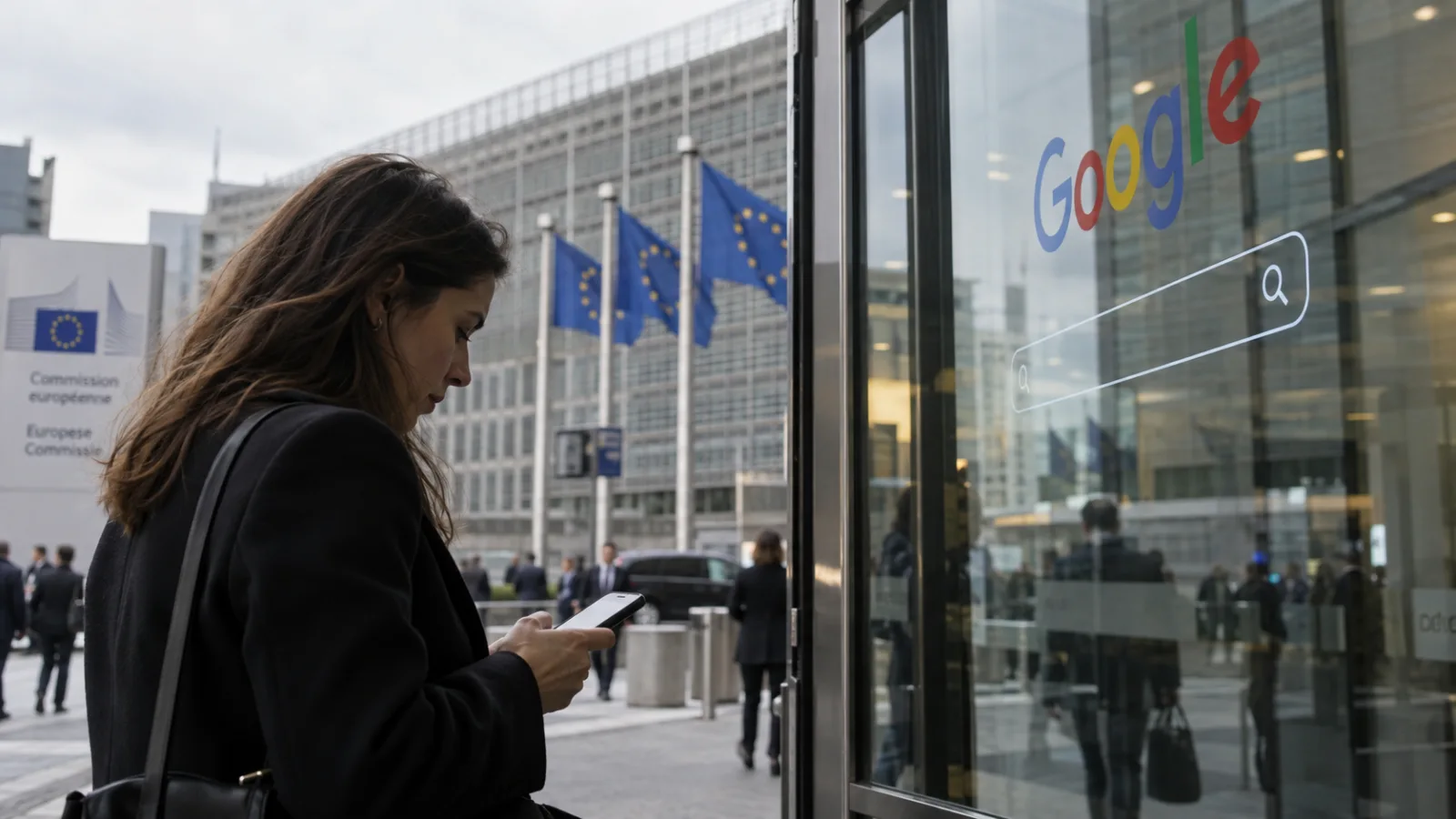
What the EU actually ordered
On July 16, the European Commission issued two binding measures against Google under the Digital Markets Act, or DMA. The first requires Google to let rival AI services access some of the same Android system features that Gemini uses. The second requires Google to share a portion of Google Search data with competing search engines and with AI chatbots that offer search features.
There is an important distinction here. The EU is not asking Google to share account information or a user's full search history. The data at issue is a slice of the query, ranking, click and view signals Google uses to improve search quality, and it is supposed to go through multiple layers of anonymization: long queries and rare terms stripped out, location generalized, exact timestamps removed.
Google's counterargument is that anonymization is not automatically safe. The company says a person's sensitive searches could still be exposed to third parties without adequate anonymization. The EU's response is that account data and search histories are not being shared, and that Google can assess risk before sharing with any third party that poses meaningful cybersecurity or data protection concerns.
So the accurate description of where things stand is this: Google is not handing search records to OpenAI. The EU has ordered Google to open certain data and Android features, and Google has started fighting the scope and safeguards of that order in court.
| Metric | What it means |
|---|---|
| 90%+ | The European Commission's estimate of Google Search's long-run market share in Europe |
| 4 data types | Query, ranking, click and view data are the categories at issue |
| 2027 | When key implementation steps, including pricing proposals, are expected to continue |
Search data is closer to intent than to interest
When markets talk about AI competition, they mostly look at two things: compute and models. How many GPUs does a company have. Which model scores higher on benchmarks. But in a market where performance gaps between models are narrowing quickly, a third factor, proprietary data, may be growing in value.
The signal Google Search has built up over the years is different in kind from ordinary content-consumption data. YouTube watch history shows what someone is interested in. Maps usage shows location and movement. Typing "hotels in San Francisco," "Tesla Model Y price" or "NVDA earnings" into a search box is closer to what someone is actually trying to get done right now.
That economic value has already been proven out in advertising. Alphabet's Google Search & Other advertising revenue came to $63.1 billion in the fourth quarter of 2025, up 17% year over year. That is more than half of Alphabet's total quarterly revenue of $113.8 billion. Search is still the center of Alphabet's cash-generating engine.
Interest → Intent → Action
- Interest: what someone watched on YouTube
- Intent: what someone is trying to solve right now, in Search
- Action: whether an AI agent turns that into an actual booking, purchase or scheduled task
When AI agents show up, the value of data widens from ad targeting to executing actions
In the search era, the flow was mostly Intent → Search → Click. A user expressed intent, looked at search results, and clicked an ad or a website.
In the agent era, that can shorten to Intent → AI → Action. Google is already moving in this direction. Personal Intelligence, unveiled in 2026, lets users opt in to connect the context from Google apps like Gmail, Photos, YouTube and Search to Gemini and AI Mode. In travel, it builds itineraries based on past bookings and preferences, and Gemini combines that with real-time data from Maps, Flights and Hotels to personalize recommendations.
That difference matters. Knowing about the world and knowing what a specific user wants are different capabilities. A model can catch up on the first through public data and large-scale training. The second requires a long-running relationship with the user, touchpoints across services, and consent-based links to personal context.
Google's potential moat may not be Gemini by itself. It may be the combination that emerges when Gemini is connected to Search, Gmail, Maps, YouTube and Chrome.
Search era vs. agent era
- Search era: Intent → Search → Click
- Agent era: Intent → AI → Action
- Google's task: turning data into personalization, and personalization into actual execution
The real story is the data layer, not the fine
Reading this case only as a multi-billion-dollar fine misses the structural point. A fine can be a one-time cost. If competitors get ongoing access to a slice of the search signals Google has built up over a long period, the competitive terms themselves change.
The EU's logic is straightforward. Google Search has held more than 90% market share in Europe for a long stretch, and large volumes of user data improve search quality, which in turn draws more users back in a loop. If that data is a barrier to entry, the argument goes, some of it should be anonymized and opened to competitors.
Google's argument is not simply monopoly defense, either. Search queries can carry sensitive material: health, finance, political interests, even corporate information. If the anonymization design is flawed, the privacy cost could outweigh any gain in competition.
In the end, the question before the courts is less likely to be whether to open the data at all, and more likely to come down to which data counts as essential to competition, and what level of anonymization and control would make opening it justified.
Insight Times Editorial Desk