China Wants to Replace Nvidia, but Its Tech Giants Ordered $35 Billion of Its Chips
A huge order for the RTX PRO 5500 shows where AI inference demand stands, and what Nvidia can and cannot turn into revenue.
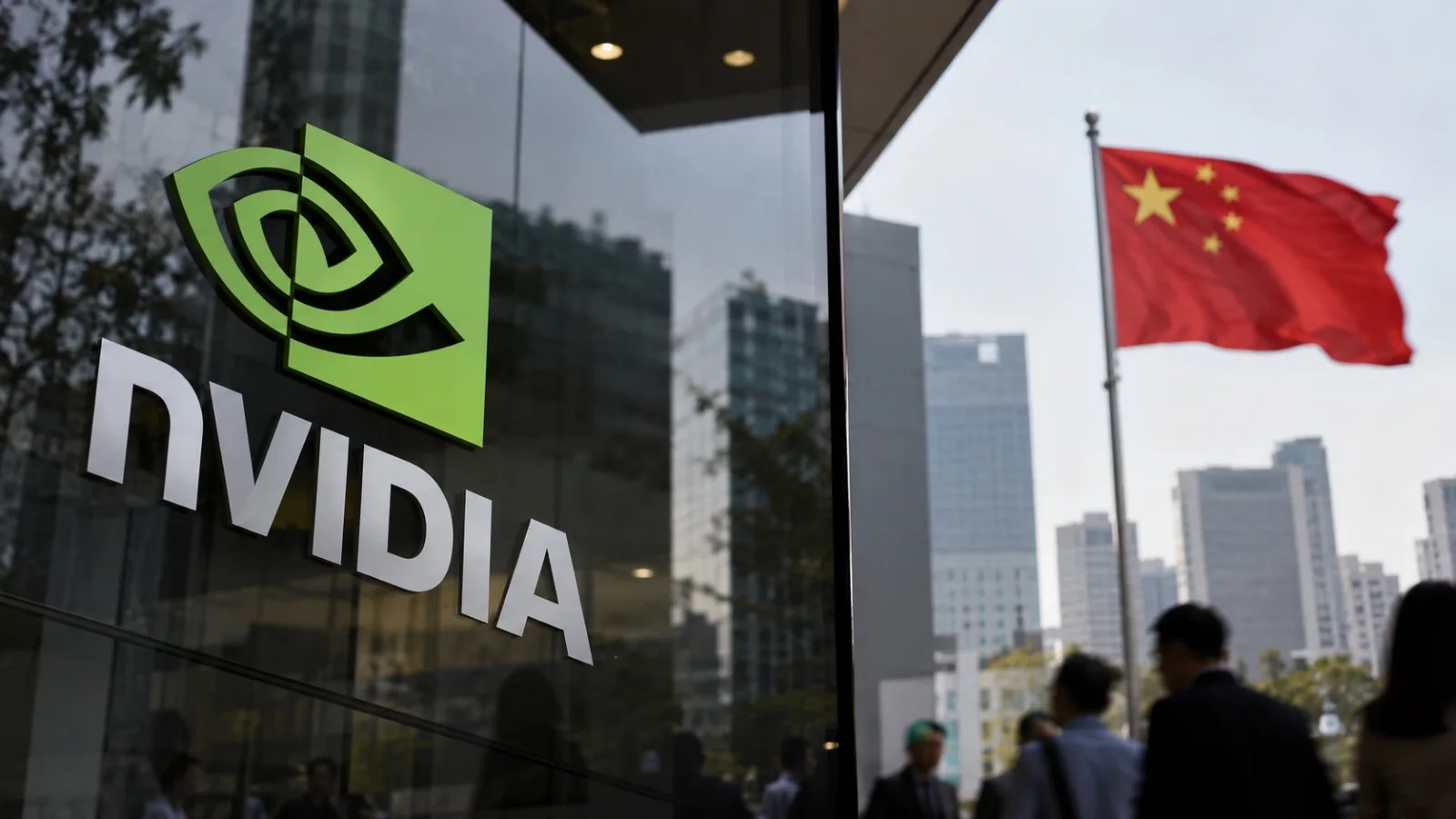
China is nurturing Huawei and other domestic chipmakers to cut its reliance on US semiconductors. Yet its leading tech companies are lining up to secure Nvidia chips.
According to Reuters on Oct. 20, ByteDance, Alibaba and Tencent ordered more than 3 million Nvidia RTX PRO 5500 graphics cards, worth $35 billion at list prices.
The product is not Nvidia's top AI chip. It is a lower-performance part that meets US export rules.
Why would Chinese companies want it in such volume? The answer says something about how AI chip demand is structured.
Orders of 6 million, production plans of up to 3 million
RTX PRO 5500 demand vs. supply plan
- Total Chinese orders: more than 6 million units
- Global production ceiling in 2027: up to about 3 million units
The two figures are a floor for orders and a ceiling for production plans. Neither is a confirmed shipment count. Source: Reuters.
| Item | Figure |
|---|---|
| Main buyers | ByteDance, Alibaba, Tencent |
| Orders from the three | More than 3 million units |
| List-price value of orders | More than $35 billion |
| Price per unit | About $11,400 |
| Total Chinese orders | More than 6 million units |
| Global production plan, 2027 | Up to about 3 million units |
| Sample supply plan | December 2026 |
| Full-scale supply plan | Q1 2027 |
There are also reports that Nvidia told some customers it could supply only 5% to 10% of requested volumes.
That ratio cannot be applied across all orders. The production plan is global, and China's actual allocation has not been confirmed. An order for 6 million units should not be read as 3 million sales, and a $35 billion order should not be read as $35 billion in revenue.
Why does China want a GPU that isn't the best?
AI chips do two broad jobs.
The first is training: teaching a huge AI model with data. Raw compute and the ability to link large numbers of GPUs matter most.
The second is inference: the trained model answering user questions, analyzing documents or generating video.
Training is an investment to develop a model. Inference is a cost that recurs as long as the service runs.
The difference matters most for companies with vast user bases and cloud businesses, such as ByteDance, Alibaba and Tencent.
Not every inference job needs a top-tier GPU. Depending on the task, it can be cheaper to run several less expensive chips.
That does not mean inference is always light. Large language models, long context windows, fast responses and real-time multimodal services need substantial compute and memory bandwidth.
What an AI company must ultimately calculate is not the peak performance of a single GPU but the total cost of handling one user request (cost per token or cost per request).
The real economics of the RTX PRO 5500 depend not only on its purchase price but on throughput, memory performance, power use and software optimization.
Export controls blocked Nvidia, but not the demand
The US restricts China's access to cutting-edge AI chips.
High-end data center GPUs such as Nvidia's B300 face sales limits in China, and the H200 is subject to individual export licenses. The RTX PRO 5500, by contrast, was reported to be a workstation product that complies with current rules.
That gives Chinese companies two options: use domestic products that still trail in performance and software ecosystem, or buy the Nvidia products they can get.
In practice, companies need not choose one. They can increase spending on Chinese chips while also securing Nvidia's.
It is hard to conclude from this that US export controls have failed. The fact that Chinese companies cannot get the products they want in the quantities they want is itself evidence the controls are working.
Nvidia has also said in an SEC filing that, because of approval issues in both the US and China, it is effectively unable to compete in China's data center computing market.
Strong demand for workstation GPUs and constraints on the China data center business can exist at the same time.
Does Nvidia gain $35 billion in revenue?
There is a long way to go.
From order to revenue
- Order demand: the customer's intent to buy
- Supply allocation: securing production capacity
- Export and delivery: meeting regulations and handing over the product
- Revenue recognition: accounting under contract terms
The $35 billion is a list-price figure for the first step. It does not mean the other steps are complete.
To book revenue, Nvidia must build the GPUs and be able to supply them to Chinese customers. Delivery could be affected if export licenses or Chinese government policy change.
Nvidia must also allocate capacity to its next-generation Rubin platform.
How resources are divided across TSMC's advanced production capacity, packaging, memory and final assembly could change the supply of RTX PRO 5500 units.
This news does not mean Nvidia earned $35 billion in China. It is closer to evidence that large demand still exists in China, while whether it can be converted into revenue is a separate question.
Takeaway
China wants to run its AI industry without Nvidia one day. Running today's AI services may still require Nvidia.
The key point is less the $35 billion figure than the fact that AI chip competition is widening from who builds the highest-performance chip to who can supply the needed computing power, and how economically.
Insight Times Editorial Desk