DeepSeek's $15 Billion Raise: Model Makers May Feel It Before Nvidia Does

China's DeepSeek is closing a round about twice its original target. For US investors, the question is less the size of the check than where the money goes and whose profits it could erode.

1. DeepSeek is shifting from a low-cost AI lab to a capital-intensive company

According to Reuters and Bloomberg reports on Oct. 22, DeepSeek is closing a deal to raise about 100 billion yuan, or $14.98 billion.

The original target was 50 billion yuan. It rose to 80 billion yuan, then to 100 billion. Tencent and CATL are named as investors, along with Meituan, Geely Auto, Midea and GigaDevice. More than 15 participants are involved.

Adding the 100 billion yuan of new money to a pre-money valuation of 500 billion yuan gives a post-money value of about 600 billion yuan, or roughly $89.9 billion. Final equity terms have not been set, so that figure is a reference calculation only.

What matters is that DeepSeek is tying itself to China's technology supply chain. It builds models, runs them on Chinese-made chips and distributes them through local platforms.

DeepSeek is also reported to be preparing a listing on Shanghai's STAR Market. But a funding round and IPO preparation do not guarantee profitability or returns for investors.

ItemFigureNote
New funding$15 billionAbout 100 billion yuan
Pre-money valuation500 billion yuanAbout $74.9 billion

Amounts reflect reported deal terms. Final completion and company announcements remain to be confirmed.

2. A plan for 160,000 Huawei accelerators matters more to Nvidia

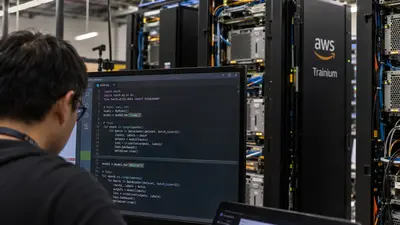
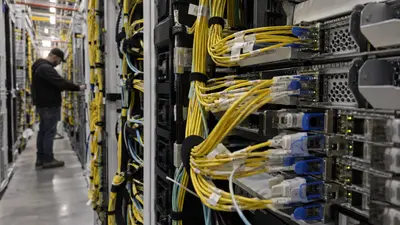
Bloomberg reported that DeepSeek plans to deploy at least 160,000 Huawei Ascend 950DT accelerators at a data center in Inner Mongolia.

One distinction matters. The chips are planned mainly for inference, the work of running trained AI models in live services. That does not mean Nvidia has been fully replaced, including in core model training. The scale and timing of the installation also depend on Huawei's production capacity.

This is a structural change worth watching for Nvidia investors.

Even as global demand for AI compute grows, some incremental demand inside China could shift to Huawei's ecosystem. It would be premature, though, to conclude that Nvidia's global dominance is weakening at the same pace.

Nvidia's strength is not only GPU performance. It also rests on the CUDA software stack, networking and the operating efficiency of large systems. Huawei's actual supply and cost competitiveness need to be confirmed before the pace of substitution can be judged.

3. If AI gets cheaper, who captures more of the profit?

DeepSeek's added capital raises the odds of a longer price war among AI models.

As models become more efficient, the compute needed per task can fall. But if use of AI agents, coding, search and workflow automation grows faster, total compute demand could rise instead.

Total compute demand = compute per task × number of tasks 50% efficiency gain: compute per task is halved. 3x usage: total compute demand is 1.5x. A hypothetical example to illustrate the principle, not an industry forecast.
IndustryGrowth opportunityProfitability risk
AI modelsMore users and API callsAPI price competition
CloudWider enterprise AI adoptionCapex, depreciation
GPUsInference demand, system expansionChinese chips, in-house chips
AI softwareLower model costsWeaker feature differentiation
Power and coolingData center buildoutDelayed or canceled investment

Still, rising compute demand and rising corporate profit are separate matters.

The more AI models become commodity-like and cheap, the more likely it is that companies controlling customer workflows, data and distribution gain a relative edge.

That could be an opportunity for Microsoft, Amazon, Alphabet and Meta. It could be a burden for companies trying to sustain high margins on premium model fees alone.

4. For Big Tech, monetization matters more than AI spending

Microsoft and Amazon can offer a range of models in their clouds. Alphabet can apply model efficiency gains to search and advertising, and Meta to ad recommendations and its own services.

But a cheaper model does not automatically mean higher profit.

If all the savings in model costs are passed on to customers as lower prices, margins may not improve. If a company can hold revenue from existing services while cutting inference costs, operating income and cash flow benefit.

Investors therefore need to track gross margin, capex, depreciation and free cash flow alongside AI usage.

The same goes for software companies. How deeply a product is embedded in customer data and business processes, more than the AI features themselves, is likely to shape long-term pricing power.

5. AI growth in China is not the same as a win for US chip companies

Even if data center spending in China rises, there is no guarantee it turns into orders for Micron, US networking vendors or power equipment makers.

In particular, the full $15 billion should not be counted as chip orders. Money is also needed for hiring, research and development, model training and service operations.

Memory investors should look for HBM supply contracts and per-product selling prices. Power and cooling investors should look for actual orders and deliveries. Custom chip investors should look for customers' adoption into volume production.

Another constraint is US security policy. On Oct. 19, the Department of Homeland Security ordered DeepSeek-related products and services removed from federal civilian agency systems. Technological competitiveness and the ability to sell in the US market are separate questions.

The real question

The most important question DeepSeek raises is not whether AI's future is bright. It is whose profits that future actually becomes.

Believing in the growth of the AI industry and holding every AI stock on the same logic are different investment decisions.

DeepSeek's raise suggests that growing AI demand and growing AI profits are different questions.

Insight Times Editorial Desk

More by topic

Starting with this story's topics, then what readers are following now

Investor psychology, decision-making and books on investing

Data Centers

This story's topic76 storiesSee all →

A building that houses servers and networking gear and supplies them with powe…

US AI Data Centers Are Headed for 90GW. Gigawatts Now Matter More Than Dollars

Goldman Sachs expects US data center capacity to grow from 64GW at the end of 2026 to 90GW at the end of 2027. The AI race is moving from buying GPUs to building power plants and transmission lines alongside them.

Tech

Tesla Energy's 13.7GWh Paradox: Expectations Ran Faster Than Deployments

Q2 deployments recovered but margins collapsed. Q3 set a record for deployments and still missed estimates. The issue is not the size of AI power demand but how fast it converts into Tesla revenue and profit.

Tech

Why the White House Swapped "AI" for "Super Intelligence"

Executive Order 14434 renames AI across the federal government without defining a new technology. The real story is about roughly $700 billion in capex, free cash flow and electricity.

Tech

Why Nvidia Is Happy to Help Make AI Models Nearly Free

Falling model prices can squeeze model makers. For Nvidia, the number that matters is the total volume of tokens generated worldwide and the compute that produces them.

Tech

Nvidia Put $2 Billion Into Lumentum. Optics May Be the Next Bottleneck, but the Stock Has Already Run

Optical networking is emerging as the next constraint on AI data centers. Investors need to separate the industry's growth potential from the price they are already paying for it.

Tech

Nvidia's Next Target After GPUs: Controlling What AI Agents Are Allowed to Do

OpenShell and Sentry are not about policing what an AI says. They are about controlling, at the server infrastructure level, which files and APIs an AI can touch, what it can execute, and who can actually pull the plug when something goes wrong.

Tech

AI Needs to Find $1 Trillion a Year From Somewhere to Pay Back Its Capex

Saying AI capex is big is no longer the point. The harder question is what end users have to pay for the buildout to pencil out, and Goldman Sachs puts that number at roughly $1 trillion a year.

Tech

NVDA

This story's topic75 storiesSee all →

The US-China Summit Didn't Erase Taiwan Risk for Chip Stocks

Washington's Taiwan policy held, but roughly $14 billion in arms sales is still on hold. For AI chip investors, the summit reads less like risk removed and more like a fragile balance extended.

Macro

Nvidia's $500 Billion Experiment: Wall Street Asks Who Backs the GPU, Not Just the Chip

The real issue in Nvidia's financing platform is not chip sales. It is how far Wall Street will trust GPU resale prices and rental income three to four years out.

Tech

The AI Bubble Question Has Changed: By Late 2026, It's ROIC Over GPUs

There is no sign yet that AI investment is slowing. If anything, hyperscaler spending forecasts keep climbing. But as the scale of that capital has grown, the market's question has shifted from "is AI growing" to "when, and how much, does this capital come back as cash."

Tech

2027 Investing Needs Alignment, Not Prediction

A new investing book argues the hard part was never picking the next winner. It's staying aligned with where value and bottlenecks are moving while keeping old human weaknesses in check.

Investor Mind

What Jensen Huang sold at the G20 was not GPUs. It was national infrastructure

Nvidia's message is that AI should be laid down like electricity, roads and the internet. After the hyperscalers, the buyers are governments, telcos, regional clouds and industrial data centers.

Tech

ASML Is Discussing 2030 Orders. How Long Can the AI Chip Supercycle Last?

Despite bubble worries, ASML sees equipment shortages through 2028. Investors should watch future production capacity, not just today's orders.

Tech

Nvidia and AMD Back Common Design to Build AI Data Centers Like Lego Blocks

A new Open Compute Project spec aims to let one building host rival chip systems. Whether it speeds up construction is not yet confirmed.

Tech

Chinese Economy

This story's topic18 storiesSee all →

Memory Chip Supercycle: Not at Peak Yet, But 5 of 6 Warning Signs Are Flashing

Memory prices are still climbing, but the pace is slowing and PC and smartphone demand is starting to crack under the weight of higher chip costs. This looks less like a price peak and more like a profit plateau building toward the next supply cycle.

Investing

The Real ASML Number Isn't the 3% Pop, It's the 30% Capacity Hike

ASML's rally isn't just an AI trade. Customers are already locking in 2027 tool slots, and ASML is raising Low-NA EUV capacity by roughly 30% to keep up.

Investing

AI Won't Slow Down. The Real Fight Is Over What Agents Can Do

Dario Amodei wants frontier AI labs to slow capability gains, but a US-wide deceleration deal looks unlikely. The more probable path: keep accelerating commercial AI while tightening security around agent permissions, high-risk features, model weights and large-scale compute access.

Tech

What Matters More Than Tesla Semi's 2,500-Truck Order

Tesla was picked as lead supplier in the largest electric Class 8 truck group order in US history. The bigger story is that the fight in electric trucking is shifting from range to charging, financing, uptime and autonomy.

Tech

Weekly Check: The AI Bull Market Isn't Over, It's Just Gotten Harder

A 5% 10-year yield, 470 gigawatts stacked up in Texas, Chinese DRAM, and whether data centers actually get switched on are starting to decide who wins the AI trade through 2027.

Tech

China Is Now Copying Something Harder Than Nvidia's GPUs: CUDA

DeepSeek and Huawei have open-sourced compute, communication and programming tools for Ascend. The contest with Nvidia is moving beyond chip speed to how easily developers can switch.

Tech

AI's Next Bottleneck Is Power, Not GPUs

Jensen Huang and Elon Musk sent the same warning in Washington. The AI race is widening from building better models to supplying power and chips at industrial scale.

Tech

Big Tech

This story's topic8 storiesSee all →

US Rates Are at 5%. Why Traders Still Fear a Yen Carry Blowup

The rate gap isn't the danger, the yen's speed is. A 2024 playbook suggests growth-stock investors need to watch USD/JPY, Japanese rates and volatility together, not just the Fed.

Macro