AI Is Supposed to Cut Costs. So Why Is It Pushing Prices Up?
Building the infrastructure behind AI means buying power, copper and data centers first, and that demand is already showing up in inflation data.

A Question That Outlasts the CPI Print
US consumer prices rose 0.4% in August from the prior month and 3.4% from a year earlier. Core CPI, which strips out food and energy, climbed 0.3% month over month, above the 0.2% consensus. Markets responded fast: futures moved to price an 80-percent-plus chance of a 25 basis point rate hike at the September 15-16 FOMC meeting, and the 10-year Treasury yield touched 4.9915% intraday, closing in on 5%.
The immediate cause is familiar enough. Conflict in the Middle East pushed oil prices higher, and gasoline prices rose 3.9% in August alone, accounting for more than a third of the overall CPI increase. But buried in the Reuters coverage was a line worth pausing on for anyone holding AI stocks for the long run. Some economists think the energy shock is not the only story. The buildout of AI infrastructure itself may be pushing prices higher too.
AI Is Software. Building It Is Strikingly Physical
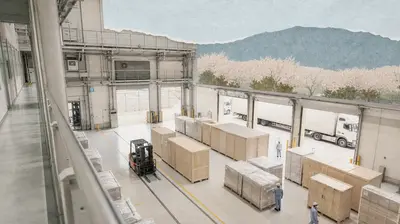
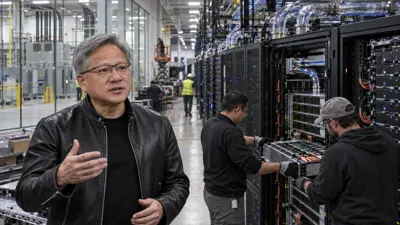
We tend to picture AI as software running on a screen. But building AI at scale requires very physical things: GPUs, high bandwidth memory, transformers, transmission equipment, cooling systems, gas turbines, copper, land, construction labor, and enormous amounts of electricity.
The problem is that demand for these inputs has exploded in a few years while supply chains have not kept pace. According to the International Energy Agency, electricity consumption by AI-specialized data centers rose roughly 50% in 2025 alone. Total data center power consumption is projected to nearly double, from about 485 terawatt-hours in 2025 to around 950 terawatt-hours by 2030. The IEA points specifically to bottlenecks in power equipment supply chains, including transformers and power electronics, as the near-term constraint on expansion.
The economics here are straightforward. When Microsoft, Amazon, Google, Meta and Oracle all chase the same limited pool of resources at once, prices rise. The inputs needed to build AI are getting more expensive before AI has had much chance to lower the cost of doing business anywhere else.
Phase One Is Construction Inflation. Phase Two Is Productivity Deflation
Understanding the price effects of AI requires paying attention to sequence, not just direction.
Early on, AI capital spending stimulates demand for power, equipment, raw materials and construction. In segments where supply expands slowly, prices rise. As companies pay more for electricity and equipment, some of that cost can pass through to other industries. Call this construction inflation.
The next phase looks different, at least in theory. As AI gets embedded more deeply into actual workflows, the cost of handling a single customer service interaction can fall. A single developer can ship more software. Research and development cycles can shorten. Logistics and inventory management can become more efficient. When the same labor and capital produce more output, the cost per unit falls. This is the AI productivity deflation that has become the familiar narrative.
The important point is that both effects can exist at the same time. Which one dominates depends on the industry and the moment. Right now, AI alone cannot explain the overall rise in US prices. The core inflation shock today still comes from energy and services. AI construction demand is better understood as an additional structural factor layered on top.
The Strange Position Nvidia Investors Find Themselves In
This framework is especially useful for reading AI stocks. Strong AI capital spending is generally good news for Nvidia. It means more data centers and more accelerators are needed. That is a positive for revenue and earnings estimates, meaning EPS.
But the same capital spending boom that stimulates demand for power, raw materials and construction can also push up prices and long-term interest rates. And that works against valuation. Higher rates mean future earnings get discounted more heavily when converted to present value.
So the same AI boom can simultaneously be a plus for EPS and a minus for the price-to-earnings multiple. In an environment like the recent one, where the 10-year yield climbs toward 5%, this framework helps explain why strong earnings are not necessarily translating into proportional stock price gains.
What to Watch
Whether transformer and power equipment supply chains loosen enough to slow the pace of construction-driven cost pressure, and whether the 10-year Treasury yield stabilizes below 5% or continues to climb, will likely determine how this tension between EPS gains and valuation compression plays out for AI-exposed stocks in the coming quarters.
Insight Times Editorial Desk