10-Year Yield Near 5% Tests the AI Bull Case: Cash Flow, Not Revenue, Is the Real Scoreboard Now
August CPI rose 0.4% month over month and 3.4% year over year, with core CPI at 0.3% and 2.4%. A day earlier, PPI jumped 5.4% year over year and diesel prices spiked 24.1% in a month.
This week's first number is 5%
That combination of data makes life harder for the Fed. After the CPI report, market-implied odds of a 25 basis point hike in September climbed to roughly 82% to 85%. But a Reuters survey of economists conducted on September 9 still showed a majority expecting the Fed to hold rates steady. Market pricing has swung quickly toward a hike, but economists' base case has not fully shifted yet.
The more important number may be the 10-year Treasury yield. On the 11th, it touched roughly 4.99% intraday before easing back to around 4.93%. Five percent is not a magic threshold. But as the risk-free rate approaches it, the present value of future earnings falls, and the cost of financing capital-heavy businesses like data centers rises.
So the question AI investors should be asking this week is less "will the Fed hike" and more "how fast is this company's AI revenue growth catching up to its capex and rising cost of capital."
The AI bottleneck is moving beyond the GPU
The next phase of AI infrastructure is getting harder to explain through chip performance alone. Nvidia's Vera Rubin platform is rolling out not just HBM4 but co-packaged optics, or CPO, which bundles switches and optical components into a single package. Nvidia says its Spectrum-X Ethernet Photonics has already reached production.
This shift matters for a simple reason. As GPU counts scale up, the network moving data between GPUs becomes the bottleneck. Copper-based links get more power-hungry and generate more heat as distance and bandwidth increase. CPO is an attempt to solve that by converting this segment to photons for more efficient transmission.
HBM memory sits in the same story. SK hynix has a multi-year partnership with Nvidia and said on its second-quarter earnings call that it has signed long-term supply agreements with roughly 10 customers. That is a signal of improving visibility in the memory market. But public disclosures alone do not confirm that all of 2027's volume is sold out, or that every contract is take-or-pay.
The upshot for chip investors: shipment volumes are no longer enough to watch. HBM supply-contract durations, the pace of CPO adoption, and system-level power efficiency now matter just as much.
Power is becoming an entry ticket, not just a cost line
Google's decision to invest 13 billion euros in Finland and sign a 22-year power purchase agreement with Fortum's Loviisa nuclear plant is symbolic. The deal is set to expand to as much as 50% of the plant's generating capacity starting in 2030.
This is not simply a contract to buy cheap electricity. Without power, a hyperscaler cannot turn on servers even after building a data center. That is why hyperscalers have started locking down generation sources and transmission access before they even pick a data center site.
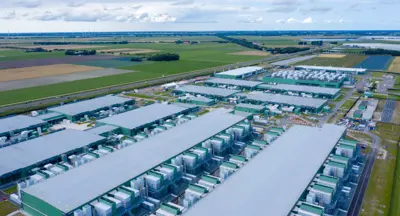
On-site power generation is rising for the same reason. Bloom Energy says its fuel-cell based power can be delivered to data centers in as little as roughly 90 days, where traditional grid connections can take years in some regions. Time itself has become a competitive edge.
Still, a distinction is needed here. The fact that power is scarce does not guarantee gains for every utility stock. Profitability varies widely depending on regulation, local opposition, transmission investment costs, and fuel prices. From an investing standpoint, it makes more sense to track order backlogs and margins in power equipment, cooling, distribution, and on-site generation tied directly to AI capex, rather than raw generation capacity.
This week's most important stress test is Oracle
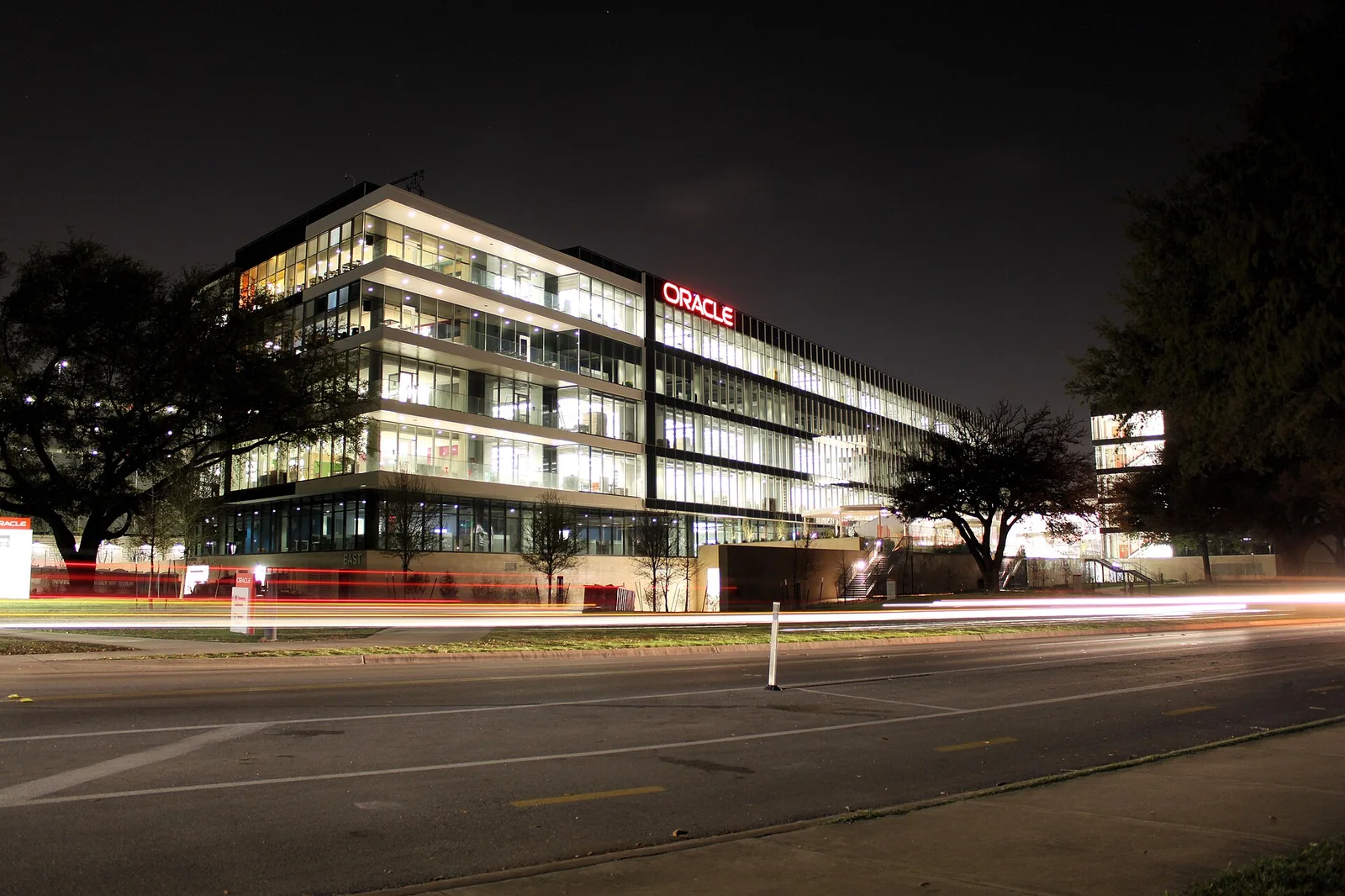
Oracle's fiscal 2027 first-quarter numbers compress the entire AI infrastructure investment cycle into one report. Quarterly revenue came in at $19.3 billion, up 30% year over year. Cloud infrastructure revenue grew 121%. Remaining performance obligations, or RPO, contracted revenue not yet recognized, stood at $664 billion.
Demand looks strong on its face. Capital is the harder question. In the same quarter, capex reached $28.5 billion, exceeding revenue, and free cash flow was negative $5.4 billion. Customer prepayments brought in $11.3 billion, and the company said a substantial portion of its new AI contracts are structured so they do not require additional financing plans.
This detail matters. The yardstick for judging AI infrastructure companies is shifting from "how fast is revenue growing" to "how much capital has to go in first to generate that revenue."
Going forward, revenue growth needs to be read alongside free cash flow, capex, customer prepayments, debt, and RPO on the same screen. Even with 30% revenue growth, if capex grows faster and reliance on outside financing keeps rising, valuations could come under pressure.
The second risk to watch: the financialization of AI
Anthropic is reportedly weighing an IPO that could raise as much as $100 billion at a valuation near $2 trillion, and Reuters reports Nvidia is in discussions to participate as an anchor investor for up to $10 billion. Nothing is finalized yet.
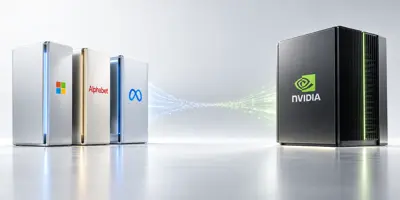
What makes this structure notable is that Nvidia would be investing in an AI model company that, in turn, could purchase large amounts of cloud infrastructure built on Nvidia GPUs.
That is not automatically evidence of "fake demand." But investors should scrutinize how independent that demand really is. The key question is whether a customer's own revenue and cash flow can grow enough on their own to sustain GPU purchases over the long run, or whether supplier investment and financial support are propping up part of that demand.
For the AI bull market to last, rising usage at model companies eventually has to convert into real revenue and cash. Capital circulating between the same players to inflate growth rates is not enough on its own.
Insight Times Editorial Desk