AI Boom's Weak Link: Credit Markets Begin to Flash Warnings
Data center demand may be ample, but growth can stall if the builders cannot raise money. How to read the debt structure behind the AI boom.

Part 2 of 4 in the series "The AI Correction: When Does the Rebound Begin?"
Funding comes before GPU orders
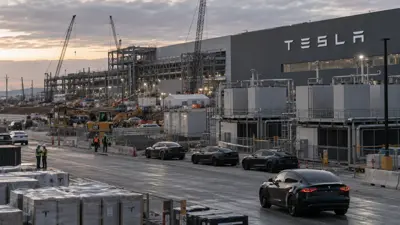
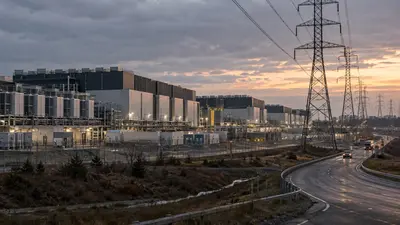
Data center operators must spend on GPUs, servers, power equipment, buildings and networking before customer revenue arrives in earnest. Even when long-term contracts are signed, cash can trickle in over several years.
Operators that cannot build assets with equity alone turn to corporate bonds, bank loans, private credit and project finance. When bond yields rise, the cost goes up not only for new investment but also for refinancing existing debt as it comes due.
So the market has begun to question not the demand for AI computing but the financial sustainability of the companies that must supply it.
The CoreWeave numbers to watch
According to the research provided, yields on some CoreWeave bonds rose to 15% to 16% in mid-October, and its CDS spread climbed to about 1,200 basis points. These are stress readings for specific securities at that time. They do not mean every borrowing carried the same rate, nor that they were closing levels on October 23.
With the 10-year Treasury yield near 5%, a demand for much higher yields on some bonds signals growing wariness about credit and liquidity risk. Yields still vary widely by bond structure, maturity, collateral and seniority.
If a company's stock rebounds while its bond prices keep falling and refinancing terms worsen, the rebound alone does not show that the financial problem is solved.
- Yield on some bonds: 15% to 16%
- CDS spread: about 1,200bp
- 10-year Treasury yield: about 4.99%
The financial links the IMF flagged
The IMF's 2026 Global Financial Stability Report analyzed 14 AI-related circular financing deals disclosed since 2023. It found about $300 billion in equity investment, $650 billion in debt and $1.4 trillion in future revenue commitments tied together.
The figures do not mean revenue is double-counted or that all of it has already been turned into cash. They mean investors, customers and lenders are interconnected, so trouble at one company could hit another's expected revenue and the value of its investment assets at the same time.
In a boom, equity investments and purchase agreements speed up expansion. In reverse, if a customer's funding is delayed, orders, collateral values and new investment plans could shrink together.
- Equity investment: about $300B
- Related debt: about $650B
- Future revenue commitments: about $1.4T
- Deals analyzed: 14
Separating contagion from single-company trouble
Credit stress at a weak neocloud provider does not translate directly into a crisis for the large-bank system. Secured loans, staged loan disbursement and investors' diversified exposure can dampen the shock.
But in an industry where a handful of operators aggressively drive GPU demand and data center construction, a pullback by even a few of them could change suppliers' expectations for future orders. Being a growth industry does not remove funding risk.
This content is for information only and is not a recommendation to buy or sell any financial product.
Insight Times Editorial Desk