Stocks Can Rise Even if the Iran War Doesn't End

Wall Street is waiting less for a declaration of peace than for Hormuz to normalize. What matters is whether energy-driven inflation and long-term yields stop getting worse.

The 20-second read

1
Middle East crude exports have nearly returned to prewar levels. Even with the war still going, supply chains have already begun to adapt.
2
Yet Brent crude closed at $116.72 on October 23. What is propping up oil prices now is less the current shortfall than the risk of renewed escalation and expensive shipping costs.
3
A full-fledged stock market recovery could come before a final end to the war. The key is the point at which oil prices, freight rates, interest rates and corporate earnings forecasts stop getting worse.

Does the war have to end for stocks to rise? For investors holding US tech, AI and semiconductor shares, the more useful question is different: "Will the war make tomorrow's economy worse than today's expectations?"

That is close to what Wall Street is focused on now. There is no confidence in an early end to the fighting. Talks between the US and Iran have stalled. Reports say the US and Israel are preparing options for more strikes after the Nov. 3 midterm elections. But a prepared military plan is not the same as a decision to attack.

Meanwhile, a different change is already under way in energy markets. The war continues, yet crude exports are recovering. What the market is waiting for may be less a diplomat's signature than economic normalization around Hormuz.

Crude is back. The risk premium remains

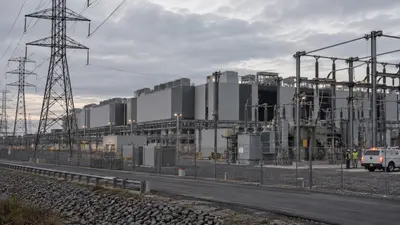
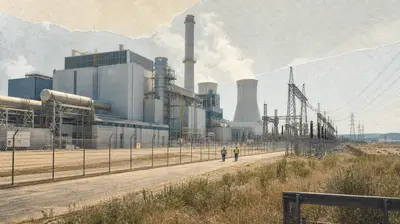
The number of ships passing through Hormuz and the volume of oil reaching world markets are not the same measure. If some vessels avoid attack risk and use bypass pipelines and other ports, exports can recover even when the strait is not fully normal.

  • 98%: Middle East crude shipments at the end of September versus pre-war levels, by JPMorgan's estimate
  • 58%: Shipments of refined products such as diesel and gasoline versus pre-war levels
  • $116.72: Brent December futures settlement on Oct. 23, per barrel

A report citing Kpler data said combined shipments through Hormuz and bypass routes recently topped 24 million barrels a day, above the pre-war average of 23.3 million. On supply alone, this is far from a state in which almost no crude gets out.

Yet Brent sits at $116.72. It looks like a contradiction, but the market prices not today's barrels so much as whether those barrels can keep coming out safely tomorrow. Ship attacks, threats to Saudi energy facilities, costly insurance and freight, and a shortage of refined products all add a risk premium on top of crude.

The goods are being delivered again. The problem is that shipping is expensive, and no one knows when the network might break again.

Nov. 3 is a political fork, not an end date for the war

High oil prices are an electoral burden for President Trump. Reuters reported that the war and tariffs are lifting fuel and living costs and pressuring Republicans' midterm prospects. The White House has said it will not strike Iran again before the election.

But the more Washington hurries toward a deal, the less reason Iran has to move at the same pace. Citing Iranian officials, Reuters reported that Tehran is trying to delay talks and raise pressure on shipping to impose a political cost on Trump. US impatience is both a driver of negotiations and a source of leverage for the other side.

So the assumption that "the election is close, so the war will end soon" is a weak basis for investing. Reports have also said US and Israeli forces have drawn up plans to resume attacks after the election. That means plans and options exist. It does not mean an attack has been finally approved.

Even if the balance of power in Congress shifts after the midterms, the war does not end automatically. Whether a White House freed from election pressure becomes more flexible or more hawkish remains open.

Markets can adapt before the war ends

Markets are more sensitive to whether things get worse than expected than to the existence of bad news. If supply disruption stays within a range and companies can recalculate their cost structures, discount rates and earnings forecasts for stocks can stabilize even as the war goes on.

JPMorgan, in fact, sees supply resilience and demand destruction as limits on how far crude can run. Goldman Sachs, by contrast, says Brent futures carry a high risk premium of about $25 and that the market has priced in a large share of the chance of a longer or escalated conflict.

The two views do not contradict each other. One looks at physical supply adapting. The other looks at future risk still in the price. The current market holds both at once.

ItemStatus
Current supplyCrude exports near, or for some periods above, pre-war levels
Remaining bottlenecksRefined products, freight costs, insurance, safety of alternative export routes such as Saudi Arabia
Market priceBrent still in the $110s, with a high premium for renewed escalation
Gate for equitiesWhether energy-driven inflation and rising long-term yields stop

Don't just watch oil falling. Why it falls matters more

High prices destroy demand on their own. Consumers use less, companies adjust production and transport, and suppliers add bypass routes. JPMorgan believes this demand loss can restrain oil prices even if supply constraints persist.

For stocks, though, there is a trap. If oil falls because supply recovers and shipping normalizes, it helps corporate margins and consumption at once. If oil falls because the economy is slowing, inflation pressure eases but sales and earnings can worsen.

A good drop in oil is supply-side normalization. A bad drop is demand collapse. Investors need to check the cause, not just the price.

Blaming the tech pullback on the war alone misreads what comes after a ceasefire

Tech stocks face another burden besides oil and rates: questions about the scale of AI data center spending, upfront costs, debt financing and payback periods. AP reported that high long-term yields, together with worries about AI company valuations and returns on investment, are adding to tech volatility.

This matters. If the war calms, the energy risk premium and some rate pressure could ease. But how fast AI companies turn hundreds of billions of dollars in capital spending into revenue and cash flow is a separate matter.

The market's internals, as Goldman Sachs described them on Oct. 20, tell a similar story. The S&P 500 was about 2% below its record high, yet the median stock was about 15% below its own peak. Index returns and what investors actually experience have split widely. A ceasefire would not solve every stock's valuation problem.

Can stocks rise while the war continues?
  • Yes. Stocks price in the future rate of change before they price in the current situation.
  • If supply disruptions stop growing and costs stabilize, the risk premium can shrink before the war formally ends.
Is the November 3 midterm election the most important date?
  • Politically it is an important turning point, but it is not a deadline for the war.
  • Both a policy of holding off on additional attacks before the election and a review of strike options after it have been confirmed, but actual military action is a separate decision.
If Brent crude falls below $100, is that enough of a boost for tech stocks?
  • The reason for the drop matters. If it reflects supply returning to normal, it is positive. If it reflects a collapse in demand from a recession, worsening corporate earnings could be the bigger problem.
  • Look at long-term interest rates, EPS estimates and FCF forecasts together with oil prices.
What is the biggest condition under which the current thesis could be wrong?
  • Attacks could expand to bypass export infrastructure, such as Saudi ports, the East-West Pipeline and refineries.
  • In that case, the premise that supply holds up despite some Hormuz constraints would break, and an actual shortage of barrels could again drive prices.

What to watch

Middle East crude and refined product shipmentsIf only crude gets close to 100% while refined products stay around 60%, the bottleneck continues. The more refined products recover too, the stronger the case for normalization.
Brent crude and ocean freight ratesIf freight and insurance costs stay high even as oil prices fall, the risk premium has not been fully removed. Costs are closer to normal only when both fall together.
US 10-year Treasury yieldIf high oil prices push inflation expectations and long-term rates up again, the discount-rate burden on growth stocks persists. We need to check whether stable oil prices lead to stable rates.
AI company earnings and FCF forecastsEven if the war calms, the problem of recouping AI investment remains. A tech rebound is more likely to last if earnings estimates and free cash flow forecasts recover together.
The market likely needs confirmation that energy-driven inflation and long-term yields are no longer worsening, more than it needs a signed deal.

Insight Times Editorial Desk

More by topic

Starting with this story's topics, then what readers are following now

Investor psychology, decision-making and books on investing

A building that houses servers and networking gear and supplies them with powe…

Why Nebius Is Keeping Some 2027 AI Capacity Off the Shelf

Nebius mixes long-term contracts, short-term premiums and auctions. Holding back capacity pays only if the servers stay busy, and it is not yet clear the pricing will last.

Tech

AI ran out of memory before it ran out of GPUs

The HBM bottleneck is spreading into DRAM prices, server costs and the price of the next laptop or phone.

Tech

Is Space Cooler for AI? Why Musk Wants Data Centers in Orbit

The next limit on AI may be power and cooling, not GPUs. Elon Musk is looking to Earth orbit for an answer, but the test is cost per hour of compute.

Tech

White House Swaps AI for "SI." The Real Investment Signal Is Infrastructure, Not the Name

An executive order renames artificial intelligence "Super Intelligence" and six frontier labs sign a voluntary safety accord. What investors should watch is the data center, power, nuclear and chip policy now gathered under one national-competitiveness frame.

Tech

Musk Sees the Next Phase of AI Infrastructure: Who Can Switch GPUs On, Fast

If neoclouds struggle under financial pressure, AI demand may not shrink. It may simply favor the few operators with the capital and execution to serve it, a shift that could matter for SpaceX and Tesla.

Tech

Weekly Check: The AI Bull Market Isn't Over, It's Just Gotten Harder

A 5% 10-year yield, 470 gigawatts stacked up in Texas, Chinese DRAM, and whether data centers actually get switched on are starting to decide who wins the AI trade through 2027.

Tech

Is Memory Peaking? In the AI Era, Watch the Bottleneck, Not the Demand

Demand still outruns supply. But memory stocks can peak before demand does. The real question is how long HBM4, server DRAM, CXL and Big Tech capex keep the cash flowing.

Tech

NVDA

101 storiesSee all →

Who Hits $1 Trillion Next: Reading AMD and ASML by Different Rules

One company is chasing Nvidia's GPU empire. The other sells the machine that draws the chips for every advanced chipmaker, including Nvidia. Both get floated as 2028 trillion-dollar candidates, but the numbers investors need to watch are entirely different.

Investing

Box Shows AI Its Manuals, and the AI Starts Redesigning the Workflow

Box Architect, built with NVIDIA, moves AI from reading documents to designing how work gets done. It has not yet reached beta, so the real-world payoff remains to be seen.

Tech

Tech Selloff: Is the Bull Market Over? Wall Street's Four-Year Chart Says Not Yet

The uptrend has survived five double-digit pullbacks in four years. This time, AI companies' debt and cash flow are the new variables.

Investing

Marvell's $115 Billion Lumentum Deal: Is AI's Next Bottleneck Light, Not Chips?

Marvell's purchase of Lumentum points to a contest beyond GPU speed, in data transfer and power efficiency. Whether the price is right is not yet confirmed.

Tech

Nvidia and Palantir Put AI Inside the Supply Chain - The Real Shift Is That It's Learning Judgment

A single Vera Rubin rack holds 1.3 million parts. The real breakthrough in Nvidia and Palantir's new supply chain AI isn't automating that complexity, it's capturing the judgment calls that used to live only in planners' heads.

Tech

If You Only Watch Tesla, You May Be Missing Half the AI Story

Nvidia builds the AI brain. Who supplies the electricity to run it? Six power companies Tesla investors should know, and why Tesla's storage business is just one link in the chain.

Investing

Nvidia Moves From GPUs to CPUs as AI Agents Reshape a $200 Billion Chip Market

A customer's early test found Nvidia's Vera CPU handled about twice the AI agent workload of its existing chips. The bigger story is where the money in semiconductors is heading as AI shifts from answering questions to doing work.

Tech

GPU

73 storiesSee all →

A chip built to draw graphics, whose ability to run thousands of identical cal…

The Next AI Chip Race Is About How Chips Connect

Applied Materials will lift its stake in Dutch equipment maker BESI from about 9% to 20%. The bet is less about control than about a new way to link chips.

Tech

US AI Data Centers Are Headed for 90GW. Gigawatts Now Matter More Than Dollars

Goldman Sachs expects US data center capacity to grow from 64GW at the end of 2026 to 90GW at the end of 2027. The AI race is moving from buying GPUs to building power plants and transmission lines alongside them.

Tech

Nvidia's $500 Billion Experiment: Wall Street Asks Who Backs the GPU, Not Just the Chip

The real issue in Nvidia's financing platform is not chip sales. It is how far Wall Street will trust GPU resale prices and rental income three to four years out.

Tech

The Cheaper Tokens Get, the Bigger Your AI Bill Gets

As AI shifts from training to inference, the token is becoming an industrial commodity. Falling prices are not cutting demand, because agents and automation consume tokens at a scale no human chat session ever did.

Investing

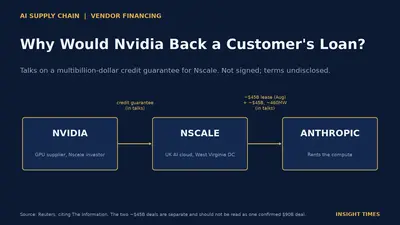
Dark navy cover. Flow diagram: Nvidia to Nscale (credit guarantee, in talks) to Anthropic (~$45B compute lease signed in August plus a separate ~$45B, ~460MW deal in talks). Title: Why Would Nvidia Back a Customer's Loan?

Why Would Nvidia Guarantee Its Customers' Data Center Loans?

Nvidia is reportedly in talks to back financing for Nscale's West Virginia data center. Nothing is signed, and the terms are not public.

Tech

Two Companies Drive 34% of S&P 500 Earnings Growth as AI Pays Sellers First

Nvidia and Micron generate a third of expected earnings growth in US large caps. Apollo says the financial effect of AI is not yet visible in the S&P 493.

Investing

Amazon Goes After Nvidia's Strongest Moat, and It Is Software, Not GPUs

Amazon's open-source TorchNeuron aims to let existing AI code run on its Trainium chips. The contest comes down to the total cost of AI compute and the return on Amazon's $220 billion in annual capital spending.

Tech

HBM

78 storiesSee all →

Memory stacked next to the GPU.

Memory Is Still Short, but Less Short: Checking for the Peak This Week

Citi trimmed its 2027 DRAM and NAND shortage forecasts together. Server pricing remains strong, while consumer markets show weakness. This week's numbers show where the memory boom may peak.

Investing

A 3x P/E is not a discount. It is a verdict on how long memory profits last

Nomura's buy case on Samsung Electronics and SK Hynix does not stop at higher memory prices. It argues that if AI has turned memory from a cyclical component into strategic infrastructure, the formula the market uses to value both companies has to change too.

Investing

2027 Isn't the End: Citi's Case for a Memory Supercycle Running to 2031

Citi says the memory shortage timeline is stretching again. If AI shifts from "train once" models to continual learning, HBM, server DRAM and enterprise SSDs could all fall short at the same time.

Tech

Has Memory Peaked? Prices Are Cooling, but the Shortage Looks Set to Run to 2028

Price growth has slowed and consumer demand is already breaking. Server and HBM supply remains short, and Micron says more than 75% of its 2027 volume is already committed to customers.

Tech

AI Chip Peak Check: Demand Still Rising, Risk Building in 2027-2029 Supply and Funding

DRAM and NAND contract prices are still climbing and HBM suppliers hold the edge. Power shortages, AI financing costs and simultaneous memory expansion are the risks for later years.

Investing

The Real ASML Number Isn't the 3% Pop, It's the 30% Capacity Hike

ASML's rally isn't just an AI trade. Customers are already locking in 2027 tool slots, and ASML is raising Low-NA EUV capacity by roughly 30% to keep up.

Investing

Photo of a semiconductor cleanroom inspection lab illustrating the memory chip supply chain

Memory Chip Peak Weekly Check

Chipmakers reported record results, yet chip stocks plunged 7.2% in a single day. That is what happened in the memory market this week. The boom is still on, but the stock market has already started pricing in the next risk.

TechEXPLAIN