Memory Is Still Short, but Less Short: Checking for the Peak This Week
Citi trimmed its 2027 DRAM and NAND shortage forecasts together. Server pricing remains strong, while consumer markets show weakness. This week's numbers show where the memory boom may peak.
The 20-second read
The 20-second brief
Citi cut its 2027 DRAM shortage forecast from 8.7% to 3.8%. The shortage continues, but it is smaller than expected.
AMD's data center revenue surged. AI demand is alive, but consumer memory prices and the stock market are telling a different story.
This week's verdict: the pace of price increases has likely peaked, earnings have not been confirmed to have peaked, and there is a risk that stock prices peak first.
The biggest change this week is the size of the shortage
2027 DRAM shortage forecast: 8.7% → 3.8% (Citi revision)
2027 NAND shortage forecast: 6.1% → 3.3% (Citi revision)
The question investors ask about memory has changed. Through last week, the focus was "how long will it stay short?" This week, "how much less short will it get?" matters more.
In its 2027 outlook released Tuesday, Nov. 3, Citi cut the DRAM shortage from 8.7% to 3.8% and the NAND shortage from 6.1% to 3.3%. This is not an announcement that the shortage is over. It says supply is catching up with demand faster than expected.
Even if a store is still short of goods, it is hard to keep raising prices once the line of customers shrinks quickly. Memory works the same way. The change in the size of the shortage may be a more sensitive signal for future prices and earnings than whether a shortage exists.
That does not mean AI demand has cracked. AMD reported Tuesday, Nov. 3, that third-quarter data center revenue rose 97% from a year earlier. Demand for chips going into AI servers is strong. Yet the Nasdaq posted a weekly decline even after Friday's (Nov. 6) rebound. Good earnings and a good stock price are already separate matters.
The price list holds two different markets
Counterpoint said Thursday, Nov. 5, that the pace of third-quarter DRAM price increases had slowed. In the spot market tracked by TrendForce, buyers of some DDR products stood aside rather than chase prices. Consumer NAND wafers also showed weakness.
Contract prices for server DRAM and enterprise SSDs, by contrast, remain strong. TrendForce's fourth-quarter forecast calls for conventional DRAM contract prices to rise 10% to 15% and NAND 15% to 20%. Claims that prices have collapsed blend these two markets together.
Another shift shows up here. Splitting the market into HBM and everything else is no longer enough. Even ordinary DRAM can see strong demand once it goes into an AI server. Memory in smartphones and PCs, on the other hand, faces demand suppressed by high prices themselves. Who is buying now matters more than the product name.
This week's peak verdict: there is more than one peak
First, the peak in the rate of price increases. It has likely already passed. That does not mean prices are falling. They are still rising, only more slowly. It is like a car that slows from 100 km/h to 80 km/h: it still moves forward.
Second, the peak in corporate earnings. Not yet confirmed. Server demand and long-term supply agreements are supporting results. Micron said it has allocated or committed more than 75% of its fiscal 2027 volume to customers. But committed volume is not all revenue locked in at the same price.
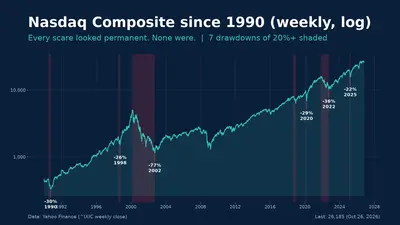
Third, the peak in stock prices. It can come before earnings. The market prices not only what companies earn now but also what they will earn in the next cycle. Even while the boom lasts, lower expectations for future earnings can shake shares first.
The overall verdict this week is that the peak is one step closer than it was last week. That does not mean all three peaks have been confirmed.
Two illusions: capacity additions and low P/E ratios
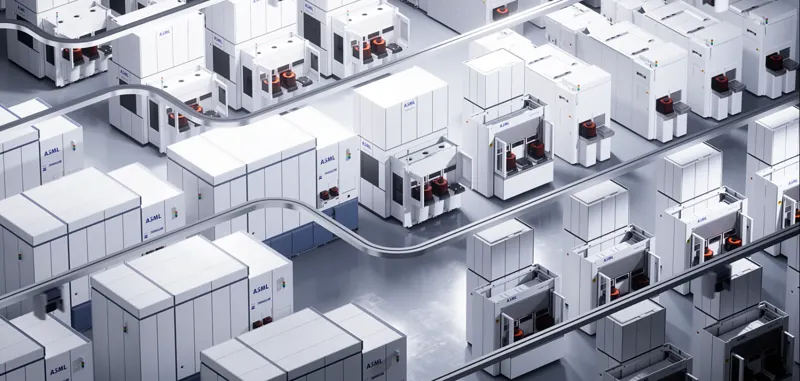
The reasons for supply to grow have also increased. Citi raised its 2027 capex growth forecasts for DRAM and NAND to 55% and 35%, respectively. China's CXMT and YMTC are also expanding capacity. Price competition in commodity products in particular could intensify.
Still, money spent on factories today does not turn into memory supply tomorrow. Micron's expanded investment starts with construction and securing cleanroom space. Installing equipment and raising yields take time before real product ships. Higher investment is a seed of future risk, not evidence of oversupply next quarter.
There is also an illusion of cheapness. Barron's cited Micron's forward P/E at 3.9 on Thursday, Nov. 5. But when earnings are at a peak, P/E ratios can look very low. A stock at 4 times earnings is at 8 times if earnings halve while the price stays put.
So the better question is not "how cheap is it now?" but "how much can the company earn if prices normalize?" BofA stresses the strength of memory supply and demand, while Morgan Stanley warns about low multiples near a cycle peak. There is reason to watch both.
Next week, Nov. 9 to 13: three things to watch
First, whether spot-price weakness spreads to contract prices for server DRAM and enterprise SSDs. If both weaken together, this week's warning gets one notch heavier.
Second, whether customer behavior changes. Beyond simple waiting in the spot market, watch for rising inventories, delayed deliveries and changes to long-term contract terms.
Third, whether AMD's strong results lead to upward earnings revisions across the semiconductor sector. At the same time, watch capex and free cash flow at the big tech companies investing in AI data centers. Buying a lot of chips is different from making money on that investment.
Insight Times view
This week's news is not a death notice for the memory boom. But the easy formula that "as long as there is a shortage, stocks keep rising" has cracked. The shortage persists and earnings are strong. But if the shortage narrows and capacity additions speed up, stocks may price in ordinary future earnings first.
Long-term investors do not need a panicked sale of everything, nor an all-in purchase just because prices fell. It is reasonable to keep a long-term approach built on non-leveraged core ETFs, check for overconcentration in semiconductors and deploy new money in stages.
Next week the question is still one: not "is it still short?" but "can earnings last longer than the pace at which the shortage is shrinking?"
FAQ
Prices keep rising. Why worry about a peak?
Stock prices can reflect the future pace of increases and the durability of earnings before they reflect the price level.
Did Chinese suppliers' share surge this week?
No. By Counterpoint's measure, CXMT's DRAM revenue share slipped from 10% in the second quarter to 9% in the third. The concern is future capacity expansion.
Do heavy long-term contracts make oversupply impossible?
No. Contracted volume, price terms and the possibility of delivery adjustments are separate matters. Customer orders and actual shipments need to be checked together.
- The peak in the rate of price increases has probably passed. That does not mean prices are falling.
- The peak in corporate earnings has not yet been confirmed.
- The peak in stock prices can show up before the peak in results. The three peaks need to be viewed separately.
- Citi cut its 2027 DRAM shortage forecast from 8.7% to 3.8%.
- It cut its NAND forecast from 6.1% to 3.3%. This does not mean the shortage is going away. It means the shortage is getting smaller.
- The numbers so far make that hard to argue. Weakness has shown up in the spot market and in consumer NAND.
- Contract prices for server DRAM and enterprise SSDs are still strong. TrendForce expects fourth-quarter contract prices for commodity DRAM to rise 10% to 15%.
- It may look cheap, but it is hard to say for sure. When earnings are at a peak, the P/E can look low.
- A stock with a P/E of 4 would see its P/E rise to 8 if earnings were cut in half, even with the share price unchanged.
- Watch whether weakness in spot prices spreads to contract prices for server DRAM and enterprise SSDs.
- Also watch for rising inventories, delayed deliveries, and changes to long-term contract terms.
- We need to check whether AMD's strong results lead to higher earnings forecasts across the semiconductor sector.
What to watch
Insight Times Editorial Desk