Robots Are Replacing Workers, So Why Is Figure AI Hiring a $45-an-Hour Night Supervisor?
A Figure AI job posting points to a new yardstick for humanoid economics, including Tesla's Optimus: not what the robot costs, but how long it works without human help.
The 20-second read
1. Humans work the night shift to manage robots
Robots are supposed to take over human work. So what does it mean when a company needs someone to look after them all night?
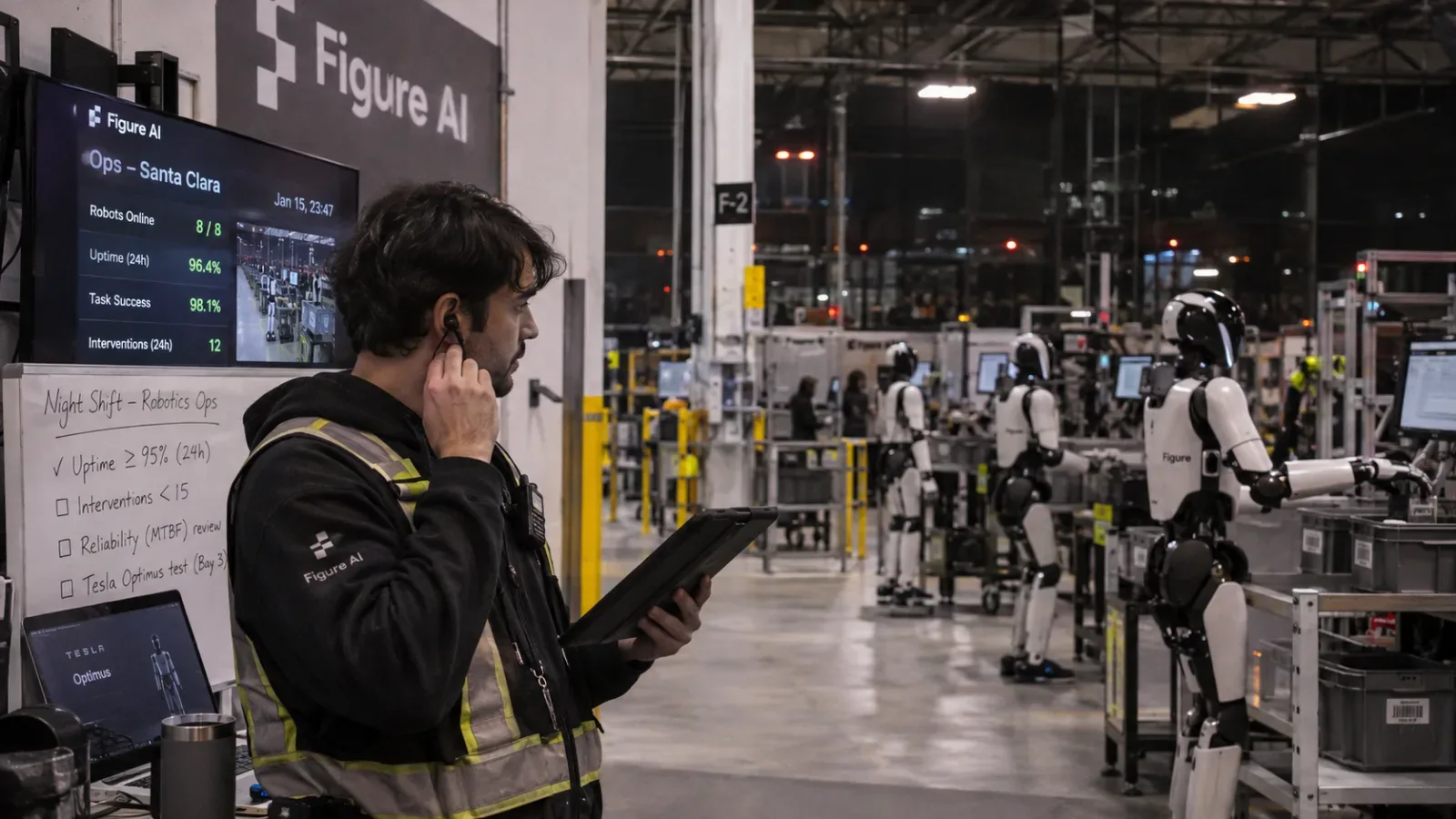
That is the story behind a job posting from Figure AI, the US humanoid robot maker, dated Nov. 5. The job is in Santa Clara, California. It is an overnight operations lead role, running from 10:30 p.m. to 7 a.m., with pay of $40 to $45 an hour. The position starts as a contract job and could convert to full time. Business Insider reported the posting.
| Item | Detail |
|---|---|
| Hourly pay in the posting | $40 to $45 |
| Overnight shift | 10:30 p.m. to 7 a.m. |
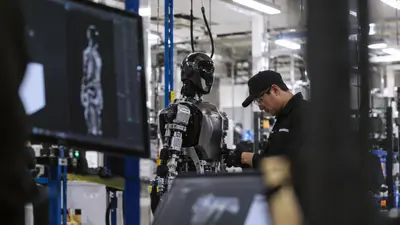
The job involves assigning tasks to robot operators and tracking how long the robots run and how much work they handle. When a robot breaks down or a safety problem arises, the lead decides whether to keep it running or stop it. Engineering support is limited overnight, so judgment on the floor matters.
2. The cost missing from the robot price tag
Companies buy robots not because they look like people, but to get work done more efficiently.
If a person has to rush over every time a robot stops, the math changes. The purchase price is joined by operator wages, breakdown response and lost work time.
Consider a site where one operator looks after 5 robots and another where one operator looks after 50. With the same operator wage, the supervision cost carried by each robot differs sharply.
| Robots per supervisor | Supervision cost per robot |
|---|---|
| 5 | Heavy |
| 50 | Light |
This comparison is a hypothetical to illustrate the point. Figure AI's actual supervision ratio has not been disclosed.
Cutting supervisors alone is not the answer. If downtime rises from breakdowns, or safety risks grow, the losses can exceed the wages saved. What matters is the ability to reduce supervision while keeping robot productivity intact.
3. What to check on Tesla's Optimus
For investors, the scene to watch is not a robot walking smoothly in a video. It is a worksite where the robot keeps working while no one is helping.
Tesla's (TSLA) Optimus faces the same test. So do Figure AI, Agility Robotics and other humanoid makers. What they all need is reliability in repetitive, real-world tasks.
Asking whether a robot does the job well is not enough. Investors should also look at how long it works continuously without human intervention, how often it breaks down, and how many robots one operator can manage.
If those measures improve, there is more room to cut per-robot operating costs and strengthen the case for real deployment. If humans must stay close no matter how fluid the motion looks, commercialization could be slower.
4. How does human work change as robots spread?
Automation removes some tasks and creates others.
When robots arrive on a site, someone has to measure performance and log errors. Someone has to make safety calls on the spot. Engineers define the tasks robots take on and test them repeatedly. Operations managers revise the work environment and procedures.
In the past, people moved goods by hand. Going forward, the people who verify that robots do that work properly may become more important.
Workers and parents may want to note the shift. The skills that gain value may be less about operating machines and more about spotting problems, judging safety and improving how people and machines work together.
- It posted a listing for a night operations lead on Nov. 5.
- The job is in Santa Clara, California, and the shift runs from 10:30 p.m. to 7 a.m.
- The pay is $40 to $45 an hour. The role starts as a contract position and could convert to full-time.
- The lead assigns tasks to robot operators and manages the robots' uptime and workload.
- When a robot breaks down or a safety issue comes up, the lead decides whether to keep it running or stop it.
- Engineering support is limited at night, so judgment on site matters.
- Beyond the purchase price of the robots, there are operator labor costs, breakdown response, and lost working time.
- The more robots one operator handles, the lower the supervision cost per robot tends to be.
- However, Figure AI's actual supervision ratio has not been disclosed.
- It makes sense to look together at how long robots work continuously without human intervention, how often they break down, and how many robots one operator manages.
- The polish of a demo video alone makes it hard to gauge how fast commercialization is moving.
- Tesla's Optimus and Agility Robotics can be judged by the same standards.
- Work such as measuring robot performance, logging errors, and making safety calls may grow.
- People who verify that robots are doing their jobs properly could become more important.
- However, how many jobs will actually be created has not yet been confirmed.
What to watch
Insight Times Editorial Desk