If Tesla and SpaceX Merge, Who Gets the Gains from Musk's Grand Plan?

The two companies have begun formally weighing a merger. For long-term TSLA holders, the key question is not technical synergy but how much of the value created flows to existing shareholders.
A merger has entered formal discussion for the first time

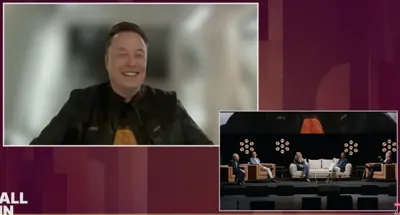
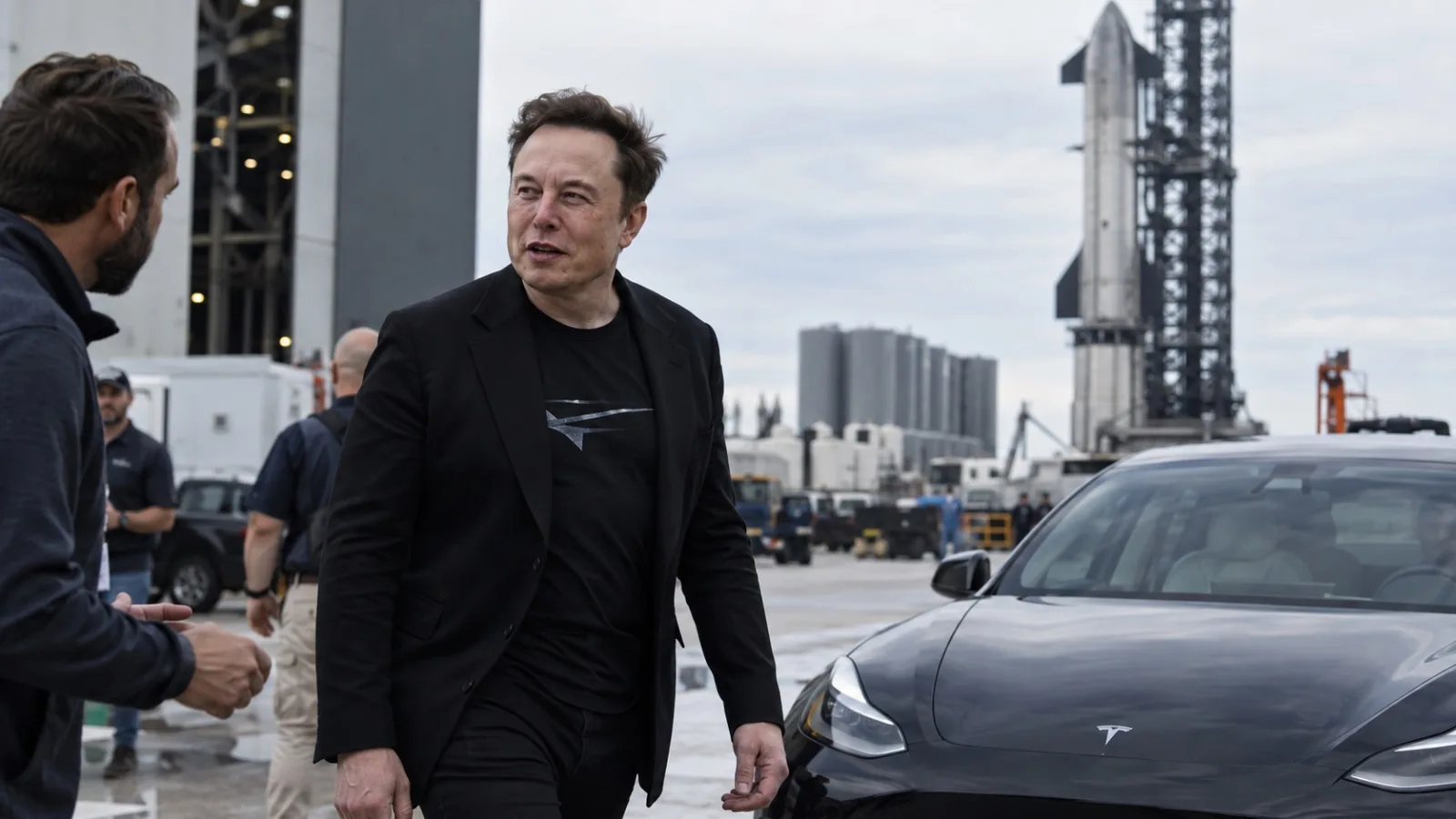
On SpaceX's third-quarter earnings call on Oct. 20, Elon Musk said a merger of Tesla and SpaceX is a good idea.

The two companies formed a special committee at shareholders' request. Musk said he is not taking part directly in the committee's negotiations because of his conflict of interest as a major shareholder and CEO of both companies.

Until now, a merger was closer to Musk's long-term vision and investor speculation. What differs now is that boards are examining the possibility of a deal.

A special committee is not an approval, however. The price, the structure and the share exchange ratio are all undecided. Musk himself cautioned against market expectations that a deal is certain.

  • Confirmed: committee formed, with independent directors from both companies
  • Undecided: merger price, including exchange terms
  • Uncertain: whether the merger happens, since it is still pre-approval

Why would Musk want to combine the two?

Tesla and SpaceX started in different businesses. But as AI becomes a shared base technology, the boundary between them is blurring.

Tesla's strengths are mass production of vehicles and robots, batteries, power management and self-driving AI. SpaceX has satellite communications, space launch and large-scale AI computing infrastructure.

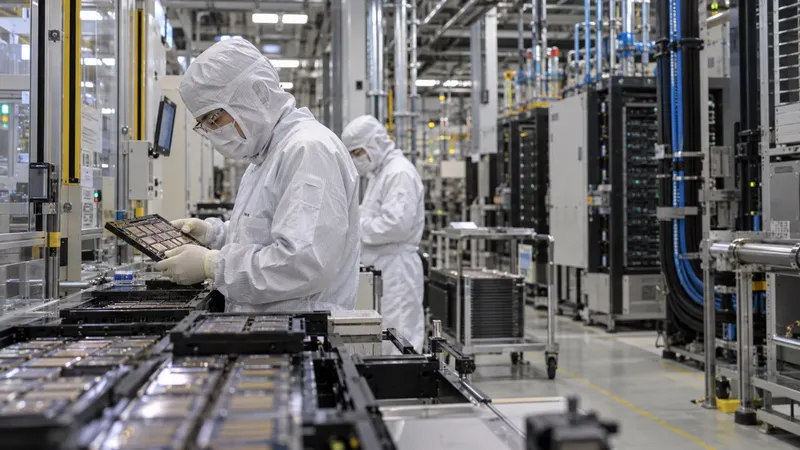
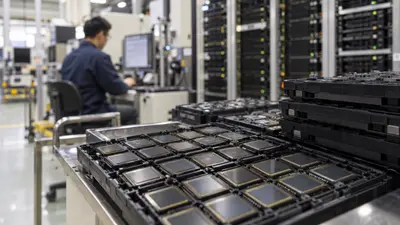
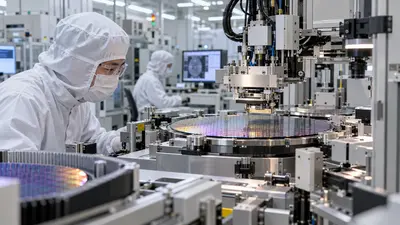
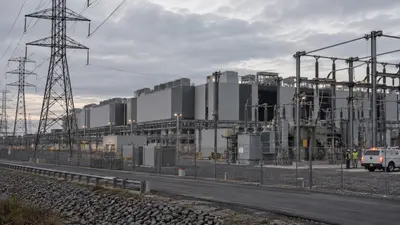
The best example of potential cooperation is Terafab, a joint semiconductor project. Sharing chip design and production, AI software and data center power infrastructure could cut duplicated investment. Over the long term, services linking satellite communications, vehicles and robots are also conceivable.

A decisive question remains: why does it have to be a merger?

Joint R&D, chip supply contracts and shared data center investment are possible even if the two companies stay separate. The economic case for a merger has to be proven not by simple synergy but by gains that can be realized only through combination.

SpaceX is now both a space company and an AI infrastructure company

The key change in judging this discussion is SpaceX's business structure.

SpaceX's third-quarter 2026 revenue was about $14.58 billion, up 161% from a year earlier. AI-related revenue reached about $7.56 billion. But capital spending in the same quarter also came to about $19.6 billion, more than quarterly revenue.

  • SpaceX Q3 2026 revenue: $14.58 billion, up 161% year over year
  • Capital spending in the same quarter: $19.6 billion, larger than quarterly revenue

Two things follow. SpaceX's AI business is growing fast. And sustaining that growth requires enormous new capital.

Revenue growth and return on investment are different matters. As spending grows, utilization, depreciation and the profitability of customer contracts matter more.

If Tesla's capital were put into this AI infrastructure buildout after a merger, existing shareholders would gain new growth opportunities along with greater capital-intensive risk.

In a $3.5 trillion merger, price matters most

The roughly $3.5 trillion figure cited by Reuters is the sum of the two companies' market values at the time. It does not represent a deal price or a fair value for a combined company.

What investors should watch in a merger is not the size of the business but how much of their ownership is preserved.

Suppose Tesla is valued at $1.5 trillion and SpaceX at $2 trillion, and they merge in an all-stock exchange.

Hypothetical economic stake of existing shareholders after a merger

  • Existing Tesla shareholders: 42.9%
  • Existing SpaceX shareholders: 57.1%

The percentages are an example calculated from the assumed pre-merger values. They are not a forecast reflecting actual deal terms or voting structure.

If Tesla values SpaceX's growth too highly, existing TSLA holders' post-merger stake shrinks accordingly. If the companies combine at a fair price and also generate additional cash flow, the value of existing holders' stake could rise.

In the end, the core of a merger is less what size the company becomes than how much of the additional value created by the merger goes to whom.

The more sensitive issue is Musk's control

Musk holds significant stakes and management influence in both companies. In a deal like this, terms favorable to one company's shareholders can be unfavorable to the other's.

That is why a special committee assesses value independently and, where needed, seeks outside financial advice and a fairness review.

Musk said approval on the Tesla side would require votes in favor equal to 50% of all outstanding shares. That means a simple majority of shares voted would not be enough. The actual approval requirement depends on the final deal structure, applicable law and disclosures, which need to be checked.

Economic ownership of common shares should also be distinguished from voting power. If a merger were designed in a way that raises Musk's effective voting power, ordinary shareholders' governance risk would need to be assessed as well.

The bottom line

Two good companies combining does not necessarily make a better investment.

Whether Musk can build a single technology ecosystem is an important question. But for Tesla shareholders, the more important one is how much of that ecosystem's value they would own.

This is an analysis of information for investment decisions and is not a recommendation to buy or sell.

Even if a merger happens, what matters to Tesla shareholders is not the size of the company but how much of it they still own afterward.

Insight Times Editorial Desk

More by topic

Starting with this story's topics, then what readers are following now

Investor psychology, decision-making and books on investing

TSLA

This story's topic43 storiesSee all →

The Cybercab is not a $30,000 car. Tesla is selling hours, not vehicles

No steering wheel, no pedals. The economics of Tesla's robotaxi turn on how many paid hours a day it runs, not on what it costs to build.

Tech

Musk's Terafab: What a $119 Billion Chip Plant Is Really For

From Tesla's robots to SpaceX's orbital data centers, Musk wants to control chip production itself. The open question is whether he can make advanced chips at high yield.
Tech

Tesla and SpaceX: What Shareholders Should Watch in Musk's Next Chapter

A Roadster demo, a proposed stock gift to children and a new proxy-voting program have fueled merger talk. No deal has been announced, and the exchange terms would matter more than any one price.

Investing

Tesla's biggest asset is not the car: when Robotaxi and Optimus stop being options

Tesla's AI value sits in autonomy and humanoids, and both could dwarf car manufacturing. The gap is between a demo and a fleet that earns cash per vehicle.

Tech

Tesla Energy's 13.7GWh Paradox: Expectations Ran Faster Than Deployments

Q2 deployments recovered but margins collapsed. Q3 set a record for deployments and still missed estimates. The issue is not the size of AI power demand but how fast it converts into Tesla revenue and profit.

Tech

Why Tesla Lined Up $30 Billion in Credit It Says It Won't Use This Year

Tesla's 2026 capex is set to nearly triple. The question is less about debt than about when spending on AI, robotaxis, chips and energy turns into cash flow.

Tech

Musk's Real AI Strategy Isn't the Model, It's a Chips-to-Space Physical Stack

On the All-In Summit stage, Elon Musk and Gwynne Shotwell laid out AI peer review, Terafab, Starship, and orbital data centers as if they were separate topics. Strung together, they reveal Musk betting the AI race is decided less by who builds the smartest model and more by who can deploy intelligence at the lowest cost and largest scale.

Tech

HBM

75 storiesSee all →

Memory stacked next to the GPU.

AI Chip Peak Check: Demand Still Rising, Risk Building in 2027-2029 Supply and Funding

DRAM and NAND contract prices are still climbing and HBM suppliers hold the edge. Power shortages, AI financing costs and simultaneous memory expansion are the risks for later years.

Investing

Has Memory Peaked? Prices Are Cooling, but the Shortage Looks Set to Run to 2028

Price growth has slowed and consumer demand is already breaking. Server and HBM supply remains short, and Micron says more than 75% of its 2027 volume is already committed to customers.

Tech

The Real ASML Number Isn't the 3% Pop, It's the 30% Capacity Hike

ASML's rally isn't just an AI trade. Customers are already locking in 2027 tool slots, and ASML is raising Low-NA EUV capacity by roughly 30% to keep up.

Investing

2027 Isn't the End: Citi's Case for a Memory Supercycle Running to 2031

Citi says the memory shortage timeline is stretching again. If AI shifts from "train once" models to continual learning, HBM, server DRAM and enterprise SSDs could all fall short at the same time.

Tech

AI Chips Haven't Peaked. The Real Risk Sits in 2028 Supply

HBM and server DRAM shortages are now spreading into enterprise SSDs. The question isn't today's strength, it's how much new capacity these prices are pulling in and when it lands.

Investing

The Next AI Chip Race Is About How Chips Connect

Applied Materials will lift its stake in Dutch equipment maker BESI from about 9% to 20%. The bet is less about control than about a new way to link chips.

Tech

US AI Data Centers Are Headed for 90GW. Gigawatts Now Matter More Than Dollars

Goldman Sachs expects US data center capacity to grow from 64GW at the end of 2026 to 90GW at the end of 2027. The AI race is moving from buying GPUs to building power plants and transmission lines alongside them.

Tech

A building that houses servers and networking gear and supplies them with powe…

Nvidia and Palantir Put AI Inside the Supply Chain - The Real Shift Is That It's Learning Judgment

A single Vera Rubin rack holds 1.3 million parts. The real breakthrough in Nvidia and Palantir's new supply chain AI isn't automating that complexity, it's capturing the judgment calls that used to live only in planners' heads.

Tech

Why the White House Swapped "AI" for "Super Intelligence"

Executive Order 14434 renames AI across the federal government without defining a new technology. The real story is about roughly $700 billion in capex, free cash flow and electricity.

Tech

2027 Investing Needs Alignment, Not Prediction

A new investing book argues the hard part was never picking the next winner. It's staying aligned with where value and bottlenecks are moving while keeping old human weaknesses in check.

Investor Mind

AMD Crossed $1 Trillion, and the Market Started Looking at CPUs Again

AMD's stock topped a $1 trillion market cap for the first time. The rally isn't just about being an Nvidia alternative. It reflects a reassessment of AMD as a full-stack AI infrastructure vendor, one that bundles CPUs, GPUs and networking, as AI shifts from chatbots to agents and reignites data center demand for CPUs.</deck> <parameter name="oneline">As AI moves from chatbots to agents, the market has started counting the CPU sitting next to the GPU again.

Tech

Why Nebius Is Keeping Some 2027 AI Capacity Off the Shelf

Nebius mixes long-term contracts, short-term premiums and auctions. Holding back capacity pays only if the servers stay busy, and it is not yet clear the pricing will last.

Tech

DeepSeek's $15 Billion Raise: Model Makers May Feel It Before Nvidia Does

China's DeepSeek is closing a round about twice its original target. For US investors, the question is less the size of the check than where the money goes and whose profits it could erode.

Tech

AI Data Centers Are Rewriting Contracts While They Wait for Power

Oracle's Project Jupiter shows that the AI power shortage is no longer a "2030 forecast." The mere possibility of a delayed power hookup has already triggered a force majeure clause, and it is starting to shake billions in loans and lease-income timelines.

Tech

NVDA

92 storiesSee all →

Amazon Goes After Nvidia's Strongest Moat, and It Is Software, Not GPUs

Amazon's open-source TorchNeuron aims to let existing AI code run on its Trainium chips. The contest comes down to the total cost of AI compute and the return on Amazon's $220 billion in annual capital spending.

Tech

AI's Next Bottleneck Is Money, Not Chips

Broadcom is lending Anthropic up to $42 billion, and Nvidia wants to build a $500 billion market for loans backed by GPUs. The AI race may turn on what rate buyers pay to borrow.

Tech

Two Companies Drive 34% of S&P 500 Earnings Growth as AI Pays Sellers First

Nvidia and Micron generate a third of expected earnings growth in US large caps. Apollo says the financial effect of AI is not yet visible in the S&P 493.

Investing

China's AI Labs Went Open Source Because They Had to, Not Because They Wanted To

A GPU shortfall pushed Chinese AI labs toward efficiency and open weights, and that constraint is now reshaping the global competition over who controls AI's basic infrastructure.

Tech

Nvidia's Next Target After GPUs: Controlling What AI Agents Are Allowed to Do

OpenShell and Sentry are not about policing what an AI says. They are about controlling, at the server infrastructure level, which files and APIs an AI can touch, what it can execute, and who can actually pull the plug when something goes wrong.

Tech

The US-China Summit Didn't Erase Taiwan Risk for Chip Stocks

Washington's Taiwan policy held, but roughly $14 billion in arms sales is still on hold. For AI chip investors, the summit reads less like risk removed and more like a fragile balance extended.

Macro

ASML Is Discussing 2030 Orders. How Long Can the AI Chip Supercycle Last?

Despite bubble worries, ASML sees equipment shortages through 2028. Investors should watch future production capacity, not just today's orders.

Tech