Are AI Chips Really Undervalued? Why Market Doubts Persist

Demand is strong and earnings are record-setting, yet shares remain jittery. The question for investors is now the durability of profits and the ability to recoup capital, more than the growth rate.

The 20-second read

1
AI demand and investment returns are two different things. Chip suppliers get paid first, but data center operators have to recover huge capital spending over several years.
2
A low P/E does not automatically mean a stock is undervalued. You need to tell whether today's high earnings are a new baseline or a temporary peak created by supply shortages.
3
If your view on the long-term growth of AI chips holds, a realistic strategy is to buy quality companies in regular installments over at least five years, rather than trying to predict the bottom.

1. Why are chip stocks nervous when AI is growing?

The debate over AI semiconductors looks odd. Demand is strong and companies talk about record earnings, yet the market still doubts that high share prices can be justified.

The two facts do not contradict each other.

For an AI chip supplier, the money booked as revenue is capital spending for its customer, the cloud company. The supplier earns a profit when it sells. The buyer has to run data centers and recover the investment over several years.

The problem is that time gap.

Even if AI usage keeps rising, returns can fall short of expectations if service prices drop or if power and depreciation costs climb quickly. Customers could then delay their next chip purchases.

Charles Schwab has made a similar point. AI infrastructure investment is expanding, but monetization is still at an early stage, and financing conditions are emerging as a new constraint.

What the market doubts is less the future of AI than how long the current pace of investment can be sustained.

2. Why a low P/E still leaves investors uneasy

A high-growth chip company with a lower price-to-earnings ratio than a traditional industrial can look attractive.

But the P/E ratio has a trap. Share prices reflect the future, while earnings, the denominator, are just a number for a particular period.

MeasureWhat investors should check
Trailing 12-month P/EBased on earnings already reported
Forward 12-month P/EBased on expected earnings over the next year
P/E on a specific year's estimateBased on the forecast for that fiscal year

Comparing P/E ratios built on different periods can distort the very judgment of whether a stock is cheap.

More important is normalized earnings: the profit a company can keep earning after supply shortages ease and rivals raise output.

Two possibilities coexist in the market.

First, today's high margins may be temporary excess profits created by scarce supply. In that case, a low P/E reflects a future decline in earnings that is already priced in.

Second, structural growth in AI may have set a new baseline for chip demand and profits. In that case, a low P/E could be a substantial investment opportunity.

The key is not the growth rate itself. It is how long current earnings can last.

3. What does SK hynix's "sold out through 2029" prove?

In memory, real evidence of long-term demand is appearing.

On its third-quarter 2026 earnings call, SK hynix said its DRAM and HBM volumes were effectively sold out through 2029. That figure, however, combines long-term supply agreements already signed with purchase demand still under discussion with customers.

Confirmed long-term agreement (LTA) volumes account for more than 50% of total production capacity in 2027 and 2028, with 14 contracted customers.

How long-term demand turns into cash revenue

  1. Demand talks
  2. Long-term contract
  3. Firm order
  4. Shipment
  5. Revenue recognition
  6. Payment collected

The further along the chain, the greater the certainty of revenue and cash flow.

This is evidence that medium- to long-term demand is very strong. It does not mean that output and selling prices through 2029 are both locked in.

What matters is how firmly the contracts bind buyers to purchase, whether prices can be renegotiated, and whether delivery timing can be adjusted.

HBM profitability can also shift with rivals' capacity additions, customer qualification and product generation changes.

The memory cycle is not disappearing. The more useful question is whether the cycle in HBM could diverge from the cycle in commodity memory.

4. Another AI risk: money borrowed against GPUs

Even if AI usage keeps growing, some data center companies could run into financial trouble.

The reason is that a GPU's technical life differs from its economic life.

If the next generation of GPUs improves sharply in performance and power efficiency, older GPUs may keep working fine while their rental rates and resale values fall.

How GPU financing risk could unfold

  • Better economics for next-generation GPUs
  • Lower rental income and collateral value for existing GPUs
  • Weaker cash flow at the borrower
  • Pressure to post more collateral or repay debt
  • Less capacity to buy new AI chips

The risk matters most for infrastructure operators that rely heavily on outside borrowing. They should not be judged by the same standard as hyperscalers with large internal cash generation.

That a server keeps running does not guarantee the safety of a loan issued against it.

5. Is the Nvidia probe a crisis for the whole AI industry?

Nvidia faces company-specific risks that should be assessed separately from the industry outlook.

They are a US government investigation related to MegaSpeed and allegations of foreign intelligence activity targeting CEO Jensen Huang.

Nvidia's board formally announced an independent investigation on November 8. It said that, for now, it has no basis to conclude that national security or company secrets were compromised.

This is a different kind of event from a decline in AI chip demand. It is closer to export-control, compliance and executive governance risk.

Investors should focus less on the sensational details of the allegations than on the actual findings and the scope of any penalties. If restrictions on export licenses widen or a serious leak is confirmed, company value could be affected.

For now, it is reasonable to judge industry demand separately from the risk premium on Nvidia as an individual company.

If the P/E of AI chip stocks is low, should I buy now?
  • A low P/E is a starting point for analysis, not a reason to buy.
  • Compare earnings over the same period, and weigh normalized earnings together with the current share price.
Will SK hynix's long-term contracts prevent a downturn in the memory cycle?
  • Long-term contracts can improve demand visibility and soften sharp swings in results.
  • However, cycles driven by competitors' capacity expansion, price renegotiations, yields and product transitions still exist.
Can data centers lose money even as AI users grow?
  • Yes. Falling unit prices, operating costs and depreciation can outweigh the growth in usage.
  • What matters is not usage but utilization, per-unit profitability and free cash flow after the investment.
What should a long-term investor do now?
  • Set an investment horizon of at least five years and prefer dollar-cost averaging (DCA), buying a fixed amount each month.
  • Diversify mainly among quality companies and keep out money you may need for near-term living expenses. If the investment thesis breaks down, review your position size.

What to watch

Chip earnings estimatesExpected EPS holds or rises, versus EPS cut even as orders increase.
HBM contracts and marginsFirm orders and sustained profitability, versus delivery delays and price renegotiations.
Customer free cash flow (FCF)Cash flow improves after capital spending, versus rising borrowing and worsening FCF.
GPU rental economicsHigh utilization and stable rental rates, versus a sharp drop in rental rates for older GPUs.
Credit and financingStable borrowing rates and refinancing terms, versus more collateral demands and a heavier refinancing burden.
Whether AI chips look cheap depends on how long current earnings can be sustained, not on how fast they are growing.

Insight Times Editorial Desk
More by topic

Starting with this story's topics, then what readers are following now

Investor psychology, decision-making and books on investing

HBM

This story's topic77 storiesSee all →

Memory stacked next to the GPU.

Memory Is Still Short, but Less Short: Checking for the Peak This Week

Citi trimmed its 2027 DRAM and NAND shortage forecasts together. Server pricing remains strong, while consumer markets show weakness. This week's numbers show where the memory boom may peak.

Investing

The Real ASML Number Isn't the 3% Pop, It's the 30% Capacity Hike

ASML's rally isn't just an AI trade. Customers are already locking in 2027 tool slots, and ASML is raising Low-NA EUV capacity by roughly 30% to keep up.

Investing

A 3x P/E is not a discount. It is a verdict on how long memory profits last

Nomura's buy case on Samsung Electronics and SK Hynix does not stop at higher memory prices. It argues that if AI has turned memory from a cyclical component into strategic infrastructure, the formula the market uses to value both companies has to change too.

Investing

2027 Isn't the End: Citi's Case for a Memory Supercycle Running to 2031

Citi says the memory shortage timeline is stretching again. If AI shifts from "train once" models to continual learning, HBM, server DRAM and enterprise SSDs could all fall short at the same time.

Tech

AI ran out of memory before it ran out of GPUs

The HBM bottleneck is spreading into DRAM prices, server costs and the price of the next laptop or phone.

Tech

Has Memory Peaked? Prices Are Cooling, but the Shortage Looks Set to Run to 2028

Price growth has slowed and consumer demand is already breaking. Server and HBM supply remains short, and Micron says more than 75% of its 2027 volume is already committed to customers.

Tech

AI Chip Peak Check: Demand Still Rising, Risk Building in 2027-2029 Supply and Funding
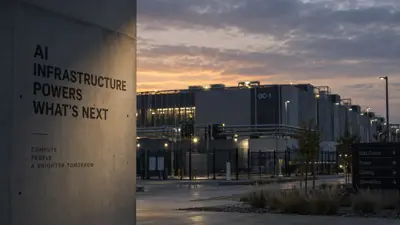
DRAM and NAND contract prices are still climbing and HBM suppliers hold the edge. Power shortages, AI financing costs and simultaneous memory expansion are the risks for later years.

Investing

Valuation

This story's topic36 storiesSee all →

Measuring where a share price sits relative to the company’s results.

Anthropic's IPO: The Number That Matters More Than $100 Billion Is $2 Trillion

Claude-maker Anthropic is growing at a stunning pace, but the real question for investors is not how fast, only how long, and how much cash is left after GPUs and data centers.

Tech

Oil at $110, 10-Year Yield at 5%: The Discount Rate on Growth Stocks Is Rising Again

Brent crude spiked to $109.97 intraday and the US 10-year Treasury yield tested the 5% threshold. What matters is not the numbers themselves but that oil-driven inflation fears are pushing bond yields higher across the globe at once.

Macro

Marvell's $115 Billion Lumentum Deal: Is AI's Next Bottleneck Light, Not Chips?

Marvell's purchase of Lumentum points to a contest beyond GPU speed, in data transfer and power efficiency. Whether the price is right is not yet confirmed.

Tech

The S&P 500 Looks Fine. So Why Do Most Stocks Hurt?

The index sits near its high, yet most of its members are down 20% to 30% or more from their own peaks. A look at the "stealth bear market" and the numbers long-term investors should watch.

Investing

2027 Investing Needs Alignment, Not Prediction

A new investing book argues the hard part was never picking the next winner. It's staying aligned with where value and bottlenecks are moving while keeping old human weaknesses in check.

Investor Mind

Year Five of the Bull Market: Why U.S. Stocks Aren't Expensive Yet, and What AI Chips and Power Must Deliver

U.S. stocks have gained about 117% since the October 2022 low. What happens next depends less on the bull market's age than on whether expected earnings, which lean heavily on AI semiconductors, turn into reality.

Investing

Anthropic Posts a Profit, but Investors Are Uneasy About the $2 Trillion Question

Reported third-quarter revenue of $16.8 billion and an adjusted profit show AI can make money. Slowing growth and $518 billion in long-term commitments are the open questions.

Tech

A building that houses servers and networking gear and supplies them with powe…

Nvidia and Palantir Put AI Inside the Supply Chain - The Real Shift Is That It's Learning Judgment

A single Vera Rubin rack holds 1.3 million parts. The real breakthrough in Nvidia and Palantir's new supply chain AI isn't automating that complexity, it's capturing the judgment calls that used to live only in planners' heads.

Tech

Is Space Cooler for AI? Why Musk Wants Data Centers in Orbit

The next limit on AI may be power and cooling, not GPUs. Elon Musk is looking to Earth orbit for an answer, but the test is cost per hour of compute.

Tech

Musk Sees the Next Phase of AI Infrastructure: Who Can Switch GPUs On, Fast

If neoclouds struggle under financial pressure, AI demand may not shrink. It may simply favor the few operators with the capital and execution to serve it, a shift that could matter for SpaceX and Tesla.

Tech

White House Swaps AI for "SI." The Real Investment Signal Is Infrastructure, Not the Name

An executive order renames artificial intelligence "Super Intelligence" and six frontier labs sign a voluntary safety accord. What investors should watch is the data center, power, nuclear and chip policy now gathered under one national-competitiveness frame.

Tech

The Cheaper Tokens Get, the Bigger Your AI Bill Gets

As AI shifts from training to inference, the token is becoming an industrial commodity. Falling prices are not cutting demand, because agents and automation consume tokens at a scale no human chat session ever did.

Investing

Workers in hard hats beside a communications equipment cabin, with a Starship rocket on its launch tower at dusk in the background

SpaceX Forecast at About $730 Billion in 2028 Revenue: The Bigger Opportunity Musk Sees

Sequoia Capital made a bold forecast, and Elon Musk replied, "I think we can do better." The future SpaceX is looking at is far bigger than the rocket launch business. The plan is to link satellite communications, AI data centers and orbital computing into one giant business.

TechEXPLAIN

Dark navy cover. Flow diagram: Nvidia to Nscale (credit guarantee, in talks) to Anthropic (~$45B compute lease signed in August plus a separate ~$45B, ~460MW deal in talks). Title: Why Would Nvidia Back a Customer's Loan?

Why Would Nvidia Guarantee Its Customers' Data Center Loans?

Nvidia is reportedly in talks to back financing for Nscale's West Virginia data center. Nothing is signed, and the terms are not public.

Tech

NVDA

96 storiesSee all →

Who Hits $1 Trillion Next: Reading AMD and ASML by Different Rules

One company is chasing Nvidia's GPU empire. The other sells the machine that draws the chips for every advanced chipmaker, including Nvidia. Both get floated as 2028 trillion-dollar candidates, but the numbers investors need to watch are entirely different.

Investing

China's AI Labs Went Open Source Because They Had to, Not Because They Wanted To

A GPU shortfall pushed Chinese AI labs toward efficiency and open weights, and that constraint is now reshaping the global competition over who controls AI's basic infrastructure.

Tech

Box Shows AI Its Manuals, and the AI Starts Redesigning the Workflow

Box Architect, built with NVIDIA, moves AI from reading documents to designing how work gets done. It has not yet reached beta, so the real-world payoff remains to be seen.

Tech

Before Robots Sell, Chips Sell First: Following the Money in the Humanoid Race

Billions of dollars are moving before humanoid robots reach mass sales. Compute suppliers may see revenue first, but that does not guarantee stock returns.

Tech

Two Companies Drive 34% of S&P 500 Earnings Growth as AI Pays Sellers First

Nvidia and Micron generate a third of expected earnings growth in US large caps. Apollo says the financial effect of AI is not yet visible in the S&P 493.

Investing

Tech Selloff: Is the Bull Market Over? Wall Street's Four-Year Chart Says Not Yet

The uptrend has survived five double-digit pullbacks in four years. This time, AI companies' debt and cash flow are the new variables.

Investing

The AI Bubble Question Has Changed: By Late 2026, It's ROIC Over GPUs

There is no sign yet that AI investment is slowing. If anything, hyperscaler spending forecasts keep climbing. But as the scale of that capital has grown, the market's question has shifted from "is AI growing" to "when, and how much, does this capital come back as cash."

Tech