Dow Up 0.43%, Chips Down 4%: Anthropic's IPO Fails to Stem the AI Selloff

About 15 minutes into trading, the market was not falling across the board. The Dow rebounded while the Nasdaq and the semiconductor supply chain took the heaviest selling.
The 20-second read

1
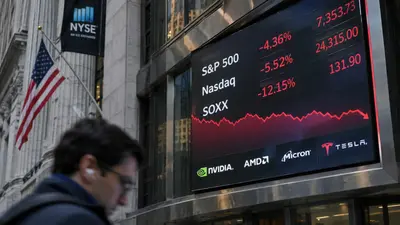
Dow +0.43%, S&P 500 -0.49%, Nasdaq -1.38%. The split among the three indexes points to selling pressure concentrated in tech stocks rather than a broad market collapse.
2
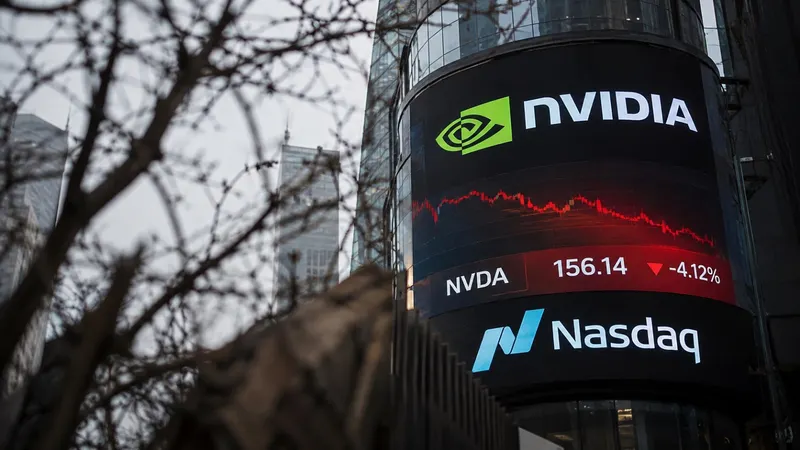
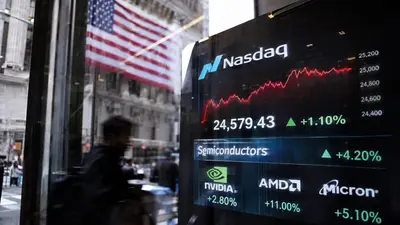
SOXX is down about 4.2%, Nvidia about 4.7%, AMD 5.59% and Micron 7.58%. Weakness has spread across the AI supply chain, from GPUs to memory, chip equipment and servers.
3
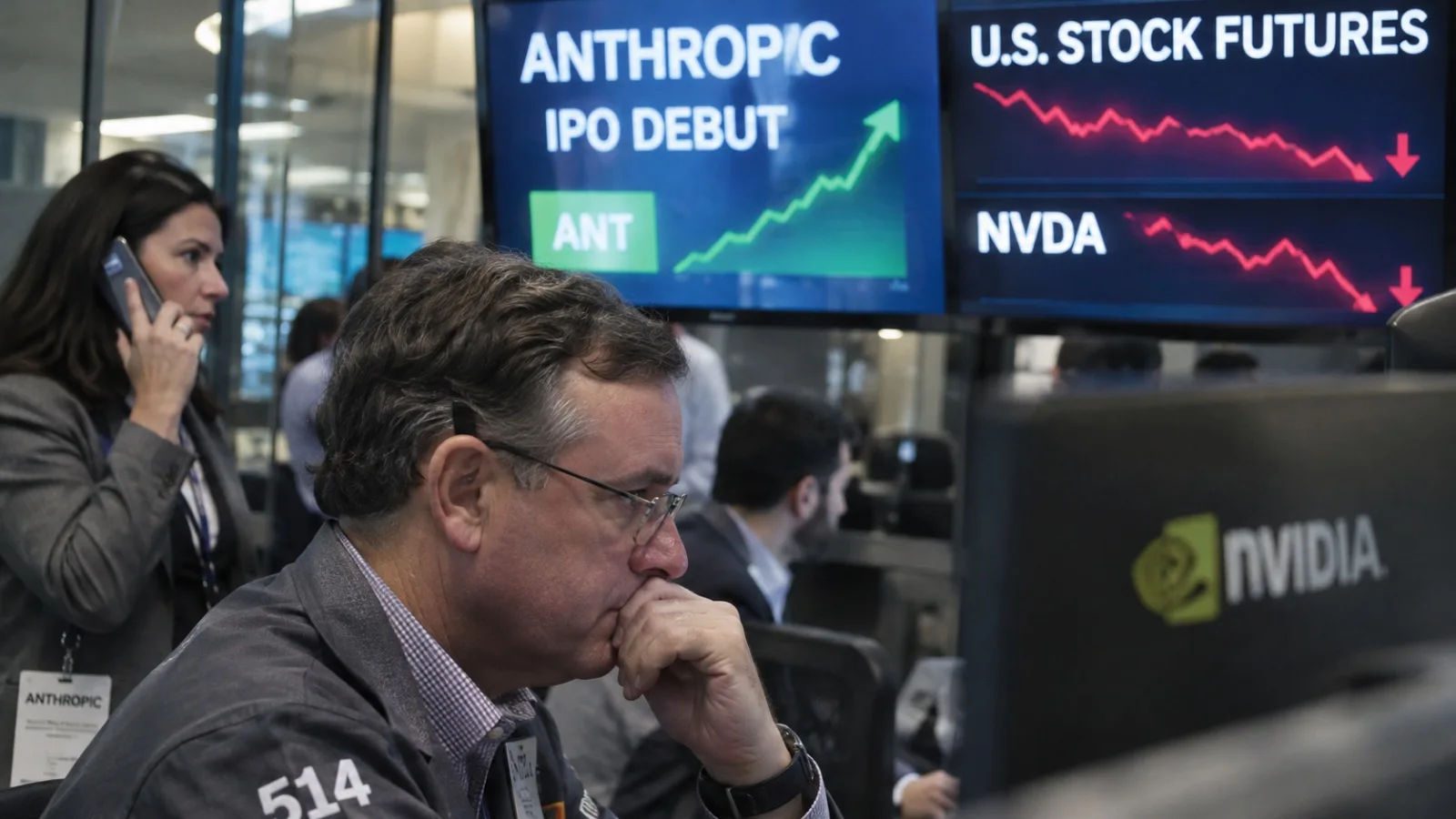
Anthropic (ANT) is trading near $89, down about 8% to 9% from the prior close of $97.17. It remains above the $83 IPO price, but the gap from the first trade price of $111.50 has widened.

Dow Jones Industrial Average: +0.43% (49,308.56) S&P 500: -0.49% (about 15 minutes after the open) Nasdaq Composite: -1.38% (about 15 minutes after the open)

AI supply chainChange
SOXX-4.20%
NVDA-4.73%
AMD-5.59%
MU-7.58%
TSM-4.35%
AVGO-2.88%
DELL-7.65%
CRWV-6.79%
ANT-8.33%

Figures come from the second of several trading screens captured at different times. ANT is from the first screen. Numbers move throughout the session.

1. Dow up, Nasdaq down: where the selling concentrated

Around 9:44 a.m. ET on Nov. 20, the Dow Jones Industrial Average stood at 49,308.56, up 211.50 points (+0.43%). The S&P 500 was down 0.49% and the Nasdaq Composite down 1.38%. Major indexes had fallen about 2% the day before, and the slide continued. But the character of the early session was different.

Apple rose 0.49% and Alphabet 2.01%. Nvidia fell about 4.7%, Meta 2.02% and Tesla 1.39%. Big Tech did not move as one. The selling centered on names tied closely to AI computing infrastructure. That makes it hard to read the Dow's small gain as a recovery in sentiment.

2. Chip ETF down more than 4%, selling spreads from chips to servers

Across the two screens, SOXX was down 4.20% to 4.46%. Nvidia fell 4.73% to 4.78%, AMD 5.59%, TSM 4.35% and Broadcom 2.88%. Memory maker Micron (-7.58%), SK hynix's ADR (down about 5%) and equipment makers AMAT (-5.70%) and Lam Research (-5.49%) were not spared.

AI server and infrastructure names fell sharply too: Dell -7.65%, CoreWeave -6.79%, Marvell -6.55% and Oracle -3.47%. A move this broad is hard to pin on bad news at one GPU company. Qualcomm, at -0.15% at the same moment, held up comparatively well, a sign that chip stocks are separating by business mix and market expectations.

3. Anthropic: above its IPO price, below its first trade

Anthropic listed on the 19th at an IPO price of $83. It opened at $111.50 and closed its first day at $97.17. About 15 minutes into the open on the 20th, the stock was at $89.08 on screen and $88.82 at the time of reporting. Those are drops of roughly 8.3% and 8.6% from the prior close.

Against the $83 IPO price, the stock is still up. But a buyer at $111.50 is sitting on a loss of about 20% at $89. Raising money successfully and earning a return as a post-listing buyer are different things. The IPO's popularity also did nothing to ease valuation pressure on existing AI stocks.

4. Does this mean the AI growth story is over?

What has been confirmed so far is a sharp repricing of stocks, not a halt in technology adoption. AI model developers bear computing costs, cloud companies bear data center capex, and chip suppliers bear the cost of expanding production. The market is asking when that spending turns into profit and free cash flow.

Other pressures piled on: a stronger dollar index at 103.7 to 103.9, gold futures down about 3% and bitcoin below $62,000. Gold and bitcoin falling together may point to risk reduction and a scramble for liquidity, but that alone does not establish forced liquidation or a systemic crisis. Company-specific uncertainty also bears watching, such as reports of a regulatory probe into Nvidia over China.

The Dow is up, so why do people call the market weak?
  • The Dow rose 0.43%, but the S&P 500 fell 0.49% and the Nasdaq fell 1.38%. The semiconductor ETF in particular dropped more than 4%, so you have to account for differences in how each index is built.
Is this bad news for Nvidia alone?
  • No. AMD, TSM, Micron, chip equipment makers, Dell and CoreWeave all fell as well. It is more reasonable to see this as company-specific bad news combined with a broader reassessment of AI infrastructure.
Has Anthropic's IPO failed?
  • Measured against the IPO price, the stock is still up even at about $89. But it is down about 20% from the first trade price on its first day of listing. You need to separate how well the offering was received from how the stock performs after listing.
Is now the time to buy AI stocks?
  • A 15-minute drop alone is not enough to decide. It is a question of checking each company's cash flow, capital spending, earnings outlook and current valuation together, and managing your portfolio weighting.

What to watch

Whether SOXX and NVDA narrow their intraday lossesCheck whether selling pressure across semiconductors is actually easing.
ANT's $83 IPO price and prior close of $97.17Check where demand for newly listed AI stocks finds support.
Moves in AMD, MU, TSM, AMAT and DELL togetherCheck whether the selling is limited to GPUs or extends across the whole supply chain.
University of Michigan final November consumer sentiment and inflation expectations: Due at 10 a.m. Eastern time, and a variable that could affect the interest rate outlook.
Dollar index, US Treasury yields and BitcoinCheck whether the preference for cash and the move away from risk continue.
Indexes diverged, but selling concentrated in AI chips and servers, and Anthropic's listing did not stop it.

Insight Times Editorial Desk
More by topic

Starting with this story's topics, then what readers are following now

Investor psychology, decision-making and books on investing

Nasdaq

This story's topic17 storiesSee all →

Tech Selloff: Is the Bull Market Over? Wall Street's Four-Year Chart Says Not Yet

The uptrend has survived five double-digit pullbacks in four years. This time, AI companies' debt and cash flow are the new variables.

Investing

A building that houses servers and networking gear and supplies them with powe…

Why Nebius Is Keeping Some 2027 AI Capacity Off the Shelf

Nebius mixes long-term contracts, short-term premiums and auctions. Holding back capacity pays only if the servers stay busy, and it is not yet clear the pricing will last.

Tech

AI ran out of memory before it ran out of GPUs

The HBM bottleneck is spreading into DRAM prices, server costs and the price of the next laptop or phone.

Tech

Is Space Cooler for AI? Why Musk Wants Data Centers in Orbit

The next limit on AI may be power and cooling, not GPUs. Elon Musk is looking to Earth orbit for an answer, but the test is cost per hour of compute.

Tech

White House Swaps AI for "SI." The Real Investment Signal Is Infrastructure, Not the Name

An executive order renames artificial intelligence "Super Intelligence" and six frontier labs sign a voluntary safety accord. What investors should watch is the data center, power, nuclear and chip policy now gathered under one national-competitiveness frame.

Tech

Musk Sees the Next Phase of AI Infrastructure: Who Can Switch GPUs On, Fast

If neoclouds struggle under financial pressure, AI demand may not shrink. It may simply favor the few operators with the capital and execution to serve it, a shift that could matter for SpaceX and Tesla.

Tech

Is Memory Peaking? In the AI Era, Watch the Bottleneck, Not the Demand

Demand still outruns supply. But memory stocks can peak before demand does. The real question is how long HBM4, server DRAM, CXL and Big Tech capex keep the cash flowing.

Tech

Marvell's $115 Billion Lumentum Deal: Is AI's Next Bottleneck Light, Not Chips?

Marvell's purchase of Lumentum points to a contest beyond GPU speed, in data transfer and power efficiency. Whether the price is right is not yet confirmed.

Tech

NVDA

101 storiesSee all →

Who Hits $1 Trillion Next: Reading AMD and ASML by Different Rules

One company is chasing Nvidia's GPU empire. The other sells the machine that draws the chips for every advanced chipmaker, including Nvidia. Both get floated as 2028 trillion-dollar candidates, but the numbers investors need to watch are entirely different.

Investing

Box Shows AI Its Manuals, and the AI Starts Redesigning the Workflow

Box Architect, built with NVIDIA, moves AI from reading documents to designing how work gets done. It has not yet reached beta, so the real-world payoff remains to be seen.

Tech

Nvidia and Palantir Put AI Inside the Supply Chain - The Real Shift Is That It's Learning Judgment

A single Vera Rubin rack holds 1.3 million parts. The real breakthrough in Nvidia and Palantir's new supply chain AI isn't automating that complexity, it's capturing the judgment calls that used to live only in planners' heads.

Tech

If You Only Watch Tesla, You May Be Missing Half the AI Story

Nvidia builds the AI brain. Who supplies the electricity to run it? Six power companies Tesla investors should know, and why Tesla's storage business is just one link in the chain.

Investing

Nvidia Moves From GPUs to CPUs as AI Agents Reshape a $200 Billion Chip Market

A customer's early test found Nvidia's Vera CPU handled about twice the AI agent workload of its existing chips. The bigger story is where the money in semiconductors is heading as AI shifts from answering questions to doing work.

Tech

Nvidia's $500 Billion Experiment: Wall Street Asks Who Backs the GPU, Not Just the Chip

The real issue in Nvidia's financing platform is not chip sales. It is how far Wall Street will trust GPU resale prices and rental income three to four years out.

Tech

China's AI Labs Went Open Source Because They Had to, Not Because They Wanted To

A GPU shortfall pushed Chinese AI labs toward efficiency and open weights, and that constraint is now reshaping the global competition over who controls AI's basic infrastructure.

Tech

GPU

73 storiesSee all →

A chip built to draw graphics, whose ability to run thousands of identical cal…

The Next AI Chip Race Is About How Chips Connect

Applied Materials will lift its stake in Dutch equipment maker BESI from about 9% to 20%. The bet is less about control than about a new way to link chips.

Tech

US AI Data Centers Are Headed for 90GW. Gigawatts Now Matter More Than Dollars

Goldman Sachs expects US data center capacity to grow from 64GW at the end of 2026 to 90GW at the end of 2027. The AI race is moving from buying GPUs to building power plants and transmission lines alongside them.

Tech

The Cheaper Tokens Get, the Bigger Your AI Bill Gets

As AI shifts from training to inference, the token is becoming an industrial commodity. Falling prices are not cutting demand, because agents and automation consume tokens at a scale no human chat session ever did.

Investing

Dark navy cover. Flow diagram: Nvidia to Nscale (credit guarantee, in talks) to Anthropic (~$45B compute lease signed in August plus a separate ~$45B, ~460MW deal in talks). Title: Why Would Nvidia Back a Customer's Loan?

Why Would Nvidia Guarantee Its Customers' Data Center Loans?

Nvidia is reportedly in talks to back financing for Nscale's West Virginia data center. Nothing is signed, and the terms are not public.

Tech

Two Companies Drive 34% of S&P 500 Earnings Growth as AI Pays Sellers First

Nvidia and Micron generate a third of expected earnings growth in US large caps. Apollo says the financial effect of AI is not yet visible in the S&P 493.

Investing

Amazon Goes After Nvidia's Strongest Moat, and It Is Software, Not GPUs

Amazon's open-source TorchNeuron aims to let existing AI code run on its Trainium chips. The contest comes down to the total cost of AI compute and the return on Amazon's $220 billion in annual capital spending.

Tech

AI's Next Bottleneck Is Power, Not GPUs

Jensen Huang and Elon Musk sent the same warning in Washington. The AI race is widening from building better models to supplying power and chips at industrial scale.

Tech