When Big Tech Borrows for AI, Why Does the Rest of the Bond Market Feel It?

AI data center spending has set off a surge in corporate bond issuance. The AI race is now a contest to raise money in financial markets, not just to buy chips.

The 20-second read

1
Big Tech is turning into a heavy borrower. Corporate bond issuance by Amazon, Alphabet, Meta and Oracle reached about $194 billion as of July 7, 2026, up about 79% from the full-year 2025 total.
2
The ripple effects show up first in credit spreads. When companies raise large sums at the same time, the extra yield investors demand can rise.
3
The question for long-term investors: will the returns from AI investment be comfortably higher than the cost of capital?

1. Why do the world's most profitable companies borrow?

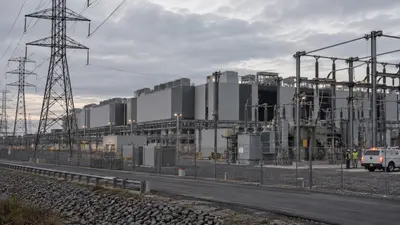
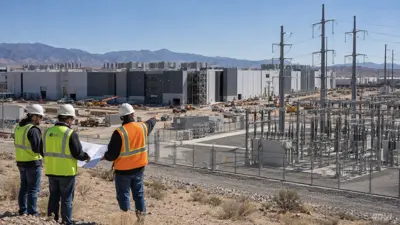
Microsoft, Google and Amazon have long generated enormous amounts of cash. As AI data center buildouts grow, they are leaning more on outside financing.

Reuters, analyzing LSEG data, found that Amazon, Alphabet, Meta and Oracle had issued about $194 billion in corporate bonds through July 7, 2026. That is more than the roughly $108 billion they issued in all of 2025. On October 29, reports said Microsoft was also preparing a bond sale of about $25 billion.

It is not only a question of needing cash. Data centers are built to be used for a long time, so a company can keep its internal cash in reserve and spread the cost of the investment over many years.

As borrowing rises, some of the investment risk in the AI industry moves from the stock market to the bond market.

2. Why do yields move when corporate bond supply grows?

When a company issues a bond, it borrows from investors and promises to pay interest. Investors could instead buy a Treasury of the same maturity. A corporate bond therefore generally carries an extra yield on top of the Treasury yield, reflecting the company's own credit risk, liquidity and other factors. This is the credit spread.

If bond supply rises quickly, investors can demand higher yields. According to Reuters, the median credit spread on major hyperscalers' bonds with two to four years to maturity widened from about 0.30 percentage point in 2025 to about 0.40 percentage point in July 2026.

That is observable evidence that competition for funding is affecting actual financing costs. Still, credit spreads also respond to changes in a company's creditworthiness and to market risk appetite.

How a corporate bond's funding cost is built

A hypothetical example, not actual market rates

ItemRate
Treasury yield4.0%
Credit spread+1.0 pt
Corporate funding cost5.0%

With the same Treasury yield, if the credit spread widens to 1.5 points, the funding cost rises to 5.5%.

3. Is Big Tech pushing up US Treasury yields too?

There is a plausible channel. Heavy issuance can spread out investors' demand for funds and affect the prices, and the yields investors require, on other bonds.

But a rise in the extra yield on corporate bonds is not the same thing as a rise in Treasury yields themselves.

The 10-year Treasury yield is shaped by many factors: expectations for the Fed's policy rate, inflation, Treasury supply, the term premium and the growth outlook. The Fed itself breaks long-term rates into the expected path of short-term rates and the term premium.

In October 2026, worries about the burden of AI spending grew, yet the 10-year yield fell on a monthly basis. Tech stocks sold off and investors moved into safe assets at the same time. It would be a mistake to conclude that AI bond issuance is the main driver of higher long-term Treasury yields.

4. Which companies gain and which lose?

Big Tech companies with strong cash generation have relatively more capacity to absorb heavier borrowing, though they still need to show returns on their investment. Highly leveraged AI data center operators are sensitive to higher refinancing rates, project delays and falling utilization.

For Nvidia and other chip suppliers, customers' higher capital spending is a sales opportunity, but tighter funding conditions are a risk to future demand. Rate-sensitive sectors such as REITs could face pressure on asset values and borrowing costs if long-term rates and credit conditions worsen.

The Bank for International Settlements (BIS) notes that a range of financing structures is in use, including data center co-investment, special purpose vehicles, long-term leases and commitments to buy computing capacity. Even without direct borrowing, a company can take on long-term contractual obligations. Lease liabilities, purchase commitments and guarantees should be reviewed alongside debt.

Type of companyEffect of funding-market changes
Cash-rich Big TechMore room to fund, but returns on investment must be proven
Debt-reliant AI infrastructure operatorsSensitive to refinancing rates, construction delays and utilization
Chip suppliersBenefit from capex, but face risk if customers' funding worsens
Rate-sensitive sectors such as REITsVulnerable to higher long-term rates and tighter credit

5. One number that matters in AI investing: ROIC

Return on invested capital (ROIC) measures how much operating profit a company earns on the capital it puts into its business. Comparing it with the weighted average cost of capital (WACC), the cost of funding, helps show whether AI spending creates economic value.

A company with fast-growing sales may still fail to create enough value if the return on new investment is below its cost of capital. Conversely, cash flow may worsen early in an investment, yet high utilization and stable contract revenue later can produce returns above the cost of capital.

What matters is not the absolute size of the investment but the ability to recoup it over the long term.

ROIC versus cost of capital

ScenarioROICWACCGap
A12%8%+4 pts
B5%8%-3 pts

A simplified hypothetical comparison. A company's overall ROIC can differ from the return on a new AI project.

Is it always bad for a stock when Big Tech issues a lot of corporate bonds?
  • No. If the return on investment is comfortably higher than the cost of funding, borrowing can raise a company's value. On the other hand, using debt to expand low-return investments increases risk.
Can Treasury yields fall even when corporate credit spreads widen?
  • Yes. If worries about the economy raise demand for Treasuries at the same time that concerns about corporate credit risk grow, both can happen together.
If interest rates fall, are heavily indebted AI companies the biggest winners?
  • Not necessarily. If rates are falling because of a recession or slowing AI demand, weaker sales and utilization can offset the savings on interest costs.
Do individual investors need to calculate ROIC and WACC precisely?
  • Even without a precise model, you can watch the direction of operating margin, cash flow, capital expenditure, net debt and financing costs together.

What to watch

Corporate credit spreadsIf they widen, the burden of new borrowing and refinancing may rise.
10-year US Treasury yieldLook at the reason behind a move, not just the level.
Net debt and interest coverageCheck whether operating profit and cash flow comfortably cover interest costs.
ROIC and WACCAssess whether the return on new investment exceeds the cost of capital.
Long-term leases and purchase commitmentsLook for future payment obligations that sit outside the debt on the balance sheet.
Big Tech's AI borrowing has nudged up the extra yield on corporate bonds, but it is too early to say it has lifted Treasury yields.

Insight Times Editorial Desk
More by topic

Starting with this story's topics, then what readers are following now

Investor psychology, decision-making and books on investing

HBM

75 storiesSee all →

Memory stacked next to the GPU.

AI Chip Peak Check: Demand Still Rising, Risk Building in 2027-2029 Supply and Funding

DRAM and NAND contract prices are still climbing and HBM suppliers hold the edge. Power shortages, AI financing costs and simultaneous memory expansion are the risks for later years.

Investing

Has Memory Peaked? Prices Are Cooling, but the Shortage Looks Set to Run to 2028

Price growth has slowed and consumer demand is already breaking. Server and HBM supply remains short, and Micron says more than 75% of its 2027 volume is already committed to customers.

Tech

The Real ASML Number Isn't the 3% Pop, It's the 30% Capacity Hike

ASML's rally isn't just an AI trade. Customers are already locking in 2027 tool slots, and ASML is raising Low-NA EUV capacity by roughly 30% to keep up.

Investing

2027 Isn't the End: Citi's Case for a Memory Supercycle Running to 2031

Citi says the memory shortage timeline is stretching again. If AI shifts from "train once" models to continual learning, HBM, server DRAM and enterprise SSDs could all fall short at the same time.

Tech

AI Chips Haven't Peaked. The Real Risk Sits in 2028 Supply

HBM and server DRAM shortages are now spreading into enterprise SSDs. The question isn't today's strength, it's how much new capacity these prices are pulling in and when it lands.

Investing

The Next AI Chip Race Is About How Chips Connect

Applied Materials will lift its stake in Dutch equipment maker BESI from about 9% to 20%. The bet is less about control than about a new way to link chips.

Tech

US AI Data Centers Are Headed for 90GW. Gigawatts Now Matter More Than Dollars

Goldman Sachs expects US data center capacity to grow from 64GW at the end of 2026 to 90GW at the end of 2027. The AI race is moving from buying GPUs to building power plants and transmission lines alongside them.

Tech

A building that houses servers and networking gear and supplies them with powe…

Nvidia and Palantir Put AI Inside the Supply Chain - The Real Shift Is That It's Learning Judgment

A single Vera Rubin rack holds 1.3 million parts. The real breakthrough in Nvidia and Palantir's new supply chain AI isn't automating that complexity, it's capturing the judgment calls that used to live only in planners' heads.

Tech

Why the White House Swapped "AI" for "Super Intelligence"

Executive Order 14434 renames AI across the federal government without defining a new technology. The real story is about roughly $700 billion in capex, free cash flow and electricity.

Tech

2027 Investing Needs Alignment, Not Prediction

A new investing book argues the hard part was never picking the next winner. It's staying aligned with where value and bottlenecks are moving while keeping old human weaknesses in check.

Investor Mind

AMD Crossed $1 Trillion, and the Market Started Looking at CPUs Again

AMD's stock topped a $1 trillion market cap for the first time. The rally isn't just about being an Nvidia alternative. It reflects a reassessment of AMD as a full-stack AI infrastructure vendor, one that bundles CPUs, GPUs and networking, as AI shifts from chatbots to agents and reignites data center demand for CPUs.</deck> <parameter name="oneline">As AI moves from chatbots to agents, the market has started counting the CPU sitting next to the GPU again.

Tech

Why Nebius Is Keeping Some 2027 AI Capacity Off the Shelf

Nebius mixes long-term contracts, short-term premiums and auctions. Holding back capacity pays only if the servers stay busy, and it is not yet clear the pricing will last.

Tech

DeepSeek's $15 Billion Raise: Model Makers May Feel It Before Nvidia Does

China's DeepSeek is closing a round about twice its original target. For US investors, the question is less the size of the check than where the money goes and whose profits it could erode.

Tech

AI Data Centers Are Rewriting Contracts While They Wait for Power

Oracle's Project Jupiter shows that the AI power shortage is no longer a "2030 forecast." The mere possibility of a delayed power hookup has already triggered a force majeure clause, and it is starting to shake billions in loans and lease-income timelines.

Tech

NVDA

92 storiesSee all →

Amazon Goes After Nvidia's Strongest Moat, and It Is Software, Not GPUs

Amazon's open-source TorchNeuron aims to let existing AI code run on its Trainium chips. The contest comes down to the total cost of AI compute and the return on Amazon's $220 billion in annual capital spending.

Tech

AI's Next Bottleneck Is Money, Not Chips

Broadcom is lending Anthropic up to $42 billion, and Nvidia wants to build a $500 billion market for loans backed by GPUs. The AI race may turn on what rate buyers pay to borrow.

Tech

Two Companies Drive 34% of S&P 500 Earnings Growth as AI Pays Sellers First

Nvidia and Micron generate a third of expected earnings growth in US large caps. Apollo says the financial effect of AI is not yet visible in the S&P 493.

Investing

China's AI Labs Went Open Source Because They Had to, Not Because They Wanted To

A GPU shortfall pushed Chinese AI labs toward efficiency and open weights, and that constraint is now reshaping the global competition over who controls AI's basic infrastructure.

Tech

Nvidia's Next Target After GPUs: Controlling What AI Agents Are Allowed to Do

OpenShell and Sentry are not about policing what an AI says. They are about controlling, at the server infrastructure level, which files and APIs an AI can touch, what it can execute, and who can actually pull the plug when something goes wrong.

Tech

The US-China Summit Didn't Erase Taiwan Risk for Chip Stocks

Washington's Taiwan policy held, but roughly $14 billion in arms sales is still on hold. For AI chip investors, the summit reads less like risk removed and more like a fragile balance extended.

Macro

ASML Is Discussing 2030 Orders. How Long Can the AI Chip Supercycle Last?

Despite bubble worries, ASML sees equipment shortages through 2028. Investors should watch future production capacity, not just today's orders.

Tech

GPU

65 storiesSee all →

A chip built to draw graphics, whose ability to run thousands of identical cal…

Musk Borrowed $40 Billion for GPUs. He Also Warned AI Cloud Firms Could Go Bust

SpaceX's giant financing shows a new dividing line in AI: who borrows matters as much as how much is spent. Firms with other revenue may outlast those that rent out GPUs alone.

Tech

AI Stops Just Talking, Starts Working: The Second Infrastructure Cycle

The center of the AI race is shifting from chatbot performance to agents that finish real work. For investors, what matters is not model rankings but how a single query turns into dozens of inference calls, pulling demand beyond GPUs into CPUs, HBM, networking and power.

Tech

Why Nvidia Is Happy to Help Make AI Models Nearly Free

Falling model prices can squeeze model makers. For Nvidia, the number that matters is the total volume of tokens generated worldwide and the compute that produces them.

Tech

The Number That Matters More Than How Smart AI Gets

This week's AI models got stronger and cheaper at the same time. The chart long-term investors should watch isn't the weekly benchmark leader, it's the falling cost of finishing a task successfully.

Tech

AI Data Centers' Next Bottleneck: Getting Power From the Grid to the GPU

Securing a gigawatt of power does not mean a gigawatt reaches GPU compute. The next fight in AI infrastructure is happening inside the data center, over how little electricity gets wasted before it reaches the chip.

Tech

Nvidia's $1 Trillion Number: How Far Has the AI Infrastructure Supercycle Come

Nvidia now frames Blackwell and Rubin sales opportunity through 2027 at more than $1 trillion. The real story isn't how many more GPUs get sold, it's AI turning into a physical infrastructure buildout spanning chips, memory, networking, cooling and power grids.

Tech

The Cheaper Tokens Get, the Bigger Your AI Bill Gets

As AI shifts from training to inference, the token is becoming an industrial commodity. Falling prices are not cutting demand, because agents and automation consume tokens at a scale no human chat session ever did.

Investing