Quantum Computing Is Rising. Why Is AMD Putting Money In?
Quantum machines will not displace GPUs outright. They still need conventional chips to run, and AMD is aiming for the point where the two connect.
The 20-second read
1. Why a GPU company is investing in quantum
If quantum computing is the future, do today's chips become obsolete?
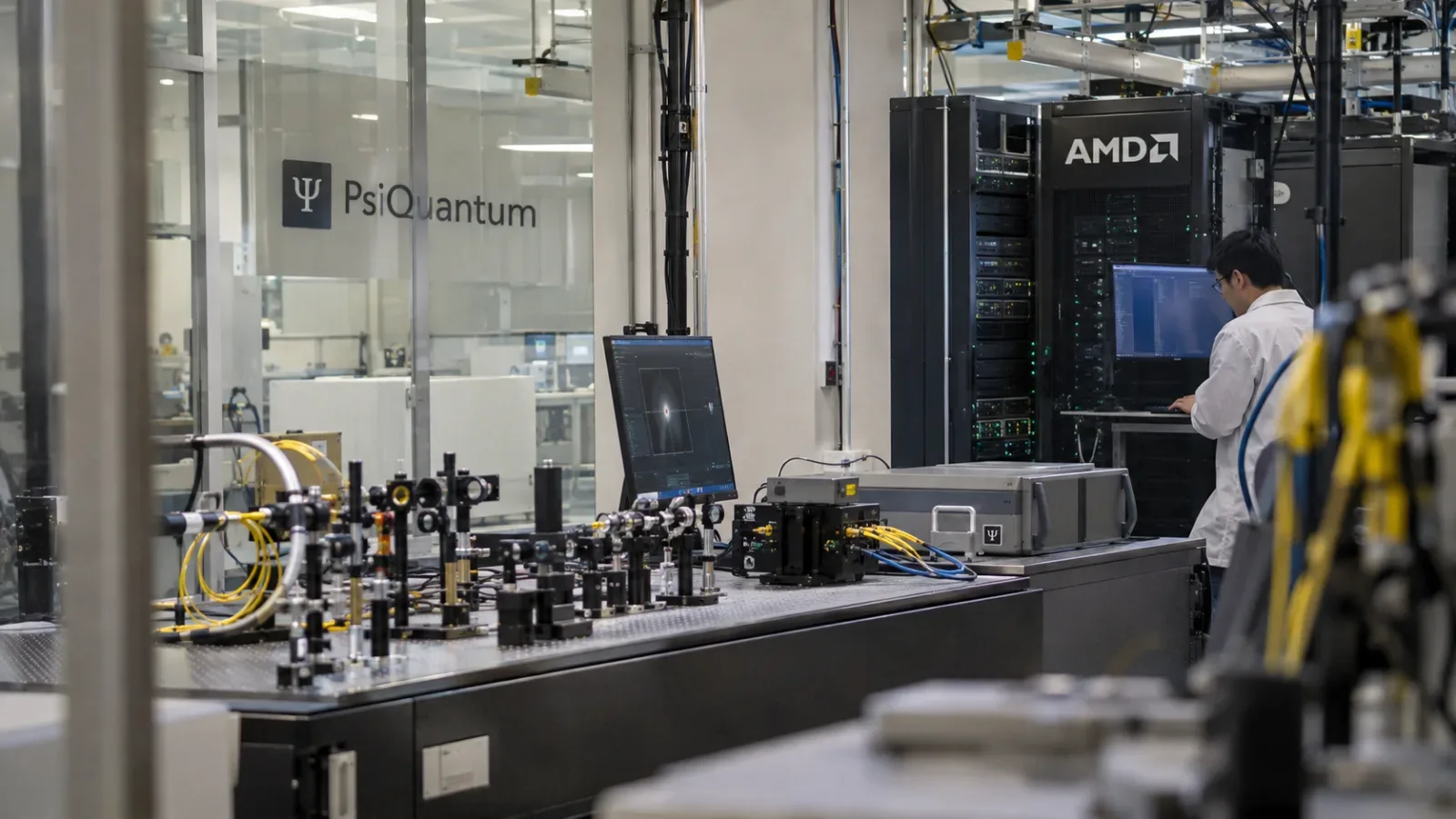
AMD's latest move offers an interesting answer. According to Reuters, AMD is pursuing an equity investment in PsiQuantum, a US quantum computing company. The two plan to jointly develop infrastructure for large-scale quantum computers and technology that links them with conventional machines.
This is not AMD building a quantum computer. It is closer to supplying CPUs, GPUs, adaptive computing technology and software to create an environment where quantum computers can do real work.
2. Quantum computers need helpers too
Quantum computers handle certain calculations that conventional computers struggle with, using a new approach. But they are not all-purpose machines that do everything alone.
Think of auto racing. Even the best F1 engine cannot run a race without the car's control systems and data analysis. Quantum computers are similar. The calculation must be prepared, the hardware controlled, errors corrected, and the results processed so existing systems can use them.
- Conventional computer: prepares the job, controls the system, processes data
- ↓
- Quantum computer: performs the specific calculation
- ↓
- Conventional computer: supports error correction, analyzes and uses the results
The structure that links conventional high-performance computing (HPC), AI and quantum computing is called hybrid computing. That is the area AMD wants to help develop.
3. What is different about AMD's partner
PsiQuantum is developing a quantum computer that computes with photons, particles of light. That is a different technical path from quantum computers built on superconducting circuits. It aims to build the system on silicon photonics.
The two companies also pointed to an early result as an example of their research collaboration: using AMD hardware in a simulation of a specific molecule used in cancer research. It is an effort to explore how conventional chips and new computing technology can work together on complex scientific calculations.
What matters is less the flash of the research than its direction. The ability to bind different computing technologies into one working system could become a new competitive edge.
4. Two different paths in quantum investing
For investors, it helps to separate two kinds of companies. The difference resembles that between a firm that digs for gold itself and one that sells the tools used to dig.
Companies building it directly: quantum computer makers. They invest in completing a new computing technology. If it succeeds, the reward can be large, but it is hard to judge when the real business will grow.
Companies supplying the foundation: established chip and computing firms. They use CPU, GPU and software businesses already in operation to capture the additional market quantum-era systems will need.
AMD's choice looks closer to the second path. The approach keeps its existing AI and HPC business while positioning AMD as a systems supplier if quantum computing scales.
The size of the investment and the timeline for commercial quantum computers have not been disclosed. So what matters for AMD now is less near-term profit growth than a long-term option on a place in the future computing architecture.
5. What investors should check beyond the announcements
Expectations for new technology can show up in stock prices quickly. But long-term investors should look past impressive demonstrations to repeatable business.
The questions that matter: whether quantum progress translates into real hardware demand, whether AMD's products are widely adopted in systems beyond the lab, and whether that ultimately produces recurring revenue.
- No. According to the article, AMD is not planning to build quantum computers.
- It is closer to a supplier of CPUs, GPUs, adaptive computing technology and software.
- It can be seen as wanting to take part in building an environment where quantum computers can do real work.
- According to Reuters, the two companies plan to jointly develop technology that combines infrastructure for large-scale quantum computers with conventional computers.
- It is a structure that links conventional high-performance computing (HPC), AI and quantum computing into one system.
- A conventional computer prepares the task, a quantum computer performs a specific calculation, and a conventional computer then analyzes the results.
- That is hard to say. The article sees new roles emerging.
- Quantum computers also need conventional computers for control, error correction support and result processing.
- That has not been confirmed. The investment amount and the timing of quantum computer commercialization have not been disclosed.
- It looks more like a long-term option than a near-term profit source.
What to watch
Insight Times Editorial Desk