Why Amazon Wants Data on Products It Doesn't Even Sell
As AI links product research and purchase, an internal Amazon plan reported by Reuters points to a bid for control of the world's product information. Data quality and brand cooperation may decide whether it works.
The 20-second read
1. Why does Amazon need to know about products it doesn't sell?
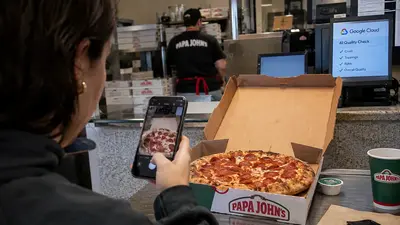
Picture someone shopping for a new laptop. They find one on Amazon, but they aren't sure it works with the peripherals they already own. So they go back to the manufacturer's website and a Google search.
That is a gap in Amazon's search. It sells goods well, but it does not hold all the information a shopper needs to decide which one fits.
An internal Amazon planning document seen by Reuters on Nov. 13 describes an effort to change that. It is called the "World Product Graph." It is a product-information network meant to link specifications, compatibility and brand-level product relationships broadly, including for products Amazon does not sell.
What Amazon wants is not to sell every product itself, but to be able to understand every product.
2. Google holds the entrance, Amazon holds the exit
Consumers have long separated where they research products from where they buy them. In a 2025 Morgan Stanley survey, 57% of respondents said they start product discovery and research on Google, versus 16% on Amazon.
For shoppers who had already decided what to buy, the picture flipped: 41% started on Amazon and 23% on Google.
Where do consumers start shopping? (Morgan Stanley survey, 2025, share of respondents)
| Stage | Amazon | |
|---|---|---|
| Discovering and researching products | 16% | 57% |
| Already decided what to buy | 41% | 23% |
Figures are per-question response shares. The two companies' numbers do not add up to the whole market.
Now imagine an AI agent that compares options and recommends products on a user's behalf. The reason to research and buy in separate places shrinks. What matters then is which service receives the consumer's first question.
Amazon's task is to protect the exit, the purchase, while widening the entrance, the research stage where Google has been strong.
3. AI answers ultimately depend on product data
The project, by the document's account, began with a surprisingly mundane problem: inaccurate answers from Amazon's own AI shopping search. Knowing a product's name is not enough to say whether it is the latest model, whether an accessory fits, or how two products differ.
So Amazon considered combining information supplied by manufacturers and brands with information collected from outside sites. An AI that explains things plausibly is not the same as an AI that picks the right product.
The catch is that this data is not an asset that is finished once collected. It has to keep up with new launches, spec changes and compatibility updates. Accuracy, freshness and even legal rights to use the data all have to be managed before it becomes a competitive edge.
The moat in AI shopping may be built less on a polished chat interface than on the quality of the product data behind the answers.
4. Defense for Amazon, offense toward Google
If Amazon gathers enough product information, shoppers have less reason to leave to research products. That is a defensive strategy against outside AI shopping agents taking over the customer relationship.
It is also an offensive move into product research, where Google is strong. If the first question about what to buy gets answered inside Amazon, the advertising opportunities tied to search could change.
But much depends on how far brands cooperate, how much access to outside sites Amazon is allowed, and whether it can bear the cost of keeping a vast dataset current. Amazon said the document is an old planning draft and does not necessarily reflect its current business plans.
Control of product data is not only a technology question. It is also a contest between brands and platforms over permissions and cost.
- It is a product information network described in an internal Amazon planning document.
- The goal is to broadly connect specs, compatibility and product relationships across brands, including products Amazon doesn't sell.
- It started with the problem of Amazon's own AI shopping search giving inaccurate answers.
- A product name alone is not enough to tell whether an item is the latest model or whether an accessory fits.
- In a 2025 Morgan Stanley survey, 57% said they start product discovery and research on Google, versus 16% on Amazon.
- When they had already decided what to buy, 41% chose Amazon and 23% chose Google.
- It can be seen that way, since it moves into product research, where Google is strong.
- It can also be seen as a defense against outside AI shopping agents taking over Amazon's point of contact with customers.
- That has not been confirmed.
- Amazon said the document is an old planning draft and does not directly reflect its current business plan.
What to watch
Insight Times Editorial Desk