Papa Johns Turns Customers' Pizza Photos Into AI Quality Control
Instead of fitting about 6,000 stores with costly AI cameras, Papa Johns is asking customers for pictures. The test suggests enterprise AI may depend as much on cheap field data as on smart models.
The 20-second read
1. Who inspects the pizza photo you send?
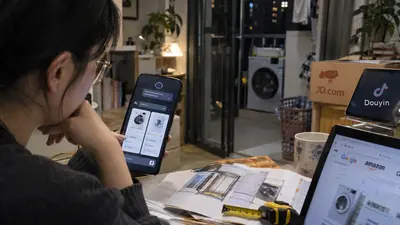
You open a delivered pizza and snap a photo. Usually it goes to a friend or into a review. At Papa Johns, that photo becomes data for checking store quality.
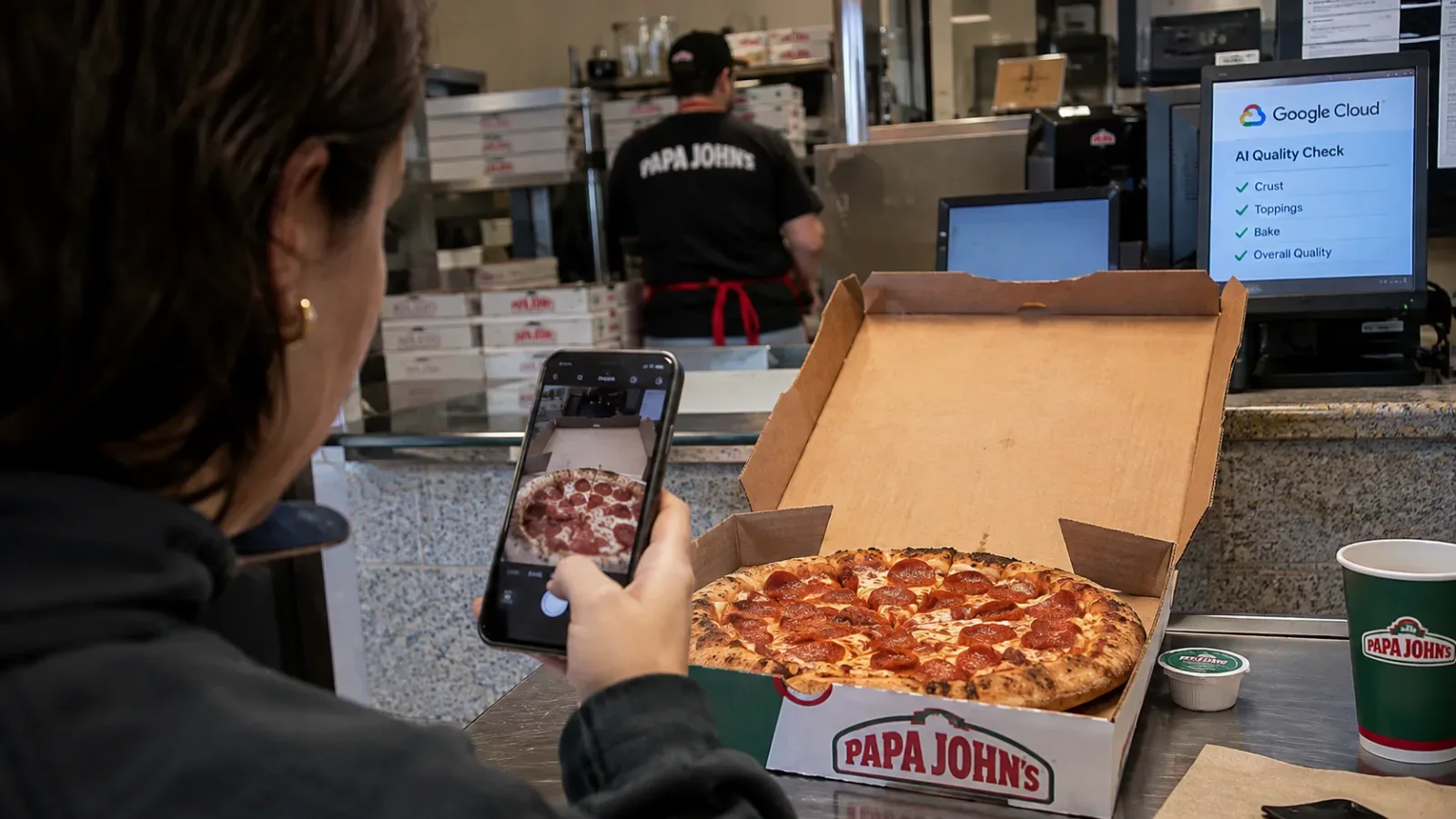
Papa Johns (PZZA) is running a promotion from Nov. 9 to Nov. 20. Customers who send a photo of their order along with feedback get a free pizza. Thousands of photos came in within the first few days.
AI looks at whether the cheese is burnt and whether the toppings or the crust edge show problems. A small action at a customer's table becomes a clue for fixing store operations.
Customers send photos, and the company gets field data that was hard to collect before.
2. The route data takes in matters more than costly cameras
Papa Johns already has AI quality-inspection cameras inside some stores. The problem is coverage.
- About 6,000: total Papa Johns stores
- Several hundred: stores with AI quality-inspection cameras
What if, instead of adding equipment everywhere, the company used the phones customers already hold? The more people send photos, the more of the real product the head office can see across many stores.
How a pizza photo becomes operating data
- Customer's phone: sends a photo and comments on the delivered pizza.
- AI quality analysis: sorts the problems in the photo and compares stores.
- Store improvement: tackles the recurring problems first.
Here the business case for AI rests less on how flashy the model is than on how widely and cheaply the data can be gathered.
The starting point for adopting AI is not only choosing which tasks to automate, but lowering the cost of collecting data.
3. Why does baking a better pizza tie to sales?
The reason for the experiment is clear. Same-store sales fell 6.5% last quarter. Apart from opening new stores, the company needs to improve the customer experience at existing ones.
When quality varies from store to store, customers have less reason to reorder. When photos and complaints pile up together, the head office can see which stores repeat which problems and set the order of fixes.
Customer photos have limits. Angles and lighting vary, so they are less accurate than in-store cameras. Misjudgments, privacy consent and measuring the real effect of improvements also need answers.
The key is that the AI does not stop at grading the look of one pizza. It is meant to change the quality of the next order.
The result of field AI should be judged not by how many photos it analyzed, but by whether it produced quality worth reordering.
4. What opens up for Google Cloud?
Papa Johns built the analysis in-house on AI capabilities it has developed with Google Cloud (GOOGL). Google is not selling pizza, but it supplies the base on which companies apply AI to everyday work.
The structure does not have to stay in pizza. Retailers could check shelf displays, e-commerce could check the condition of delivered goods, and manufacturers could check products for cosmetic defects, all from photos. The fields differ, but the method is similar: collect photos that already exist, find repeating problems and change what happens on the ground.
This case alone does not prove a Papa Johns sales recovery or a surge in Alphabet's earnings. The signal for investors is that real-world use of enterprise AI is widening into small, specific tasks.
The enterprise AI market may grow not only from single giant contracts but from the repetition of countless small jobs.
- From Nov. 9 to Nov. 20, customers who send in a pizza photo and feedback get a free pizza.
- The AI checks whether the cheese in the photo is burned and whether there are problems with the toppings or the shape of the edges.
- The chain has about 6,000 stores, but only a few hundred have AI quality inspection cameras.
- Using customers' phones lets it see the condition of more stores without adding equipment.
- Yes. Shooting angles and lighting vary, so it is less accurate than in-store cameras.
- Misjudgments, privacy consent and how to measure the actual improvement are also problems that still need to be solved.
- Same-store sales fell 6.5% in the previous quarter.
- Large quality gaps between stores can weaken customers' reasons to reorder. So the move can be seen as an effort to look after the customer experience at existing stores.
- Papa Johns built its analysis technology in-house, based on AI features it has been developing with Google Cloud.
- However, there is not yet any evidence to say that this case alone will increase Alphabet's profit.
What to watch
Insight Times Editorial Desk