AI is no longer competing on intelligence. It is competing on leftover cash
The race for better models continues, but the industry's center of gravity has moved. The question now is who can turn enormous data center and power spending into revenue and cash flow.
The era of model competition is not ending. The era of industrialization is beginning
For the past few years, the easiest way to explain the AI industry was to look at the leaderboard. Who built the bigger model. Who edged ahead on benchmarks. Who solved harder problems with fewer hallucinations.
That contest is not over. But the industry's central question has already moved to the next stage.
Once AI leaves the lab and the chat window and enters core enterprise work, search, advertising, software development, customer support, manufacturing, automotive and robotics, performance alone stops explaining who wins. What matters is whether the cost holds up when a model is called billions of times, whether the required GPUs and electricity can be secured on time, whether enterprise customers keep paying real money, and whether that revenue survives depreciation and power bills to land as cash.
Invention and industrialization are different problems. Building a steam engine was one thing. Laying a rail network that cut a country's logistics costs was another. Generating electricity was one thing. Connecting power plants, transmission lines, motors and factories to lift productivity was another. The arrival of internet protocols did not by itself guarantee the economics of Amazon and Google.
AI has entered the same phase. The first competition was over the technology that produces intelligence. The next is over the system that mass produces intelligence, supplies it cheaply, and generates repeatable cash flow.
AI flywheel 2.0 has to include cash flow
The early AI flywheel was relatively simple. More data made better models, better models attracted users, and more users produced more data.
The AI industry of 2026 cannot be explained with that picture alone. Something far heavier and more physical now sits in the middle of it.
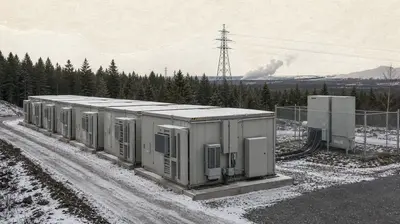
Capital builds data centers. Data centers hold GPUs, HBM and high speed networking. Running that equipment requires power and cooling. On top of it, models are trained and inference happens. Inference gets packaged as Copilot, search, advertising, code generation and agents. And at the end, a customer has to pay.
So today's AI flywheel looks more like this: capital, then power and data centers, then compute, then models, then inference, then services, then revenue, then cash flow, then reinvestment.
In that chain, the most important links are the last two. Revenue and cash flow.
Until now, the market repriced the entire supply chain on the simple fact that hyperscalers were raising AI capex. When Microsoft built data centers, Alphabet added TPUs and servers, Amazon expanded AWS capacity and Meta spent heavily on AI infrastructure, demand rose for NVIDIA, Broadcom, memory, networking, power and cooling suppliers.
But once the spending reaches hundreds of billions of dollars a year, the question changes. How much more will they invest matters less than how much is coming back from what has already been spent.
Microsoft's numbers show the new test
Microsoft's June 2026 quarter shows how far this shift has gone.
The company spent $41 billion on capex in the quarter. In a single quarter.
Demand was strong too. Azure and other cloud services revenue rose 43% year over year, and the company said customer demand still exceeds available capacity. Paid Microsoft 365 Copilot seats passed 30 million, and Azure's annual revenue crossed $100 billion for the first time.
Here is where it gets interesting. Microsoft Cloud gross margin was 65% in the same quarter. AI infrastructure investment, rising usage and a growing Azure mix are all pressing on that margin.
Read those three numbers separately and you miss the point.
Capex of $41 billion. Azure growth of 43%. Cloud gross margin of 65%.
The first is the size of the investment. The second is the strength of demand. The third is the economic price being paid to produce that growth.
So far, demand is keeping up. The claim that companies are building data centers for an AI nobody uses does not match the data. But the more important issue for investors is not whether demand exists. It is whether the capital required to serve that demand has grown so large that it damages returns.
The next test for AI is not the growth rate. It is capital efficiency.
NVIDIA's 75% margin is evidence of scarcity and a bet on customer ROI
On the other side of this structure sits NVIDIA.
NVIDIA's fiscal 2027 second quarter revenue was $96.2 billion, with data center revenue alone at $89 billion. Those figures were up 106% and 117% year over year. GAAP gross margin was 75%.
For a semiconductor company to post that growth rate and that margin at the same time means AI compute is still a scarce means of production.
But NVIDIA's long term value is not determined by GPU shipments alone. What matters more is how much money customers make on top of the GPUs they buy.
Hyperscalers do not buy GPUs because they want to own chips. They buy them because they believe those chips will produce tokens, that tokens will become products and services, and that those services will generate advertising, subscription, cloud consumption and work automation revenue.
So NVIDIA's high margin is not simply the result of a supply shortage. It is also a collective market bet that customers have concluded the economics work even at these prices.
That bet breaks not when GPU performance deteriorates. GPU performance will most likely keep improving. It breaks when the additional economic value customers create fails to keep pace with rising costs for GPUs, power, data centers and depreciation.
The right question for judging an AI capex bubble
Asking whether AI capex is a bubble is reasonable. But calling it a bubble simply because the numbers are big misses an important distinction.
Railroads, fiber optics and internet infrastructure all went through overbuilding. That infrastructure later became enormously useful to the whole economy. Yet many investors who bought the related stocks at high prices at the time lost a great deal of money.
An industry succeeding and a stock succeeding are not the same thing.
AI could easily follow that path. Even if AI raises productivity sharply and becomes essential infrastructure for society, stock returns can still be poor if too much supply capacity is built or if investors price in future profits too far in advance.
That is why judging a capex bubble means looking at the speed of capital recovery rather than the absolute amount.
If investment rises from 100 to 150 to 200 while AI related revenue and cash flow grow faster, from 40 to 70 to 120, the investment case can hold. If investment jumps to 300 while new revenue and cash flow add only 80, the story changes.
From that moment, AI stops being a technology contest and becomes a question of ROIC, return on invested capital.
Revenue growth alone is not enough
There is one more layer.
AI infrastructure is very heavy in accounting terms. Servers and GPUs depreciate over time. Data center buildings and power equipment tie up capital. Electricity and cooling costs run continuously. The more you get customers to use models, the more inference cost follows.
So looking at AI companies and hyperscalers by placing capex next to revenue growth is no longer sufficient.
Capex growth rate. AI related revenue or cloud growth. Operating cash flow. Free cash flow. Depreciation growth rate. Cloud gross margin. ARPU for AI services. Paid conversion and retention among enterprise customers. AI data center utilization.
These numbers have to be read together.
Gross margin in particular is a critical signal. Even with explosive AI demand, economics can deteriorate if the cost of delivering the service rises faster. Conversely, if inference efficiency improves and unit costs fall through custom silicon, software optimization and high utilization, massive capex can turn into a formidable barrier to entry.
The same $100 billion of AI investment can be capital destruction for one company and a moat competitors cannot cross for another.
The competition moves from model scores to cost to outcome
Enterprise customers do not want to buy tokens. They want to buy outcomes.
If $10 of AI spending removes $100 of labor, or $1,000 of AI spending creates a $100,000 revenue opportunity, AI is not expensive. If a user pays a lot for a few summaries and some generated sentences, the subscription gets cancelled.
That is why Microsoft has recently put the phrase "cost to outcome" front and center rather than "cost per token." The point is not how cheaply you can produce a single token, but how much it costs to produce a single result the customer actually wants.
This shift also changes the competitive map.
The best model does not always make the best business. A slightly less intelligent model can create more economic value if it is far cheaper and faster, connects well to enterprise data, satisfies security and regulatory requirements, and runs directly inside the software people already work in.
The winner in AI may end up being the company with the cheapest system for producing repeatable outcomes, not the company with the smartest intelligence.
The real industrial revolution starts when cash flows back into capital
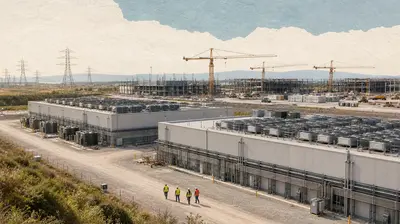
The AI industry is in a huge front loaded investment phase. Enormous sums are going into semiconductors, data centers, transmission and distribution, generation, cooling and networking. That money eventually has to be explained on income statements and cash flow statements.
The current data shows two things at once.
First, AI demand is real. Azure is holding a high growth rate, paid Copilot seats are climbing fast, and NVIDIA's data center revenue is well more than double a year ago.
Second, the cost of serving that demand is also real. Microsoft's Cloud gross margin is being affected by AI infrastructure investment, and enormous capex pressures free cash flow.
So the most important debate in AI from 2026 onward is not whether AI is real or fake. The far more practical question is whether the economic value AI creates is sufficiently larger than the cost of the capital needed to produce it.
Companies that can answer yes get stronger as the investment grows. Companies whose revenue rises while cash flow and capital efficiency keep deteriorating can lose value in the middle of an AI boom.
The next decade of AI competition will not be legible from model scorecards.
Who has secured the power. Who runs data centers at high utilization. Who lowers inference cost fastest. Who places AI inside the actual work of enterprises. Who converts that usage into recurring revenue. And finally, who recovers more cash than they invested.
The real industrial revolution in AI will most likely be complete not at the moment intelligence becomes astonishing, but at the moment intelligence becomes a means of production that earns enough to fund its own next investment.
Sources
- Microsoft FY2026 Q4 Earnings Release / Earnings Call
- NVIDIA FY2027 Q2 Financial Results
- Meta Q2 2026 Results
Insight Times Editorial Desk