Is Congress the Next Rival for US AI Companies? Three Rules Democrats Are Preparing
Democrats plan a wave of AI and data center bills when the new Congress convenes in January 2027. Passage is unlikely to be quick, but scrutiny and political costs for AI companies could grow.
The 20-second read
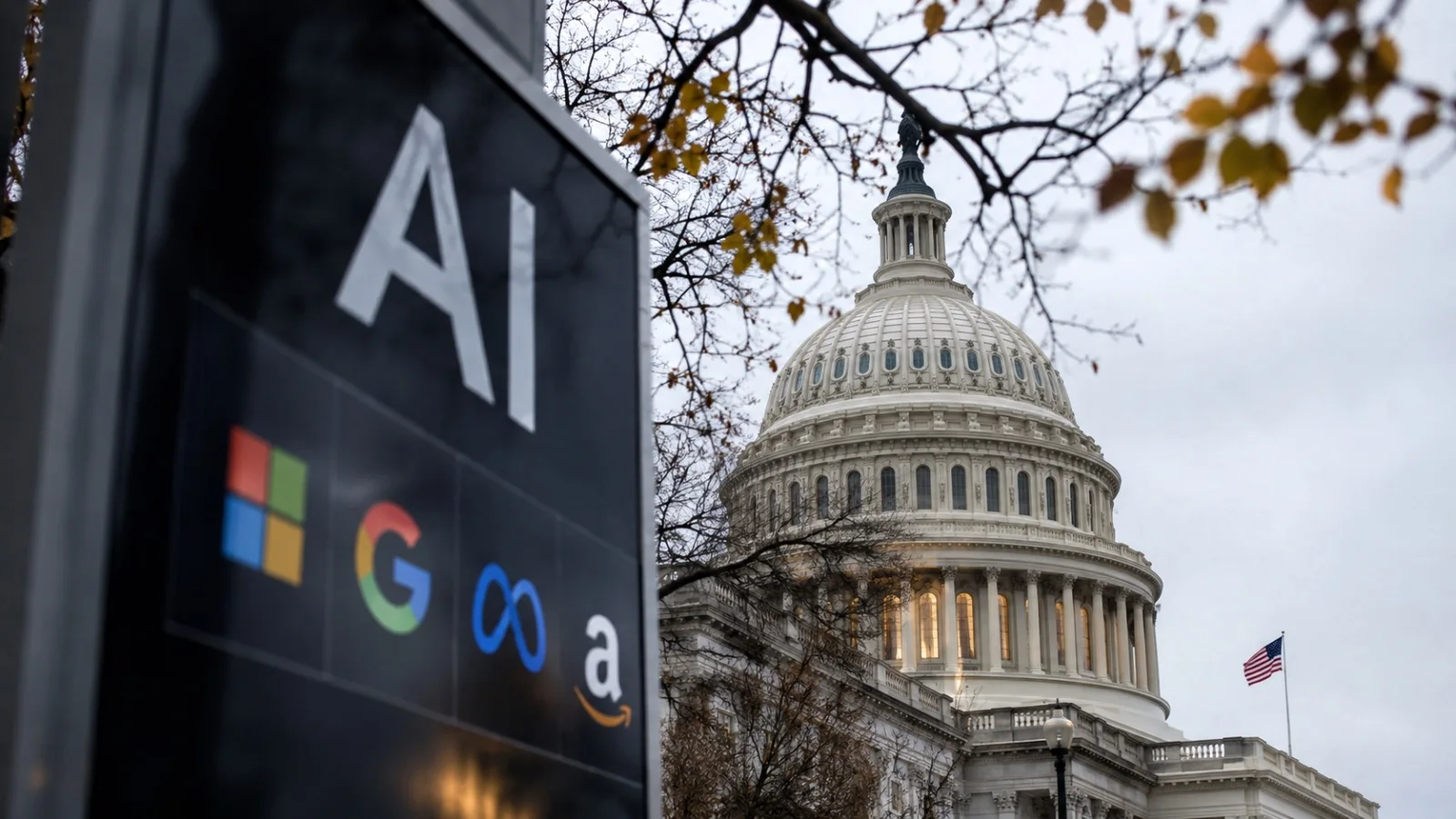
Democrats plan to introduce a large batch of AI and data center bills when the new Congress convenes in January 2027, Reuters reported on Nov. 6. Sen. Chuck Schumer named policies to curb rising household electricity bills from data center expansion as a top priority.
1. Rule one: Who pays for data center power?
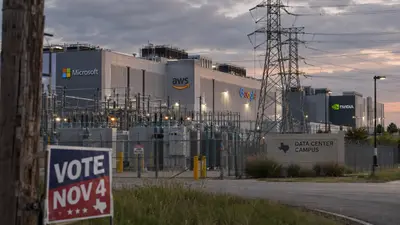
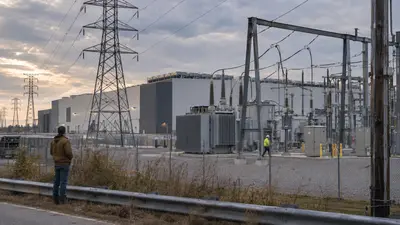
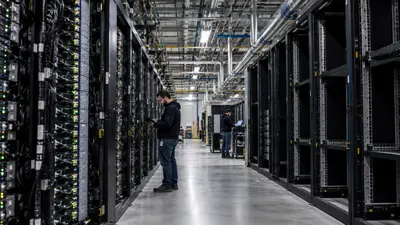
The issue is not only the electricity AI companies use. Supplying power to large data centers requires new infrastructure such as transmission lines and substations. If those costs show up in ordinary consumers' bills, local backlash is likely to grow.
Similar legislation has already been debated. The Ratepayer Protection Act passed the House in September. It would have required regulators to review whether large power consumers should bear added grid costs. In the Senate, the vote was 57 to 43, short of the 60 needed to advance.
That suggests the issue is not only a Democratic one. Electricity bills are a cost-of-living concern for voters of both parties.
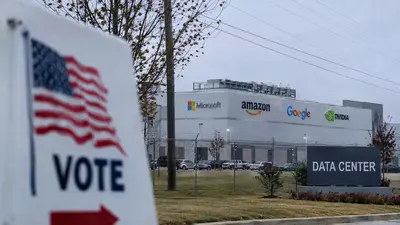
For big data center investors such as Microsoft, Google, Amazon and Meta, the cost of securing power and the economics of new facilities could matter more. Grid equipment and transmission and distribution companies, by contrast, could see new investment demand.
2. Rule two: Should AI companies grade their own products?
Rep. Lori Trahan plans to push a bill requiring independent experts to evaluate high-performance AI models against safety standards.
So far, AI companies' safety evaluations have relied largely on their own testing and public reporting. If outside verification becomes mandatory, models may need extra review before release, or may have to be fixed if problems are found.
That could affect costs and launch schedules. For business customers, though, independent verification could become a basis for deciding to adopt a model. That matters most in fields such as finance and health care, where errors are costly.
Large companies are not necessarily at a disadvantage. Firms like Google and Microsoft, with security, audit and legal teams, can absorb compliance costs more easily. The same costs could weigh more heavily on smaller AI startups.
That conclusion, that outside verification favors large companies, is still a hypothesis. The outcome depends on the evaluation standards, who is covered and how costs are structured.
3. Rule three: Who pays when AI causes harm?
An AI service giving wrong information is different from an AI service causing real damage.
Consider an AI agent that sends a user's money to the wrong place, or an automated decision that harms a third party. How much responsibility belongs to the model developer, the platform that offered the service and the company that deployed it?
Democrats are preparing legislation to clarify those boundaries. No final provisions have been set.
For companies, liability exposure, insurance premiums, legal costs and product design costs could change. If liability standards become clear, reduced legal uncertainty could also make it easier for business customers to adopt AI.
4. Do Big Tech companies benefit, or pay more?
| Company | Regulatory variables that matter relatively more |
|---|---|
| Alphabet (GOOGL) | Data center power costs, Gemini safety verification, AI service liability |
| Microsoft (MSFT) | Azure infrastructure costs, enterprise AI verification, liability under service contracts |
| Meta (META) | AI model safety, platform liability, data center expansion |
| Amazon (AMZN) | AWS grid costs, liability for providing and operating AI models |
The impact on each company depends on who is directly subject to legal obligations.
Big Tech has the compliance staff and financial strength to respond. But these companies also run the most data centers and serve the widest range of customers with AI. If the rules apply broadly, the absolute cost burden could be large too.
Rather than looking for winners from regulation, it may make more sense to distinguish companies that can pass compliance costs on to customers or offset them with productivity gains.
5. Introducing a bill is not the same as enforcing a rule
Even if Democrats take control of Congress, a bill does not automatically become law.
President Trump is opposed to mandatory federal AI regulation and could use his veto. A typical Senate bill usually needs 60 votes to end a filibuster. Overriding a veto requires two-thirds of members present in each chamber.
Still, the difficulty of passing a law does not erase influence. Congress can hold hearings, demand testimony from executives and examine security and safety records. It can also attach some regulatory provisions to must-pass legislation.
The more important change in 2027 may be less the immediate passage of a comprehensive AI law than stronger oversight and a rising political cost for companies.
- No. Introducing a bill, passing it, getting the president's signature, and actual implementation are separate steps.
- A presidential veto and Senate procedural rules are the main obstacles.
- If data center investment is delayed, the pace of growth in GPU demand could slow.
- However, AI model safety rules do not directly restrict GPU sales.
- Fixed audit and legal compliance costs can be a heavier burden for companies with less funding.
- On the other hand, large platforms also have more regulated businesses and users, so they are not necessarily beneficiaries.
- Legislative plans alone are not enough basis for a blanket buy or sell decision.
- It makes more sense to check whether the companies you hold actually see changes in power costs, AI revenue growth, cash flow, and valuation.
- Independent verification and clear liability standards could reduce uncertainty for business customers considering adoption.
- Whether that effect offsets compliance costs and product launch delays should be judged by actual operating results.
What to watch
Insight Times Editorial Desk