AI's Second Act: Where the Money Goes After GPUs
Morgan Stanley's 24 "AI Adopter" stocks share one trait: not heavy AI usage, but the ability to convert AI into revenue, margin and cash flow.
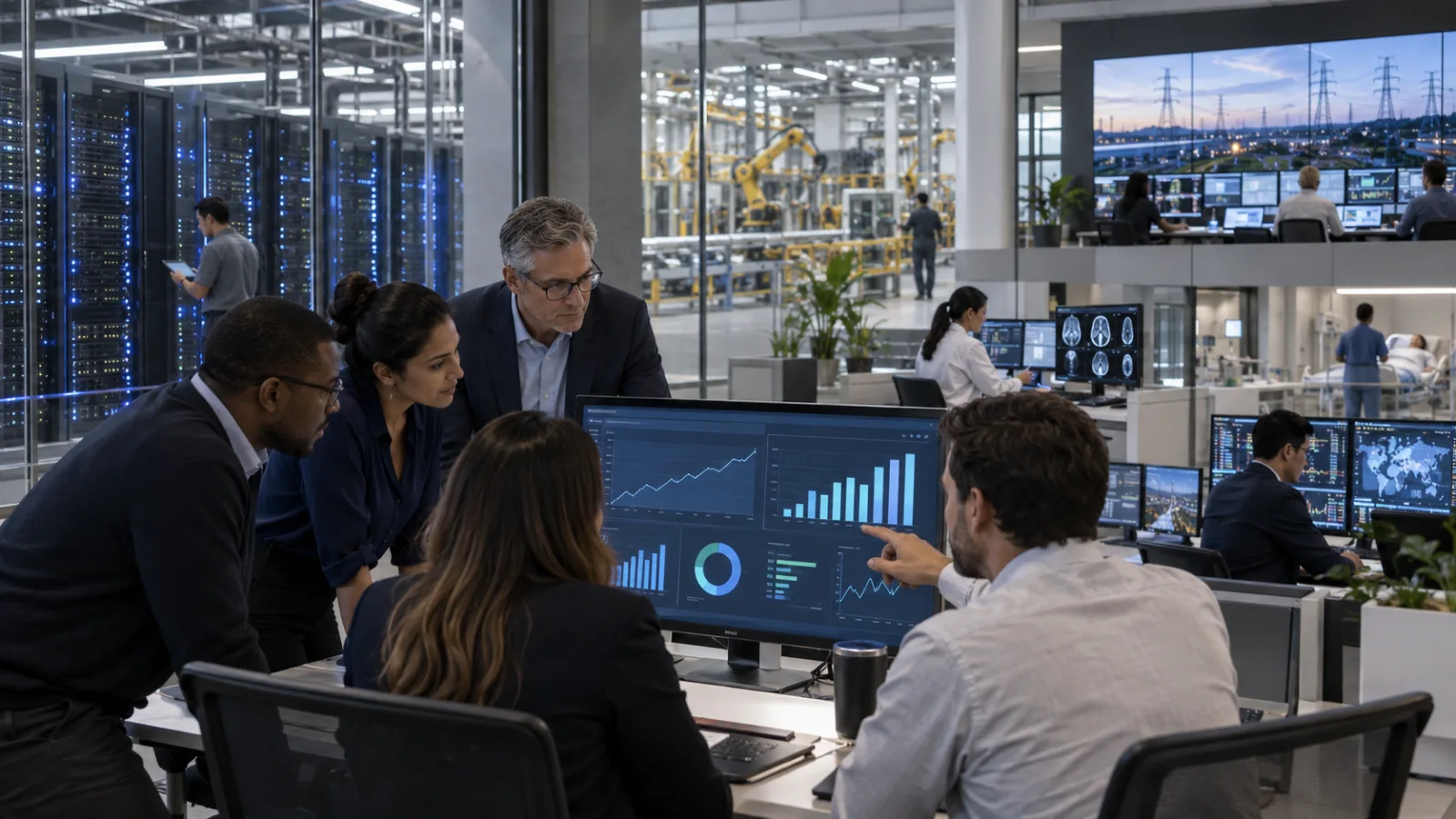
The most important question in AI investing is changing
AI's first act was led by GPUs, HBM, networking gear, servers, data centers and power. Compute was scarce and supply was tight. Investors watched capex, shipment volumes, ASPs and supply shortfalls.
In the second act, the question shifts. What matters now is where companies plug in the AI they have already bought, how much of the workforce's labor it automates, and how much that improves revenue and margins.
Morgan Stanley's Mike Wilson called August's market a mid-cycle phase rather than an early recovery, using the phrase "show me the money." In this phase, cash flow, cost control, margins and capital efficiency matter more than raw growth rates. The same yardstick is now being applied to AI.
Semiconductors aren't finished, but their monopoly on leadership may be fading
There is no evidence that structural demand for AI infrastructure companies is disappearing. If anything, as agent usage rises, so does demand for inference, memory, networking and data-center power.
But equity markets are more sensitive to changes in expectations than to current growth rates. Infrastructure companies already trade with high growth and heavy capex largely priced in. Companies applying AI to real operations, by contrast, often haven't yet shown the productivity gains on their income statements.
So it is more accurate to say the point where AI profits accrue is widening, rather than that AI infrastructure is weakening. Semiconductors aren't falling out of the cycle. They may simply be moving from the sole leader to one of several leaders.
What Morgan Stanley's 24 stocks have in common
Morgan Stanley's AI Adopter basket, released in August, spans 24 companies: mega-caps like Alphabet, Meta and Amazon; financial firms like JPMorgan, BNY Mellon and Bank of America; Palantir and Snowflake; Cadence; and utilities Vistra and NextEra Energy.
What unites this list isn't that they're "AI software companies." It's that AI can lift their revenue, let the same headcount handle more work, or raise the utilization and efficiency of assets they already own. Morgan Stanley says the basket's net margin improved by roughly 50 basis points over the trailing three months and runs about 400 basis points above the market average.
Boiled down to five categories: full-stack platforms are GOOGL, META and AMZN; data and workflow platforms are SNOW, PLTR and CDNS; financial automation covers JPM, BNY, BAC, RKT and BX; labor-intensive services include HNGE, OMDA, AXON and NAVN; and physical-asset optimization spans JCI, VST, NEE and HAWK.
The 24-stock AI Adopter basket
| Sector | Company | Ticker |
|---|---|---|
| Communication Services | Alphabet | GOOGL |
| Communication Services | Roblox | RBLX |
| Communication Services | Meta Platforms | META |
| Communication Services | Grindr | GRND |
| Consumer/Platforms | Amazon | AMZN |
| Consumer/Platforms | Navan | NAVN |
| Consumer/Platforms | eBay | EBAY |
| Financials | JPMorgan Chase | JPM |
| Financials | SEI Investments | SEIC |
| Financials | Rocket Companies | RKT |
| Financials | Blackstone | BX |
| Financials | BNY Mellon | BNY |
| Financials | Bank of America | BAC |
| Healthcare | Hinge Health | HNGE |
| Healthcare | Omada Health | OMDA |
| Healthcare | Heartflow | HTFL |
| Industrials | Axon Enterprise | AXON |
| Industrials | Johnson Controls | JCI |
| Industrials | HawkEye 360 | HAWK |
| Information Technology | Snowflake | SNOW |
| Information Technology | Palantir | PLTR |
| Information Technology | Cadence Design Systems | CDNS |
| Utilities | Vistra | VST |
| Utilities | NextEra Energy | NEE |
SaaS's real moat isn't the screen, it's the system of record
Earlier this year, markets worried that AI agents could break SaaS's seat-based pricing model. The logic: if agents do the work instead of humans clicking through a CRM or HR screen, the seat count could shrink.
But enterprise work rarely ends with a single chat window. Approving a refund means reading a customer contract, order history, inventory, pricing policy, permission structure and accounting rules, then writing the result back into the system. CRM, ERP, HCM and ITSM platforms are a company's memory and its ledger of permissions and audit trails.
Salesforce's recent numbers make the point. Agentforce annual recurring revenue topped $1.5 billion in the fiscal 2027 second quarter, up more than 240% year over year. Combined Agentforce and Data 360 ARR reached roughly $3.9 billion, up more than 210%. The company also raised its full-year revenue guidance. That doesn't mean every SaaS company wins, but it is evidence that the simple narrative of "AI kills legacy apps" is moving too fast.
The biggest market in AI's second act may not be IT budgets
The most interesting shift is in pricing. Traditional SaaS competed for a slice of a company's IT budget. But once AI agents start doing actual work, the pool of money vendors can capture widens to include labor and operating costs.
If a customer-service agent cuts an agent's repetitive workload in half and increases throughput, software pricing could shift away from a flat per-seat monthly fee toward a share of the labor savings and added throughput it generates.
If that shift plays out, the total addressable market for AI applications expands beyond IT spending to a company's entire operating cost base. That is where the biggest economic implication of AI's second act lies.
Insight Times Editorial Desk