AI Infrastructure May Need $10 Trillion, a Capital Bet Bigger Than the Railroads
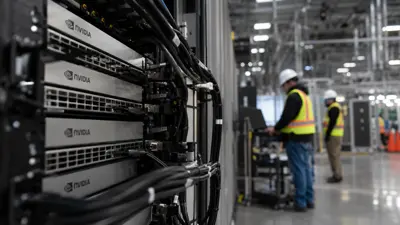
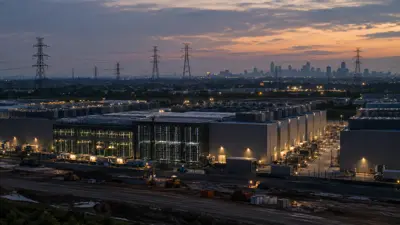
ChatGPT looks like software, but behind it sit chip fabs, GPUs, HBM, data centers, power plants, transmission lines, cooling systems and fiber. If the US buildout really reaches $10 trillion, AI stops being a tech-stock theme and becomes a national capital-allocation problem.
The number that matters more than $10 trillion is 3.63%
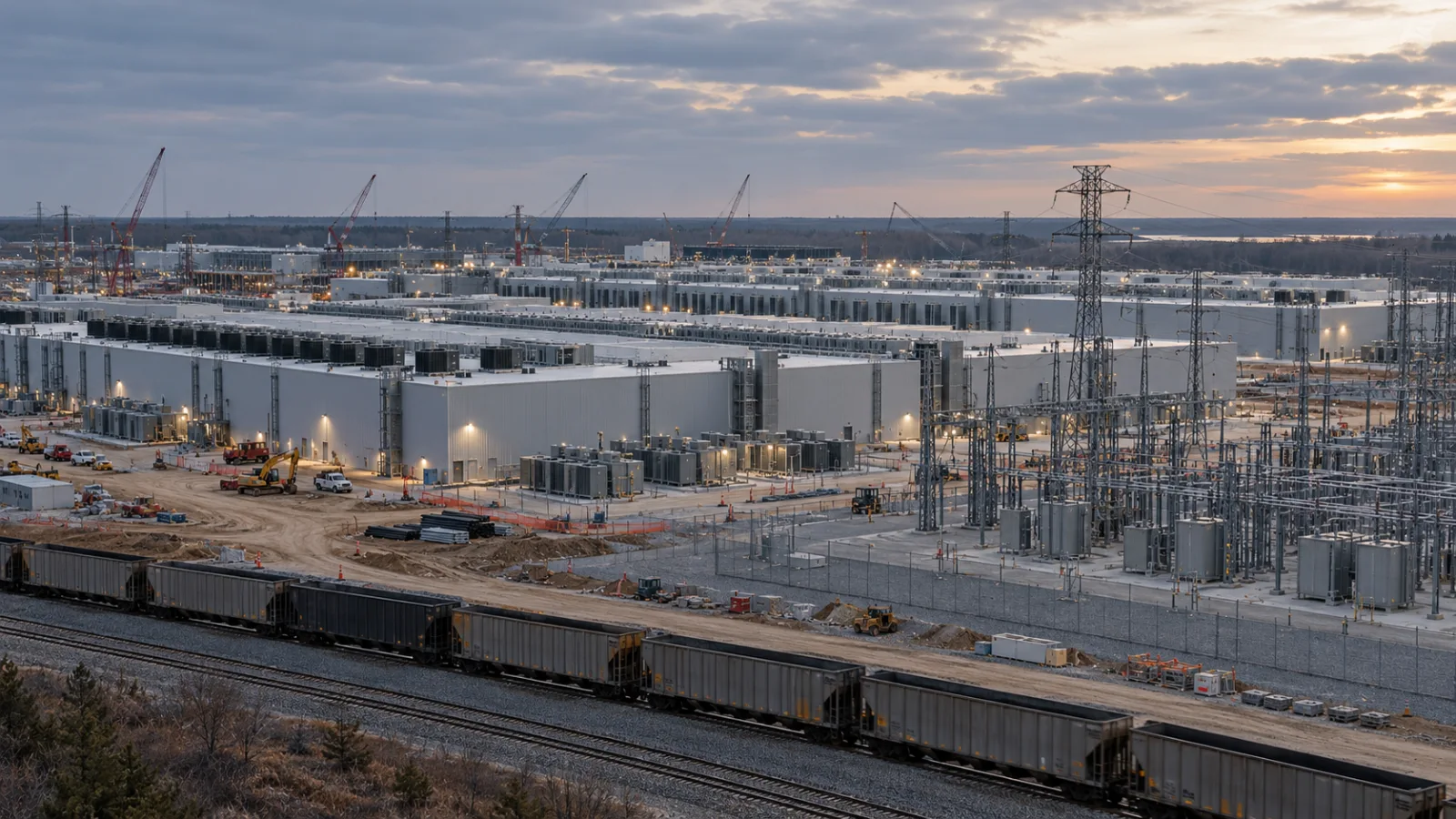
$10.3 trillion is not a locked-in spending figure. It is a central-case estimate built by Stuijvenberg Van Nieuwerburgh from the pipeline of data center projects and their facility, power and IT equipment costs. The research calculates that roughly 182.8 gigawatts of additional US data center capacity will come online by 2032, and once the upfront spending on projects that finish construction after that is included, total investment from 2025 through 2032 could reach about $10.3 trillion.
That absolute number is too large to grasp intuitively. For historical comparison, the share of GDP is more useful. The study's estimate implies an investment cycle that absorbs an average of 3.63% of US GDP per year.
AI Buildout: $10.3T — modeled investment, 2025-2032 Average share of GDP per year: 3.63% — investment intensity relative to the whole US economy Additional data center capacity: 182.8GW — central case, assuming these come online by 2032
| US infrastructure investment cycle | Period | Average annual share of GDP |
|---|---|---|
| Canals | 1836-1841 | 0.66% |
| Railroads | 1870-1890 | 2.24% |
| Power grid | 1905-1925 | 0.50% |
| Interstate highways | 1956-1973 | 1.13% |
| Telecom and fiber optics | 1996-2003 | 1.10% |
| AI infrastructure | 2025-2032 | 3.63% |
A technology succeeding and capital making money are different questions
Railroads lifted US productivity, but not every railroad company was a good investment. The internet build-out of the 1990s changed the world too, yet it could not avoid fiber overinvestment and telecom bankruptcies. A general-purpose technology can create enormous value for society as a whole while still leaving the capital that built its infrastructure most expensively with low returns.
The same distinction is needed for AI. "Will AI change the world" and "will the capital building AI infrastructure at today's prices earn a sufficient return" are different questions. The study estimates that by 2032, this infrastructure would need the AI industry to generate roughly $3.7 trillion a year in revenue to justify its expected returns. Reuters reported that starting from current combined annual revenue estimates for OpenAI and Anthropic of roughly $100 billion, that implies an annual growth rate of around 80% is needed.
This number is not a conclusion that "the AI bubble is bound to burst." If demand grows far faster than expected, utilization stays high, and model performance keeps improving, the infrastructure's cash flows could still grow enough. Still, investors should not conflate a technology's potential with capital's rate of return in the same sentence.
The bigger shift: AI risk is moving outside Big Tech
Early AI infrastructure was funded directly by companies like Amazon, Microsoft, Alphabet and Meta out of massive operating cash flow. When losses occurred, they were mostly absorbed by that company's own shareholders.
But the combined capital expenditure of Oracle, Microsoft, Amazon, Meta and Alphabet, as tallied by the study, rose from about $96.8 billion in 2020 to $415.8 billion in 2025, and is projected to expand to roughly $800.5 billion in 2026. The same research expects 2026 capital expenditure to exceed these five companies' combined operating cash flow for the first time.
1. Internal funding — Big Tech uses operating cash flow and corporate bonds to own data centers directly 2. External capital — leases, joint ventures, project finance, infrastructure funds and private credit are layered in 3. Risk dispersion — banks, insurers, pension funds and private credit investors come to share AI infrastructure's credit risk
The problem is that the risk does not disappear, it just changes location. Putting data centers or GPUs into separate entities can make Big Tech's headline debt ratios look lower. But the projects themselves can carry higher leverage, and through long-term leases, guarantees and capacity purchase agreements, that risk reconnects to the hyperscalers' own credit.
Van Nieuwerburgh does not flatly equate this with the subprime crisis. Rather, the study argues it would be premature to conclude systemic risk has already reached that level at this stage. Still, it warns that complex special-purpose vehicles and securitization structures can keep correlated risks hidden from view until a downturn arrives.
Insight Times Editorial Desk