Bitcoin's Four-Year Cycle Is Breaking Down as Institutions Buy the Lockup
A roughly 50% rally since June's low is harder to explain with the old halving cycle. Long-term holders locking up supply, ETF inflows, and dollar-debasement demand are converging at once.

This rally started because there are fewer sellers, not because there are more buyers
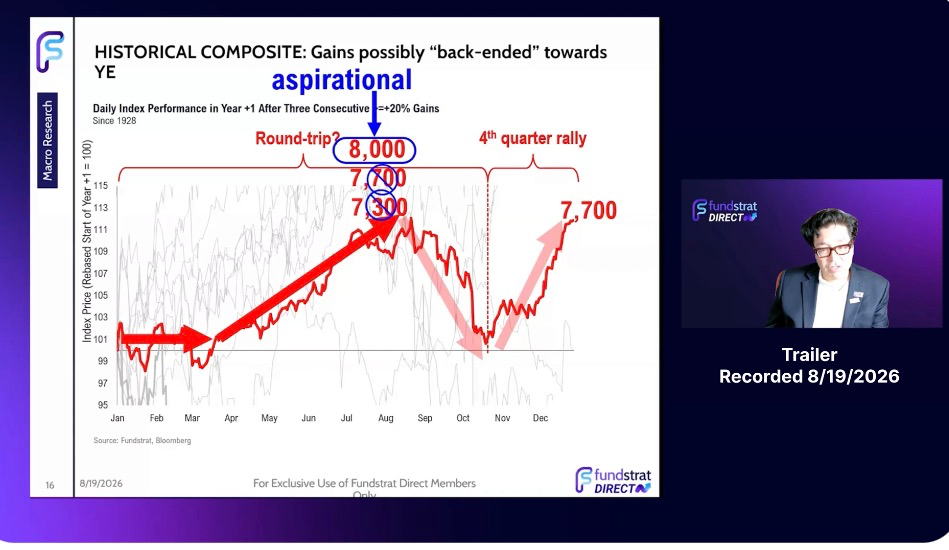
A September analysis from River frames the recent bitcoin bounce differently than a typical bull run. Some 81% of circulating supply hasn't moved in at least six months, and exchange trading volume hasn't exploded the way it did in past bull markets. Price is up roughly 50% off the June low, but the broader market hasn't been boiling over.
In a market shaped like this, prices can move sharply even without a big wave of new buying, simply because so few coins are actually available to trade. That doesn't mean demand is absent. ETF inflows have been strong again in recent days. The more accurate description right now is a market where institutional demand is attaching itself to already-locked supply.
6-month+ unmoved supply: 81% River's tally. A bigger share of long-term holdings means less coin available for immediate sale.
US spot ETF net inflow, two days: $1.7 billion About $999 million on September 21 and roughly $715 million on September 22.
Estimated average ETF cost basis: $81,722 Estimate from Bloomberg Intelligence's James Seyffart.
Institutionalization may be changing the amplitude more than the direction
CryptoQuant CEO Ki Young Ju has floated the idea that this cycle could see smaller swings in both directions, rather than repeating the pattern of 10x-plus surges followed by 80%-plus crashes. His 3x-to-5x scenario isn't an official price target. It's a cycle projection built on a larger market and growing institutional holdings.
The logic is straightforward. When bitcoin's market cap was small, relatively modest amounts of money could move price a great deal. Now, with ETFs, corporate treasuries, and professional asset managers holding coin on longer time horizons, market depth has grown. Upside momentum may be more limited than in past cycles, but that same long-duration capital could also act as a cushion in a downturn.
| Past cycle | What's different now | Why it matters for investors |
|---|---|---|
| Dominated by retail speculation | ETF and institutional holdings expanding | Time horizon of supply and demand may be lengthening |
| Sharp rallies alongside volume spikes | Supply lockup appears first | Volume alone is a weaker signal of rally quality |
| Repeated 70-80% drawdowns from highs | Recent bear-market drawdown was about 52% | Still needs confirmation that cycle amplitude is actually shrinking |
What ETFs really changed isn't the price floor, it's the demand pipeline
US spot bitcoin ETFs took in a combined roughly $1.7 billion on September 21 and 22. On the second day, BlackRock's IBIT alone pulled in about $350 million. At the same time, bitcoin's price pushed past $81,722, the estimated average cost basis for ETF investors.
Reading that number as "$81,722 is the new support level" is risky. An average cost basis is a psychological reference point, not an enforced price floor. What matters more is that even if a pullback comes, the ETF structure gives large pools of capital a fast, institutional channel to re-enter.
Long-term holder supply lockup → less coin actually circulating → renewed ETF inflows → price grows more sensitive to small shifts in demand
A $40 trillion US debt pile gives bitcoin a new investment case, not a guaranteed hedge
US national debt has crossed $40 trillion. Michael Bucella of Neoclassic Capital told CNBC that some global investors are treating bitcoin, alongside gold and the Swiss franc, as a hedge against currency debasement.
That narrative is clearly gaining traction, but it's still premature to treat bitcoin as equivalent to gold as a safe-haven asset. It remains a high-volatility asset that reacts sharply to interest rates, liquidity conditions, and risk appetite. The long-term "hedge against dollar debasement" story and the short-term "liquidity-sensitive risk asset" behavior coexist right now.
It's also worth noting that the market recovered quickly after the CLARITY Act failed to clear the 60-vote threshold in the US Senate on September 15. That doesn't mean regulatory news no longer matters. It means the list of variables driving bitcoin's price has widened well beyond regulation alone, to include ETF flows, global liquidity, fiscal concerns, and long-term holder supply.
Insight Times Editorial Desk