The AI Bull Market Changes Its Test: Who Earns the Cash, Not Who Spends the Most
The market that rewarded companies for spending more on AI is starting to sort out those that turn the spending into revenue and free cash flow. Long-term yields, financed demand and Goldman's earnings outlook all point that way.

The most important change in the US stock market is not the Fed's next rate decision. A market that gave high valuations to companies spending the most on AI is moving toward one that picks out companies producing real revenue and cash flow from that spending. AI stocks are now likely to be separated by how much cash they earn, not how much they spend.
Why the 10-year matters more than the Fed
September nonfarm payrolls rose by just 29,000, and the unemployment rate climbed from 4.1% to 4.2%. Hourly wage growth slowed to 3.0% from a year earlier. That looks less like a collapse and more like an overheated hiring market cooling.
Concern about another rate hike in October has eased. The problem is long-term yields. The 10-year Treasury yield rose as high as 5.34% intraday on Oct. 1, its highest level since 2002. A Fed that stops can still coexist with high long-term rates.
The old formula was: Fed tightening ends, Treasury yields fall, growth-stock multiples rise. Now federal deficits, heavy Treasury issuance, high energy prices and the funding needs of AI infrastructure are pushing long-term yields up at the same time.
So when assessing growth stocks, the direction of the 10-year may be a more direct discount-rate variable than the policy rate.
Two kinds of AI demand
The most important AI financing news this week is the Broadcom-Anthropic deal. Broadcom will lend Anthropic up to $42 billion, and Anthropic will use the money to rent TPU computing capacity. Anthropic's five-year TPU rental commitment totals $125.2 billion.
The structure does not by itself signal a bubble. It does signal that investors need to start dividing AI demand into two kinds.
- Organic AI demand: demand that arises when real customers use AI services and pay for them.
- Financed AI demand: infrastructure demand created up front through loans, equity investments and long-term contracts.
Early in an industry, the latter can speed up growth. Over the long run, though, it is the former that supports share prices. AI debt to revenue, lease obligations to free cash flow, and capex to revenue are likely to matter as much as GPU shipments going forward.
Memory and power remain bottlenecks
Tighter scrutiny of AI spending does not mean the infrastructure winners are finished.
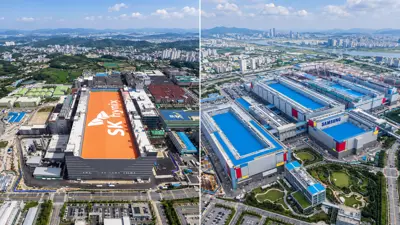
Samsung Electronics projects that high-bandwidth memory (HBM) could account for about 30% of global DRAM wafer capacity in 2027, up from roughly 20% now. Because HBM shares wafer capacity with conventional DRAM, expanding HBM can also constrain supply of standard DRAM.
Power follows a similar pattern. The US government is pursuing a loan of about $4.2 billion to Vistra to raise output at existing nuclear plants. What matters is that government money is now flowing not only to new reactors but to power uprates at existing ones.
AI infrastructure is no longer just a GPU story. Hard-to-replace bottlenecks such as memory, networking, power and cooling may keep pricing power longer.
From capex to productivity
- 2024 to 2026: AI capex rises, revenue at chip and power companies rises, EPS rises.
- 2027 and after: AI adoption rises, productivity rises, operating margins improve, free cash flow grows.
Goldman Sachs says AI investment is producing nearly half of S&P 500 EPS growth in 2026, but expects that contribution to fade. It forecasts EPS of $415 in 2027 and $460 in 2028. It also expects future earnings growth to depend more on productivity gains from using AI than on AI investment itself.
Insight Times Editorial Desk